
Best Cold Pressed Unrefined Castor Oil Compared

C CARE Castor Oil is the best fit for most buyers seeking cold pressed, unrefined castor oil because its product name and features specify USDA organic certification, a 16-ounce glass bottle and a pump. Choose a larger bottle if volume matters more, or another option if you prefer a specific brand.
Castor oil is a thick plant oil used in skin and hair routines and on fabric packs. It does not have established evidence as a way to grow hair or lashes, so choose it for conditioning rather than growth claims.
We earn a commission if you buy through links on this page. As an Amazon Associate I earn from qualifying purchases. Products are compared on manufacturer specifications, not hands-on testing.
- Best overall: C CARE Organic Castor Oil, 16 oz – Specifies cold-pressed, unrefined USDA-certified organic oil in a 16-ounce glass bottle with a pump.
- Best for larger volume: Pure Castor Oil, 32 oz – The 32-ounce bottle holds twice as much as the 16-ounce options.
- Best for cold-press specifics: Essentially KateS Castor Oil, 16 oz – Its features define cold pressing as below 120°F and specify an amber glass bottle.
| Product | Best for | Volume | Organic certification | Container | Shop |
|---|---|---|---|---|---|
| C CARE Organic Castor Oil, 16 oz | Certified organic choice | 16 fl oz | USDA certified organic | Amber glass | Check Price on Amazon |
| Pure Castor Oil, 32 oz | Larger bottle | 32 fl oz | — | — | Check Price on Amazon |
| Seven Minerals Organic Castor Oil, 16 oz | Multi-use routines | 16 fl oz | USDA Organic | Glass | Check Price on Amazon |
| Heritage Store Organic Castor Oil, 16 oz | Oil-pack routine | 16 fl oz | USDA Organic | — | Check Price on Amazon |
| Essentially KateS Castor Oil, 16 oz | Pressing detail | 16 fl oz | — | Amber glass | Check Price on Amazon |
Cold Pressed Unrefined Castor Oil Compared
Compare volume, organic certification and container material to find an option suited to your routine.
C CARE Organic Castor Oil, 16 oz

C CARE is the clearest match for buyers who want the specifications to specify cold-pressed, unrefined oil and USDA organic certification. The single-ingredient formula comes in a 16-ounce amber glass bottle with a pump, and the features describe using it to saturate a fabric oil-pack wrap. The wrap is sold separately, so this option suits buyers who already have one or plan to obtain one. Castor oil is thick and can feel heavy on hair or skin; start with a small amount, especially if you prefer lightweight products.
Bottom line: Choose this if certification and a glass pump bottle are priorities.
Pure Castor Oil, 32 oz
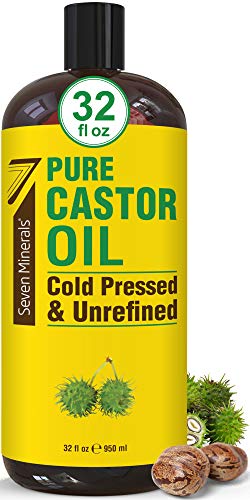
The 32-ounce size makes this the largest bottle among these options; the other products are 16 ounces. Its features identify a single ingredient, cold pressing and hexane-free processing, but do not claim organic certification. That distinction matters if certified-organic sourcing is a requirement rather than a preference. The bottle material is also not clear from the fields, so this suits buyers who prioritize quantity and processing claims over certification or packaging material. The product name includes hair and lash growth language, but castor oil should be treated as a conditioner, not a proven growth treatment.
Bottom line: Choose this when a 32-ounce supply matters more than organic certification.
Seven Minerals Organic Castor Oil, 16 oz

Seven Minerals emphasizes several cosmetic uses in one 16-ounce bottle, including hair, brows, skin, nails and oil packs. Its product name and features identify USDA organic, cold-pressed, unrefined and hexane-free oil, packaged in an amber glass bottle with a pump. That combination suits a buyer who wants one bottle for different parts of a personal-care routine. The specifications do not establish that castor oil increases hair or lash growth; use it for conditioning, and avoid applying it close to the eyes where oil can irritate or blur vision.
Bottom line: Choose this for a multi-use routine and amber glass packaging.
Heritage Store Organic Castor Oil, 16 oz

Heritage Store specifically positions its 16-ounce USDA organic, cold-pressed oil for hair care and fabric oil packs. The features suggest soaking a flannel and applying it to a chosen area, which makes this option relevant to buyers who already use that kind of routine. It is also described for brows, lashes and skin, but those cosmetic claims are not evidence of hair growth or health benefits. The container material is not clear from the fields, so choose another option if glass packaging is essential to your decision.
Bottom line: Choose this if organic oil for a fabric-pack routine is your priority.
Essentially KateS Castor Oil, 16 oz

Essentially KateS gives the most specific pressing detail: its features say the oil is cold-pressed below 120°F. It also identifies the oil as single-ingredient and hexane-free, and specifies a 16-ounce amber glass bottle with a pump. This is a useful fit for buyers who care about the maker’s processing temperature and packaging. The specifications do not identify organic certification, so it is not the strongest choice if that is a must-have. Its cold-pressing statement is a maker claim, not an independent measure of the finished oil.
Bottom line: Choose this if a pressing temperature and amber glass bottle matter.
How to choose cold pressed unrefined castor oil
Start with certification and processing claims, then choose a bottle size that matches how often you will use the oil. Cold-pressed means mechanical extraction without solvent extraction; unrefined oil has not undergone the same refining steps used to change an oil’s color, odor or composition. These terms do not by themselves establish a specific purity test or cosmetic result. If certified organic sourcing matters, compare the products that name USDA organic certification rather than treating “natural” as equivalent. For occasional use, a 16-ounce bottle is a manageable starting size; choose 32 ounces only if you expect to use the oil regularly. Treat claims about hair or lash growth as unproven, and select castor oil for its role as a conditioning oil.
Castor oil texture and application
Castor oil is notably viscous, so a small amount spreads more slowly than lighter oils such as jojoba or grapeseed oil. For skin or scalp use, begin with a few drops on a limited area; if you want a thinner blend, mix a small amount with a lighter carrier oil in your palm. Patch-test on a small area and wait 24 hours before broader application, stopping if irritation develops. Keep oil out of the eyes and do not apply it to broken or irritated skin. A pump can help dispense small amounts, but it does not make the oil suitable for every skin type. Avoid assuming that a thicker feel means better absorption or stronger results.
Using castor oil packs safely
A castor oil pack is fabric saturated with oil and placed on the body; it is not a proven treatment for pain or disease. Use a washable flannel or cotton cloth, apply only enough oil to dampen it without dripping, and protect clothing and furniture with a washable barrier. Warmth is optional: if using a warm towel, test it against your inner wrist first and avoid hot water bottles or heating pads that can cause burns. Do not use a pack on broken skin, and stop if the skin becomes irritated. Packs are separate from the oil in some options, so check that you have suitable fabric before beginning the routine.
Storage and common mistakes
Store castor oil tightly closed in a cool, dark place; heat and light can degrade oils over time. Use clean, dry hands or a clean dispenser opening so water and debris do not enter the bottle. Avoid transferring oil into unlabeled containers, and discard it if its smell, color or texture changes markedly. Another common mistake is applying large amounts to lashes or directly along the eye margin: oil can enter the eye and cause irritation or blurred vision, and growth claims are not established. Keep bottles away from children, and do not ingest cosmetic oil unless a qualified clinician has specifically advised it.
Frequently Asked Questions
Does castor oil make hair grow faster?
Castor oil has not been established as a way to make hair grow faster. It can be used as a conditioning oil, but a change in shine or feel is not proof of increased growth.
Can castor oil be used on eyelashes?
Castor oil is not proven to grow eyelashes, and oil near the eye can irritate or blur vision. Keep it away from the eye itself and stop use if irritation occurs.
How much castor oil should I apply to skin?
Start with a few drops on a small patch of skin and wait 24 hours to check for irritation. Castor oil is thick, so a small amount may be enough to cover a limited area.
How should castor oil be stored?
Keep castor oil closed in a cool, dark place, away from direct sunlight and heat. Use a clean, dry dispenser to limit contamination.
Can castor oil packs be heated?
A pack may be used with a warm towel, but the fabric should feel comfortably warm rather than hot. Avoid heating pads or hot water bottles over oil-soaked fabric because excess heat can burn skin.