
Best Running Knee Sleeves: 4 Options Compared

For most runners, Bodyprox Compression Sleeve is the best fit because its silicone lining is designed to resist slipping while its nylon, spandex, and latex blend stretches around the knee. Choose CAMBIVO 3D-Knit Knee Sleeves if you want 3D knitting, Modvel Compression Knee Brace 2-Pack for a two-sleeve pack in six sizes, or Uflex Athletics Compression Sleeve if a single sleeve fits your needs.
Running knee sleeves are elastic supports worn around the knee; they do not replace shoes, strength work, or evaluation of persistent pain.
We earn a commission if you buy through links on this page. As an Amazon Associate I earn from qualifying purchases. Products are compared on manufacturer specifications, not hands-on testing.
- Best overall: Bodyprox Compression Sleeve – Its silicone lining is intended to keep the flexible sleeve in place during workouts.
- Best for knitted support: CAMBIVO 3D-Knit Knee Sleeves – 3D knitting is the distinguishing construction, paired with a non-slip silicone feature.
- Best for size choice: Modvel Compression Knee Brace 2-Pack – The product offers six sizes and comes as a two-sleeve pack.
| Product | Best for | Construction | Grip feature | Pack size | Shop |
|---|---|---|---|---|---|
| Bodyprox Compression Sleeve | Non-slip workouts | Nylon, spandex, latex | Silicone lining | 2 sleeves | Check Price on Amazon |
| CAMBIVO 3D-Knit Knee Sleeves | Knitted construction | 3D knit | Silicone, non-slip | 2 sleeves | Check Price on Amazon |
| Modvel Compression Knee Brace 2-Pack | Multiple size options | Nylon, latex | — | 2 sleeves | Check Price on Amazon |
| Uflex Athletics Compression Sleeve | Single-sleeve support | 4-way stretch | — | 1 sleeve | Check Price on Amazon |
Running Knee Sleeves Compared
Compare how each sleeve is built and what its fit and pack format offer for running and workouts.
Bodyprox Compression Sleeve
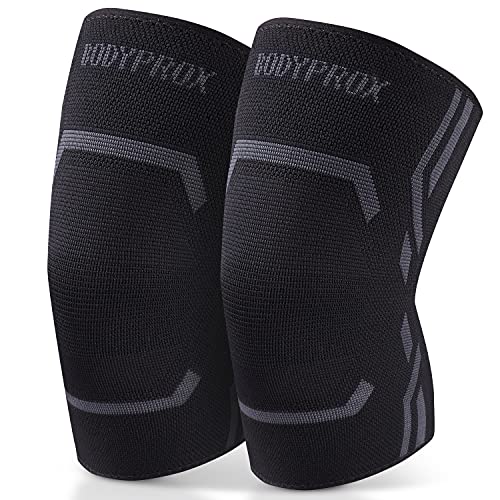
The silicone lining sets this sleeve apart for runners who want a closer hold during movement. The elastic nylon, spandex, and latex blend contours around the knee, and the two-pack supplies a sleeve for each leg. Bodyprox says the design supports patella alignment and may help reduce pain and swelling; those are maker claims, not a substitute for medical care. The medium size is the version named here, so runners between sizes or needing another size should check the fit range before ordering.
Bottom line: Choose this if staying in place during workouts is your main concern.
CAMBIVO 3D-Knit Knee Sleeves

CAMBIVO stands out for its 3D-knit construction rather than a simple stretch blend. The medium black pair is presented for running and a broad range of workouts, with silicone described as non-slip and a breathable support design. The maker says the knit supplies stable pressure and warmth, which may appeal to runners who want a close-fitting sleeve on cooler or stiff-feeling training days.
Bottom line: Pick this if knitted construction and a two-sleeve pack suit your routine.
Modvel Compression Knee Brace 2-Pack

Six stated sizes make this two-pack a useful option for runners who need more sizing choices than the medium versions compared here. Modvel describes the nylon-and-latex sleeves as lightweight, breathable, and moisture-wicking, with compression intended for active use. The pack format gives you two sleeves, while the medium color option is black. The specifications do not identify a grip feature, so runners who prioritize an anti-slip lining should compare that point before deciding; fit should remain comfortable rather than restrictive.
Bottom line: Choose this when having six size options matters most.
Uflex Athletics Compression Sleeve

Unlike the two-sleeve packs, this Uflex option is one sleeve, suited to a runner seeking support for one knee or an individual replacement. Its four-way stretch is designed for flexibility across activities, including running, and the medium fit range is 16.5 to 19 inches. The maker says the sleeve enhances stability and reduces inflammation and swelling. Because it is sold as one piece and the fit range is specific, measure the knee and check the measurement method before selecting it.
Bottom line: Pick this if you need one sleeve and your measurement falls within its range.
How to choose running knee sleeves
Choose a sleeve by fit, construction, and whether it stays in place during your stride. A sleeve should feel evenly snug without numbness, tingling, skin discoloration, or pain; loosen or remove it if those symptoms occur. Measure the circumference at the point specified by the maker, since sizing points differ between brands. For running, a flexible knit or stretch fabric allows repeated knee bending, while silicone grip can help reduce sliding. A sleeve is not a treatment for a new injury or a substitute for a clinician’s assessment when pain is sharp, swelling is substantial, or symptoms persist.
Fit and sizing for knee sleeves
Accurate measurement matters more than choosing a familiar letter size: the Uflex medium, for example, corresponds to a 16.5-to-19-inch range, while the other versions are medium without a comparable circumference range. Measure with the leg relaxed and use the maker’s point above or around the kneecap; do not assume all brands measure in the same place. A sleeve that bunches behind the knee or slides down can distract during a run, while one that is too tight can restrict comfort. Check the measurement range before ordering, especially when between sizes or buying a compression sleeve for the first time.
Compression sleeves versus hinged knee braces
Compression sleeves are fabric tubes that add a close fit and mild support without rigid side hinges; hinged braces use structured supports for more controlled movement. A runner looking for a flexible layer generally starts with a sleeve, while a brace prescribed after an injury serves a different purpose. Neither style should be chosen solely to push through pain. Silicone grip, stretch blends, and knit construction affect how a sleeve feels and stays positioned, but they do not establish injury protection. For a sleeve that slips repeatedly even at the correct size, stop the run and reassess the fit rather than tightening it until circulation or comfort suffers.
Care and safe use during runs
Wash reusable sleeves after sweaty workouts and let them dry fully before storing; trapped moisture can irritate skin and shorten fabric life. Follow the care label for temperature and drying, since heat can damage elastic fibers. Inspect seams and grip areas for tears, loss of elasticity, or rough edges before use. A sleeve should not create numbness, tingling, coldness, or color changes in the foot; remove it promptly if those appear. Compression gear can feel supportive, but new or worsening knee pain, a locked knee, or marked swelling warrants medical advice rather than a tighter sleeve.
Frequently Asked Questions
How tight should running knee sleeves feel?
A running knee sleeve should feel snug and evenly supportive without numbness, tingling, pain, or color change. Remove it if those symptoms develop, rather than tightening or continuing the run.
Can I wear a knee sleeve on both legs?
Yes, a sleeve can be worn on either leg when sized for that knee. The Bodyprox, CAMBIVO, and Modvel options here are two-sleeve packs, while the Uflex option is a single sleeve.
Should I run with knee pain and a sleeve?
A sleeve should not be used to mask sharp or worsening pain. Stop running and seek medical guidance if pain persists, swelling is substantial, or the knee feels unstable.
How do I measure for a knee sleeve?
Use a soft tape measure at the exact location the maker specifies, because sizing points differ by brand. Uflex gives a medium range of 16.5 to 19 inches, so compare your own measurement against that range before selecting it.
How often should knee sleeves be washed?
Wash a reusable sleeve after sweaty workouts and dry it completely before storing. Check its care label, because high heat can wear elastic fibers.