
Wood Burning Stove Pipe Sealant: 4 Options Compared

For a flexible seal at a wood stove pipe connection, Rutland High Heat Latex Sealant 800F is the closest match because its maker says it bonds metal stovepipe joints and remains flexible at the stove collar. Choose a different product for a static flue joint or a door gasket, since those repairs call for cement rather than a flexible sealant.
Stove pipe sealant is a heat-resistant compound used at joints or gaps where the appliance or vent maker calls for it; it is not a substitute for correctly assembled pipe or chimney parts.
We earn a commission if you buy through links on this page. As an Amazon Associate I earn from qualifying purchases. Products are compared on manufacturer specifications, not hands-on testing.
- Best overall: Rutland High Heat Latex Sealant 800F – Its maker identifies stovepipe joints and a flexible seal at stove collars, with an 800°F rating.
- Best for static flue joints: 2500°F Silicate Stove Gasket Cement – The silicate-based cement is intended for non-moving stove-pipe and flue connections and is rated to 2500°F.
- Best for stove patching: Red Devil 0466 Stove Repair Sealant – A 1000°F sealant made for patching fire bricks and sealing wood-burning stoves.
- Best for door gaskets: Rutland Original Wood Stove Gasket Cement – Its intended uses include bonding wood stove door gasket rope and furnace joints.
| Product | Best for | Joint or repair type | Form | Shop |
|---|---|---|---|---|
| Rutland High Heat Latex Sealant 800F | Flexible pipe joints | Metal stovepipe joints | 10.3 fl oz cartridge | Check Price on Amazon |
| 2500°F Silicate Stove Gasket Cement | Static flue joints | Static flue joints | 10 oz | Check Price on Amazon |
| Red Devil 0466 Stove Repair Sealant | Firebrick patching | Firebrick and stove patching | 10.1 oz | Check Price on Amazon |
| Rutland Original Wood Stove Gasket Cement | Door gasket rope | Door gasket rope and furnace joints | 10.3 fl oz | Check Price on Amazon |
Wood Burning Stove Pipe Sealant Options
Match the compound to the repair: flexible sealant for specified moving or metal connections, and cement for static joints or gasket work.
Rutland High Heat Latex Sealant 800F

For a flexible seal at a stove-pipe connection, this Rutland sealant is the most directly targeted option here: its maker says it bonds metal stovepipe joints and remains flexible at the stove collar. The 10.3-ounce cartridge is also described for stove seams, firebox gaps, and chimney or fireplace repairs. Its 800°F rating distinguishes it from the higher-rated rigid cements, but it is not the pick for a repair that requires hard-setting cement or a door-gasket bond. Use it only where the appliance or vent maker permits sealant.
Bottom line: Choose this for a specified stovepipe joint where a flexible seal is appropriate.
2500°F Silicate Stove Gasket Cement

This silicate-based cement is the option for a static stove-pipe or flue connection when the repair calls for a hard-setting compound. Its maker describes it for non-moving joints and says it bonds metal as well as brick, stone, concrete, and mortar; it is also paintable after full cure. The 2500°F rating is higher than the other products considered here, but a higher heat rating alone does not establish compatibility with every stove or vent. Because this cement is intended for static joints, choose a flexible sealant when the joint needs to remain flexible.
Bottom line: Choose this for a compatible, non-moving flue joint or masonry gap.
Red Devil 0466 Stove Repair Sealant

Red Devil 0466 is a stove repair sealant rather than a product specifically identified for stovepipe connections. Its maker says it is suited to patching fire bricks and sealing wood-burning stoves, withstands temperatures up to 1000°F, and cures hard when exposed to heat. That hard finish may suit a fixed patch, but it is a limitation for a connection that needs a flexible seal. The 10.1-ounce size and water cleanup before firing are useful application details; confirm the repair location is one the product is intended to seal.
Bottom line: Choose this for a firebrick patch or stove repair, not a flexible pipe joint.
Rutland Original Wood Stove Gasket Cement
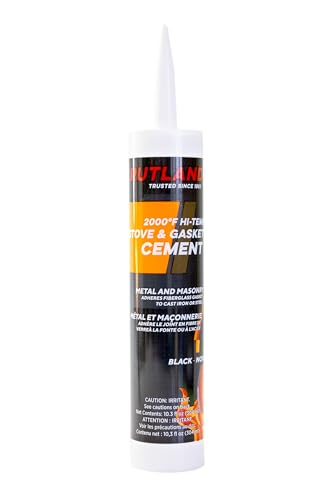
For a wood stove door gasket repair, Rutland Original is more relevant than a pipe-joint sealant: its maker identifies bonding gasket rope and sealing furnace joints as intended uses. The cement is rated for high heat and can also be used for seams or cracks. That rating does not make it a substitute for the flexible compound specified for a particular stovepipe connection. Choose this when the job is securing rope gasket or a compatible cemented joint, and use the correct gasket size for the stove door.
Bottom line: Choose this for bonding door gasket rope or a compatible furnace joint.
How to Choose Wood Burning Stove Pipe Sealant
Choose by joint movement and intended use before comparing heat ratings. Flexible RTV or latex sealants can suit a joint that needs a flexible bond, while silicate or stove cement is intended for rigid, non-moving repairs. These products are not interchangeable: a high temperature number does not confirm that a compound is suitable for a particular pipe, stove, or chimney system. Check the appliance and vent manufacturer’s instructions for whether sealant is permitted and which type to use. A practical decision rule is to use a flexible product only where a flexible seal is called for, and reserve hard-setting cement for fixed repairs specified for cement. Never use sealant to compensate for mismatched, damaged, or improperly assembled vent parts.
Stove Pipe Joints and Flue Fit
Stovepipe connectors and chimney sections serve different roles, so identify which joint you are repairing before applying any compound. Connector pipe carries exhaust from the stove to the chimney; the chimney system is designed for the higher heat and conditions beyond that connector. Many metal connector systems rely on correctly oriented sections and mechanical fasteners, and may not call for sealant at every joint. The pipe maker’s assembly instructions decide whether cement or sealant belongs there. If the joint is part of a chimney system, do not substitute a general-purpose stove cement for the specified joint component. Measure pipe diameter at the existing connection and match it to the appliance collar; a sealant cannot correct a size mismatch.
Flexible Sealant Versus Stove Cement
Flexible sealant and stove cement solve different repair problems. Flexible compounds are intended to retain some movement after curing, while stove and gasket cements set hard for static cracks, patches, or gasket bonds. The distinction matters when a metal joint expands during heating: using a hard-setting material where flexibility is required can lead to a failed seal. Conversely, a flexible compound is not automatically appropriate for a rigid firebrick patch or gasket repair. Check the use and heat rating on the product against the appliance maker’s requirement; the highest rating is not always the correct choice. Where a joint moves or changes fit, stop and confirm the required repair method rather than filling the gap with a generic sealant.
Safe Application and Curing
Apply sealant only to a cool stove and only at locations approved for that product. Fireplaces and stoves can expose repairs to both heat and smoke, so a poor seal or incorrect material can create a hazard. Remove loose old material and soot from the repair surface, then use the curing method and time required by the compound and appliance instructions. Heat-curing products need a controlled initial firing as directed; do not assume that surface-dry means fully cured. Keep the flue path clear and do not seal over joints, fasteners, or access points that must remain serviceable. If smoke escapes after the repair or the pipe is damaged, stop using the stove until the venting issue is corrected.
Frequently Asked Questions
Can silicone sealant be used on a wood stove pipe?
Only use silicone if the pipe or stove maker permits it and the product is rated for that specific joint’s temperature. Some silicone sealants are intended for pellet or gas vent connections, not every wood stove pipe joint.
Should every stovepipe joint be sealed?
No; some connector systems use mechanical assembly and fasteners without sealant at every joint. Follow the pipe maker’s instructions, since adding compound where it is not called for can interfere with the intended assembly.
What is the difference between stove cement and fire caulk?
Stove cement is generally a hard-setting compound for static repairs, while fire caulk or flexible sealant is made to retain some flexibility after curing. The joint’s required movement and the appliance maker’s instructions determine which type fits.
How long should stove pipe sealant cure before firing?
Cure time depends on the compound and its instructions; heat-cured cement may require a controlled initial firing rather than simply waiting for a fixed number of hours. Keep the stove off until the product’s required cure process is complete.
Can stove cement fix a loose stovepipe connection?
Cement should not be used to make an improperly fitted or loose connection seem secure. Correct the pipe fit and fastening method first, then use cement only if the system maker calls for it at that joint.