
Best Glue Traps for Roaches: 3 Indoor Picks Compared

HOY HOY Trap A Roach is the best fit for most homes because its baited, folded design is made specifically for indoor roach trapping. Choose 20-Pack Brown Roach Traps if a 20-trap pack matters more, or Trap a Pest Sticky Roach Traps if you also want traps intended for other crawling insects.
Glue traps are adhesive boards that catch roaches crossing them; they can help reveal activity but are not a stand-alone way to eliminate an infestation.
We earn a commission if you buy through links on this page. As an Amazon Associate I earn from qualifying purchases. Products are compared on manufacturer specifications, not hands-on testing.
- Best overall: HOY HOY Trap A Roach – The baited, folded design is specifically intended for indoor roach trapping.
- Best for more traps: 20-Pack Brown Roach Traps – The pack contains 20 traps and is shaped for placement in narrow indoor areas.
- Best for multiple insects: Trap a Pest Sticky Roach Traps – The maker identifies roaches, waterbugs and other crawling insects as targets.
| Product | Best for | Pack count | Bait | Intended targets | Shop |
|---|---|---|---|---|---|
| HOY HOY Trap A Roach | Baited trapping | 20 traps | Baited | Roaches | Check Price on Amazon |
| 20-Pack Brown Roach Traps | Larger pack | 20 traps | — | Roaches, ants, spiders | Check Price on Amazon |
| Trap a Pest Sticky Roach Traps | Multi-insect use | 18 traps | Bait pouch | Roaches, waterbugs, crawling insects | Check Price on Amazon |
Glue Traps for Roaches
Compare bait style, pack size and intended use before choosing a trap for indoor monitoring.
HOY HOY Trap A Roach
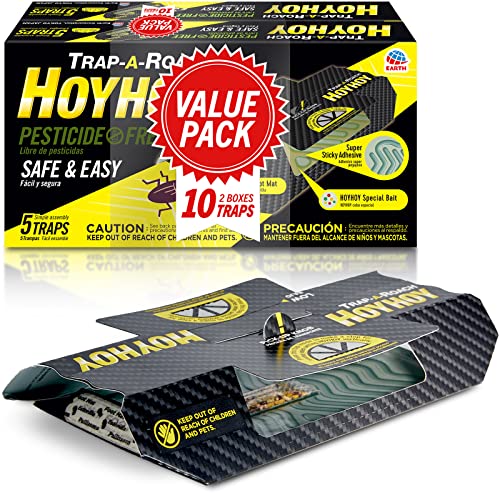
Unlike the other roach-focused picks, HOY HOY Trap A Roach has a baited glue surface with a wavy texture. Its two packs contain 10 traps each, and the folded format is intended for indoor use. Choose it when you want bait included rather than relying on an unbaited glue board. The maker describes the trap as suitable for homes with children and pets, but adhesive traps can still catch paws or fingers if accessible. Keep each trap in a place children and pets cannot reach, and check it regularly.
Bottom line: Pick this if you want baited, folded traps designed specifically for roaches.
20-Pack Brown Roach Traps

20-Pack Brown Roach Traps stands out for its 20-trap pack and compact foldable design for spaces such as under sinks, behind toilets and inside cabinets. The maker says the adhesive is food-grade and the traps can remain effective for up to six months; treat that duration as a claim for normal placement conditions, not a fixed replacement schedule. The product is also described for ants and spiders, so it may suit a home monitoring more than one crawling pest. Its compact design is less suited to covering a broad floor area with a single board.
Bottom line: Choose this when you want a 20-count pack for several indoor placement points.
Trap a Pest Sticky Roach Traps

Trap a Pest Sticky Roach Traps is the multi-insect option: its 18 folded traps include a bait pouch and are intended for roaches, waterbugs and other crawling insects. The maker recommends setting each trap flat along walls or where roaches are commonly seen. That makes it a fit for households that want to monitor more than roach activity, rather than a narrowly targeted single-pest setup. The maker calls the adhesive non-toxic and odor-free, but that does not make the glue harmless to touch; place traps out of reach of children and pets.
Bottom line: Pick this if you want one indoor trap type for roaches and other crawling insects.
How to Choose Glue Traps for Roaches
Choose a trap by whether you want a baited design, a compact foldable format or a broader multi-insect target. Glue boards catch roaches that cross the adhesive; they are most useful for monitoring activity and locating travel routes, not as the only control step during an infestation. Place traps beside walls, under appliances and near suspected activity, since roaches commonly travel along edges and sheltered routes. A trap set in open floor space may miss that traffic. If a trap remains empty, move it closer to fresh signs of activity rather than adding several in the same spot.
Use this decision guide to match a trap feature to a practical need:
| Need | Choose |
|---|---|
| Bait included | A trap identified as baited |
| Several monitoring points | A larger pack count |
| More than roaches | A trap intended for multiple crawling insects |
Where to Place Indoor Roach Traps
Place glue traps tight against walls and near likely roach routes, especially behind or beside refrigerators, under sinks and inside cabinets. Roaches prefer dark, sheltered areas close to food and moisture, so a trap near a suspected harborage is more informative than one in the center of a room. Use several monitoring points in separate rooms if activity may be spread out. Keep traps flat and fully folded when the design calls for folding; a warped or partly open trap may not present its adhesive surface properly. Do not place sticky traps where children or pets can touch them, because adhesive can catch skin, fur or paws.
What Glue Traps Can and Cannot Do
Glue traps can show where roaches are moving and catch individual insects, but they do not remove the food, water or hiding places sustaining an infestation. A steady catch near one wall can help identify a route; no catch does not prove a room is roach-free. Pair monitoring with practical prevention: seal food, wipe crumbs and grease, reduce standing water and close gaps around plumbing where feasible. For a persistent or widespread infestation, glue boards alone are unlikely to be enough. Avoid placing traps on wet or dusty surfaces, since debris and moisture can interfere with adhesive contact. Check traps every few days and replace them when they are full or the glue is dirty or no longer tacky.
How to Check and Handle Sticky Traps
Check indoor glue traps every few days so catches can be counted and the board can be replaced when its adhesive is covered or contaminated. Record which rooms and edges produce catches; repeated activity in one area is more useful than a single count in an arbitrary location. Wear disposable gloves when handling a used trap, keep it away from food-preparation surfaces and dispose of it in household trash according to local rules. Adhesive products can trap non-target insects as well as roaches, so avoid setting them outdoors or near openings where beneficial insects may enter. Keep unused traps sealed and stored where children and pets cannot access them.
Frequently Asked Questions
How often should I check roach glue traps?
Check indoor roach traps every few days so you can track catches and replace boards that are full, dusty or no longer tacky. More frequent checks make it easier to spot a new activity pattern.
Where should I put a roach glue trap?
Set a trap beside a wall or near a suspected route, such as under a sink or behind an appliance. Roaches favor sheltered edges over exposed open floor, so placement near activity matters more than scattering traps randomly.
Do glue traps get rid of a roach infestation?
Glue traps catch individual roaches and help monitor where they travel, but they do not remove the food, water or hiding places that support an infestation. Use them alongside sanitation and moisture control, and seek additional control for persistent activity.
Are roach glue traps safe around pets?
Keep adhesive traps where pets cannot reach them, even when a maker describes a product as suitable for homes with pets. Glue can catch fur or paws, and a pet may chew or disturb a trap.
When should I replace a sticky roach trap?
Replace a trap when it is full, contaminated with dust or debris, or its glue no longer feels tacky. A dirty adhesive surface may be less useful for catching roaches or monitoring activity.