
Pull Behind Yard Rakes for Sticks: 3 Models Compared

The YITAMOTOR 60-inch tow-behind rake suits broad lawn and acreage cleanup, with 21 replaceable steel tines and a 60-inch working width. Choose a narrower rake for tighter spaces, or a reel-style tine rake if windrowing loose debris matters more than collecting sticks.
We earn a commission if you buy through links on this page. As an Amazon Associate I earn from qualifying purchases. Products are compared on manufacturer specifications, not hands-on testing.
- Best overall: YITAMOTOR 60-Inch Tow-Behind Rake – Its 60-inch width and 21 replaceable steel tines suit broad debris cleanup.
- Best for a 48-inch width: 48-Inch Tow-Behind Receiver Rake – The 48-inch steel rake is designed for ATVs, UTVs and lawn tractors with a 2-inch receiver.
- Best for adjustable setup: VEVOR 48-Inch Adjustable Rake – It has 24 tines and adjustable height and angle.
| Product | Best for | Working width | Tines | Weight | Shop |
|---|---|---|---|---|---|
| YITAMOTOR 60-Inch Tow-Behind Rake | Broad yard cleanup | 60 in | 21 steel | 63.44 lb | Check Price on Amazon |
| 48-Inch Tow-Behind Receiver Rake | Receiver-hitch cleanup | 48 in | — | — | Check Price on Amazon |
| VEVOR 48-Inch Adjustable Rake | Adjustable tine setup | 48 in | 24 steel | 121.25 lb | Check Price on Amazon |
Pull Behind Yard Rakes for Sticks
Compare the working widths, tine designs and hitch details to match a rake to your yard and tow vehicle.
YITAMOTOR 60-Inch Tow-Behind Rake

The YITAMOTOR covers the widest area here at 60 inches and uses 21 replaceable steel tines. Its product features describe the tines as flexible and intended for gathering debris as well as dethatching. The rake is aimed at ATV/UTV use and tractor hitch systems, so compare the hitch arrangement with your vehicle before choosing it. A broad rake can cover open ground efficiently, but its width can make maneuvering around close-spaced trees and narrow gates harder than with a 48-inch option. Treat it as a debris rake, not a grapple for large branches.
Bottom line: Choose it for open areas where a 60-inch working width suits your route.
48-Inch Tow-Behind Receiver Rake

The 48-inch receiver model offers a narrower working width and explicitly fits ATVs, UTVs and lawn tractors with a standard 2-inch receiver. Its steel construction and powder-coated orange finish distinguish it from the other options. The maker describes it for collecting leaves, grass, pine needles and general yard debris; the features also mention hard soil, rocks and weeds, but that does not make it a tool for hauling large limbs.
Bottom line: Choose it when your tow vehicle has a 2-inch receiver and you want a 48-inch rake.
VEVOR 48-Inch Adjustable Rake
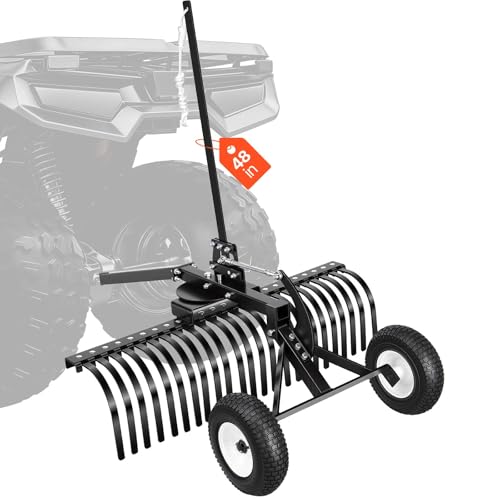
The VEVOR combines 24 steel tines with adjustable height and angle, giving it a more configurable setup than the other rakes. It has a 48-inch working width and includes wheels; its features also describe a 2-inch hitch opening and compatibility with ATVs, UTVs and utility tractors. The maker presents it for leaves, debris, moss, thatch and soil leveling. At 121.25 pounds, it is substantially heavier than the other models with weights, so consider your tow vehicle and storage arrangements. Adjustment helps tune the rake, but does not turn it into a branch-carrying attachment.
Bottom line: Choose it if height and angle adjustments matter and your vehicle can handle its weight.
Choosing a pull-behind rake for sticks
Match tine style and working width to the material and space rather than choosing by width alone. Rigid or spring steel tines can gather loose yard debris, while reel-style tine wheels are suited to combing material into rows. A 48-inch rake is easier to route through narrow areas than a 60-inch rake; measure gates and the tightest turn before selecting a wide tool. Sticks that are too large to pass between or flex the tines can snag the rake, so hand-pick bulky branches first. Use a simple rule: if the route is narrower than the rake plus clearance on both sides, select a narrower model or change the route.
Hitch fit and tow vehicle match
Confirm the hitch connection before comparing rake widths: receiver-style attachments need a compatible receiver, while tractor three-point systems use a different connection. The 48-inch receiver model specifies a standard 2-inch receiver, and the VEVOR gives a 2-inch opening and a pin size; check those dimensions against your vehicle. Tow rating and hitch height matter too, especially with a heavy attachment. Clear loose people, pets and objects from the work path, keep the rake low while moving, and stop before inspecting a snag. Never reach into tines while the attachment can move; disconnect or secure it first.
Comparing tine rake styles
Landscape rakes with rows of steel tines and reel-style acreage rakes do different work. Steel-tine models are built to rake across a surface, while tine wheels comb and can direct loose material into windrows. For stick cleanup, the useful distinction is whether the material is loose enough to gather without wedging in the tines. Use the table as a starting point, then match the hitch and width to the actual path.
| Yard need | Rake style to consider |
|---|---|
| Open ground and broad debris passes | Wide steel-tine rake |
| Narrow paths or tighter turns | 48-inch rake |
| Loose material gathered into rows | Reel-style tine rake |
| Need to tune working position | Height- and angle-adjustable rake |
Safe cleanup and routine care
Use a walking-speed pace on smooth ground and reduce speed over ruts, stones and roots; an abrupt impact can load the hitch and tines. Pick up large branches and rocks first, since a pull-behind rake is not a brush grapple or a trailer. Before each session, check the hitch pin, frame, wheels if fitted, and tines for looseness, cracks or bending. Replace damaged tines before work, and clear packed grass or twigs only after the attachment is disconnected and stable. Store steel attachments dry and remove caked soil to limit corrosion.
Frequently Asked Questions
Can a pull-behind rake pick up large sticks?
Pull-behind tine rakes are better suited to loose debris and smaller sticks than bulky branches. Hand-pick branches that can bridge across the tines or snag the frame before towing.
How wide should a yard rake be?
Choose a rake narrower than the tightest gate or path, leaving room to turn without striking fences or trees. A 48-inch model fits tighter routes more readily than a 60-inch model.
Can I tow a landscape rake with an ATV?
Several of these rakes are described for ATV use, but hitch type and vehicle capacity still need to match. Check the rake connection and your ATV’s towing limits before attaching it.
What is the difference between a tine rake and a reel rake?
A steel-tine rake drags rows of tines across the ground, while a reel-style rake uses rotating tine wheels to comb loose material. Reel rake features may allow one side to be lifted to direct a windrow.
How should I inspect a pull-behind rake?
Before each use, inspect the hitch pin, frame and tines for looseness, cracks or bending. Disconnect and stabilize the rake before clearing trapped sticks or grass.