
Ellora Farms Olive Oil: 4 Options Compared by Origin

Ellora Farms olive oil is best matched by its Crete origin and package quantity: choose the Sitia tin for that region or a Kolymvari option for its estate origin. The four options differ in origin claims and pack counts, so check those against how much oil you use and store.
We earn a commission if you buy through links on this page. As an Amazon Associate I earn from qualifying purchases. Products are compared on manufacturer specifications, not hands-on testing.
- Best overall: Ellora Farms Kolymvari EVOO, 2-Pack – It combines a Kolymvari single-estate origin with two 33.8-ounce containers.
- Best for Sitia origin: Ellora Farms Sitia EVOO Tin, 1 L – This 33.8-ounce tin names the Sitia region of Crete.
- Best for larger households: Ellora Farms Kolymvari EVOO, 4-Pack – Four 33.8-ounce tins make it the largest pack in this selection.
| Product | Best for | Origin | Pack count | Shop |
|---|---|---|---|---|
| Ellora Farms Kolymvari EVOO, 2-Pack | Kolymvari origin | Kolymvari, Crete | 2 | Check Price on Amazon |
| Ellora Farms Crete EVOO, 1 L | Single container | Crete | 1 | Check Price on Amazon |
| Ellora Farms Sitia EVOO Tin, 1 L | Sitia origin | Sitia, Crete | 1 | Check Price on Amazon |
| Ellora Farms Kolymvari EVOO, 4-Pack | Four-container stock | Kolymvari, Crete | 4 | Check Price on Amazon |
Ellora Farms olive oil options
Compare the origin and package quantity to find the Ellora Farms extra virgin olive oil that fits your pantry.
Ellora Farms Kolymvari EVOO, 2-Pack

This option names the Kolymvari region and comes as two 33.8-ounce containers, making it distinct from the single-container options and Sitia tin. Ellora Farms says the oil is single-origin and single-estate, harvested and bottled at source, and certified PDO. The numbered containers are described as part of a monitored procedure. Choose this pack if Kolymvari is your preferred stated origin and you will use or store two containers. Its larger combined quantity is less suitable if you want to open just one container and keep pantry stock minimal.
Bottom line: Choose it for a two-container pack with a Kolymvari origin.
Ellora Farms Crete EVOO, 1 L

This single 33.8-ounce container is the only Ellora option here whose features identify the oil as USDA Organic and Non-GMO certified. The maker also describes it as cold-pressed, unrefined, traceable, and made from Koroneiki olives, while the name identifies Crete as its origin. That combination suits a buyer prioritizing the certifications in one container. The maker does not identify a more specific Crete subregion, so choose another option if Sitia or Kolymvari is essential to your selection.
Bottom line: Pick it for one container and the organic and non-GMO certifications.
Ellora Farms Sitia EVOO Tin, 1 L
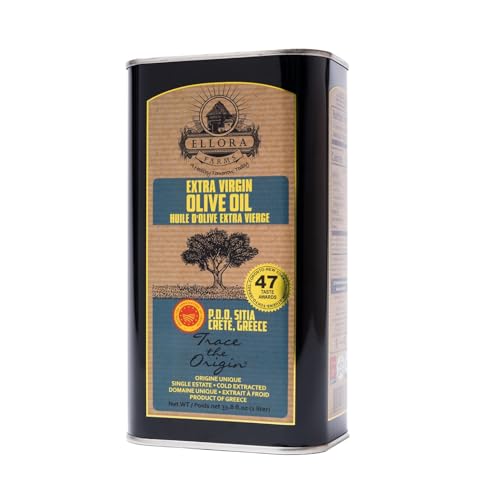
This option stands apart by naming Sitia, a region of Crete, and specifying a 1-liter tin. Ellora Farms says the oil is made exclusively from Koroneiki olives grown in Sitia, and describes it as cold-pressed, traceable, and high in phenols. The features also identify a QR code for tracing the oil to its estate. This is a strong match for buyers seeking the Sitia origin in a single tin. The other Ellora options name Kolymvari or Crete more broadly, so this is not the pick when those origins are the priority.
Bottom line: Choose it when Sitia origin and a single tin are your priorities.
Ellora Farms Kolymvari EVOO, 4-Pack

This is the largest pack in the group, with four 33.8-ounce tins, and its features name Kolymvari in Crete as the estate region. Ellora Farms says the oil is single-estate and PDO-certified; the maker describes a fruity aroma and peppery flavor. The multi-container quantity suits households that use olive oil regularly or want multiple unopened tins on hand. It requires more pantry space and is a poor fit for someone who wants to try a single container first. Its region differs from the Sitia tin option.
Bottom line: Pick this pack if you want four tins from the Kolymvari origin.
How to choose Ellora Farms olive oil
Start with the origin and quantity, because the options differ on both. The products here name Kolymvari, Sitia, or Crete without a subregion; choose Sitia only if that specific regional name matters, and choose a Kolymvari option for the Kolymvari origin. A liter is about 33.8 US fluid ounces, so the four-pack holds about 135.2 fluid ounces total. For a one-person kitchen or infrequent cooking, a single container limits the amount you need to store after opening; frequent cooks may find a multi-pack more practical. Extra virgin olive oil is mechanically extracted and must meet sensory and chemical criteria, not just carry an attractive origin claim. Treat origin, pack count, and certification as separate buying filters.
What PDO and extra virgin mean
PDO means Protected Designation of Origin, an EU scheme that ties a food to a defined area and production requirements; it is not interchangeable with a general country-of-origin claim. Extra virgin olive oil is the highest grade under the International Olive Council standard, with free acidity no higher than 0.8% and no sensory defects. Acidity is a laboratory measure, not a flavor rating. The Ellora options use different regional wording, so do not assume that a Crete-wide origin claim identifies the same area as Sitia or Kolymvari. A single-estate statement describes sourcing scope; it does not by itself establish a flavor preference. Choose the claim that matches the origin specificity you want, then compare package quantities.
How to store olive oil after opening
Olive oil keeps its quality best in a cool, dark cupboard, away from the stove, sunlight, and heat; heat, light, and oxygen speed oxidation. A commonly recommended kitchen practice is to use an opened bottle within about one to two months for best flavor, though the pace depends on temperature, exposure, and how often it is opened. Keep the cap closed between uses and pour only what you need. Avoid transferring oil into a clear decorative bottle that sits in daylight. Buy a pack size you can store properly and use while it still tastes fresh; a four-container pack works best when unopened tins can remain in a dark, cool place.
Choosing olive oil for cooking and finishing
Extra virgin olive oil works for dressings, dipping, sautéing, and many oven uses; the smoke point varies with freshness, free fatty acids, and refinement, so a single temperature does not apply to every oil. For high-heat frying, avoid letting oil smoke continuously: smoke signals breakdown and can create irritating fumes. Use fresh oil for uncooked dishes when its aroma and taste are most noticeable, and reserve older opened oil for routine cooking if it remains sound. Koroneiki is the named olive variety in several Ellora descriptions, but variety alone cannot guarantee a particular intensity or bitterness. Choose by origin and intended use rather than assuming that a polyphenol claim predicts how the oil will taste.
Frequently Asked Questions
How long does olive oil stay fresh after opening?
For best flavor, use opened olive oil within about one to two months. Heat, air, and light can shorten that window, so close the container promptly and store it in a cool, dark cupboard.
Can extra virgin olive oil be used for frying?
Yes, extra virgin olive oil can be used for many cooking methods, including sautéing and frying. Its smoke point varies with freshness and composition, so avoid heating it until it smokes continuously.
What does PDO mean on Crete olive oil?
PDO is the European Union’s Protected Designation of Origin scheme, linking a product to a defined area and specified production requirements. It is more specific than simply saying an oil comes from Greece.
Does a higher polyphenol claim mean stronger flavor?
Not necessarily; polyphenol content and perceived flavor are related but are not the same measure. Olive variety, harvest timing, and storage also influence bitterness and pungency.
How should olive oil be stored in a kitchen?
Store olive oil in a cool, dark cupboard with the cap closed, away from the stove and sunlight. Heat, light, and oxygen accelerate quality loss.