
Long Shelf Life Water: 3 Emergency Options Compared

For the longest storage period, choose Aqua Emergency Water, 24 Cans: its product name gives a 50-year shelf life, while Datrex Emergency Water, 64 Pouches and Puravai Emergency Water, 6 × 1 L have 5- and 20-year claims. Long shelf life water is packaged drinking water intended for emergency reserves; choose by the storage period and the amount you need.
Choose Datrex Emergency Water, 64 Pouches if compact individual pouches matter more than the longest period, or Puravai Emergency Water, 6 × 1 L if you prefer 1-liter bottles. Confirm the storage conditions and date guidance on the package before relying on any emergency supply.
We earn a commission if you buy through links on this page. As an Amazon Associate I earn from qualifying purchases. Products are compared on manufacturer specifications, not hands-on testing.
- Best overall: Aqua Emergency Water, 24 Cans – Its product name specifies a 50-year shelf life and the case contains 24 cans.
- Best for larger bottles: Puravai Emergency Water, 6 × 1 L – Six 1-liter bottles provide 6 liters in a bottle format.
- Best for compact kits: Datrex Emergency Water, 64 Pouches – The 64 individually packaged 125 mL pouches are compact and have a 5-year shelf-life claim.
| Product | Best for | Shelf-life claim | Package format | Total water | Shop |
|---|---|---|---|---|---|
| Aqua Emergency Water, 24 Cans | Longest period | 50 years | 24 × 12 fl oz cans | 2.25 gal | Check Price on Amazon |
| Puravai Emergency Water, 6 × 1 L | Bottled portions | 20 years | 6 × 1 L bottles | 1.59 gal | Check Price on Amazon |
| Datrex Emergency Water, 64 Pouches | Compact emergency kits | 5 years | 64 × 4.2 fl oz pouches | 2.11 gal | Check Price on Amazon |
Long shelf life water for emergency storage
Compare the storage periods, package formats and quantities before choosing a reserve.
Aqua Emergency Water, 24 Cans

For the longest storage period among these options, the product name gives Aqua a 50-year shelf life. The case contains 24 cans, each holding 12 fluid ounces, and the water is described as purified by reverse osmosis. Its can format suits a household reserve when you want individual, ready-to-open portions. The tradeoff is that 12-ounce cans provide less water per container than the 1-liter bottles in Puravai Emergency Water, 6 × 1 L, so a larger group will need more individual cans to distribute the same volume. The 50-year period is a maker claim, not a guarantee for every storage condition.
Bottom line: Choose this if the longest storage period is your main priority.
Puravai Emergency Water, 6 × 1 L

Unlike the cans and small pouches, Puravai Emergency Water, 6 × 1 L packages its water in six 1-liter bottles, totaling 6 liters. The maker gives it a 20-year shelf-life claim and describes the bottles as having twist caps. This format can suit a household or workplace kit where larger individual portions are easier to organize than many small sachets. The case contains less total water than Aqua Emergency Water, 24 Cans, and its storage period is shorter. Check the package date and storage guidance before placing it into a reserve intended to remain untouched for years.
Bottom line: Pick this if you prefer six larger bottles over cans or sachets.
Datrex Emergency Water, 64 Pouches
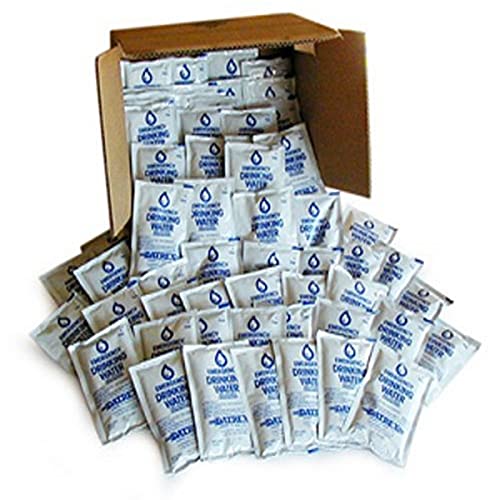
Datrex Emergency Water, 64 Pouches uses 64 individually sealed 125 mL pouches, making it the smallest portion format among these choices. Its maker states a 5-year shelf life and describes the pouches as lightweight, compact and intended for emergency use. The pre-measured portions can fit kits where carrying or distributing many smaller units is useful. The tradeoff is the shorter stated storage period compared with Aqua Emergency Water, 24 Cans and Puravai Emergency Water, 6 × 1 L; this option calls for more frequent date checks if kept as a long-term reserve. The case holds about 2.11 gallons in total.
Bottom line: Choose this for compact, individual emergency portions and plan to check its date sooner.
How much emergency water to store
Plan on at least 1 gallon of water per person per day for drinking and basic sanitation, and keep a minimum three-day supply when possible. Hot weather, illness, pregnancy, physical activity and pets can raise actual needs, so a household with those factors should plan beyond the baseline. A case of 2.25 gallons, for example, is only a portion of a one-person three-day reserve. Use the total volume—not the number of containers—to compare cases. Keep drinking water separate from water reserved for washing, and store the supply where household members can reach it without moving heavy items. Replace or supplement the reserve as household size and needs change.
How to compare shelf-life claims
A shelf life is useful only alongside package condition and storage guidance. Keep emergency water in a cool, dry place away from direct sunlight and chemicals; heat and sunlight can stress packaging over time. Do not treat a long claim as a reason to ignore dates or package damage: inspect seals and containers periodically, and set a reminder to review the supply at least once a year. A damaged, leaking or swollen container should not be relied on for drinking water. Before choosing a multi-year reserve, check that the package carries a clear storage period and any conditions that affect it. The product claims here differ substantially, so match the period to how often you are willing to inspect and rotate stored supplies.
Cans, bottles and pouches compared
Package format determines portion size, storage convenience and how much water each unit provides. Use this guide to match the container to the people and kit you are preparing.
| Format | Useful when | Tradeoff |
|---|---|---|
| 12-ounce cans | You want ready-to-open portions | More containers for a large supply |
| 1-liter bottles | You prefer larger individual portions | Bottles take more room per unit |
| 125 mL pouches | Compact, pre-measured units matter | Many pouches are needed for a larger serving |
For a household with limited storage, compare case dimensions and weight as well as total gallons; those measurements can determine whether the reserve fits a closet, vehicle or evacuation kit. For shared use, larger portions may mean fewer packages to open, while small pouches can be easier to hand out individually.
Safe storage and inspection
Keep water sealed until needed, and inspect emergency containers at least annually for leaks, damaged seals, swelling or unusual appearance. Store the supply off the floor when flooding is possible and away from fuels, pesticides and other chemicals that could contaminate packaging. Never rely on a package that is leaking or has a broken seal, even if its printed storage period has not elapsed. Store enough water for the people who may actually be present, including pets; one gallon per person per day is a planning baseline, not a ceiling. Rotate any water whose package guidance calls for a shorter period, and keep a separate supply for sanitation so drinking water is not consumed for cleanup.
Frequently Asked Questions
How many gallons of water should one person store?
A practical baseline is at least 1 gallon per person per day for drinking and basic sanitation. Keep at least three days on hand when possible, and increase the amount for heat, illness, activity or pets.
Can emergency water be stored in a hot car?
A hot car is not a good place for a long-term water reserve because heat can stress packaging. Store emergency water in a cool, dry place away from direct sunlight, and check the package guidance before using any supply exposed to high temperatures.
How often should stored water be inspected?
Inspect packaged emergency water at least once a year for damaged seals, leaks, swelling or other visible changes. Follow the package’s storage-period guidance rather than assuming every sealed container remains suitable indefinitely.
What should I do with a leaking water container?
Do not rely on a leaking container for drinking water, since a compromised seal can allow contamination. Replace it with an intact supply, and keep emergency water away from fuels and cleaning chemicals.