
Vivitar 4K Digital Camera and Alternatives Compared

The Vivitar 4K camcorder suits people who want a flip touchscreen and infrared night vision alongside 4K recording. Choose another model if you prefer a compact photo camera, optical zoom or a different screen setup.
These options range from camcorders to point-and-shoot cameras; 4K UHD video is 3,840 by 2,160 pixels, while digital zoom enlarges the image electronically rather than using optical magnification.
We earn a commission if you buy through links on this page. As an Amazon Associate I earn from qualifying purchases. Products are compared on manufacturer specifications, not hands-on testing.
- Best overall: Vivitar 4K Camcorder – Combines 4K recording, a rotating 3-inch touchscreen, infrared night vision, Wi-Fi and remote control.
- Best for included accessories: ZYDIIE 4K Camcorder – Includes a 32GB card and two batteries, along with 4K video and a rotating touchscreen.
- Best for compact photography: Duluvulu 4K Compact Camera – Offers autofocus, a 180-degree flip screen and 16X digital zoom in a compact camera.
| Product | Best for | Video resolution | Zoom | Screen | Shop |
|---|---|---|---|---|---|
| Vivitar 4K Camcorder | Night vlogging | 4K UHD | 18X digital | 3-inch rotating touchscreen | Check Price on Amazon |
| ZYDIIE 4K Camcorder | Extra accessories | 4K UHD | 18X digital | 3-inch 270-degree touchscreen | Check Price on Amazon |
| Duluvulu 4K Compact Camera | Compact selfies | 4K | 16X digital | 3-inch 180-degree flip screen | Check Price on Amazon |
| Kodak PIXPRO FZ45 | Optical zoom | 1080p Full HD | 4X optical | 2.7-inch LCD | Check Price on Amazon |
| 8K Digital Camera | Higher resolution modes | 8K; 4K at 30 fps | 20X digital | 3.5-inch 180-degree flip screen | Check Price on Amazon |
Vivitar 4K Digital Camera Options
Compare the recording formats, zoom systems and screens to match a camera to the way you shoot.
Vivitar 4K Camcorder

The Vivitar option is the only Vivitar model here, and its infrared night vision distinguishes it from the other choices. It records 4K UHD video, captures 56MP stills and has a rotating 3-inch touchscreen for framing yourself or reviewing clips. Wi-Fi app control and an included remote add ways to control or transfer footage. Its 18X zoom is digital, not optical, so it enlarges the image electronically; choose another camera if optical magnification matters more than night recording and a selfie-facing screen.
Bottom line: Pick this if you want infrared night vision and a rotating screen for 4K vlogging.
ZYDIIE 4K Camcorder
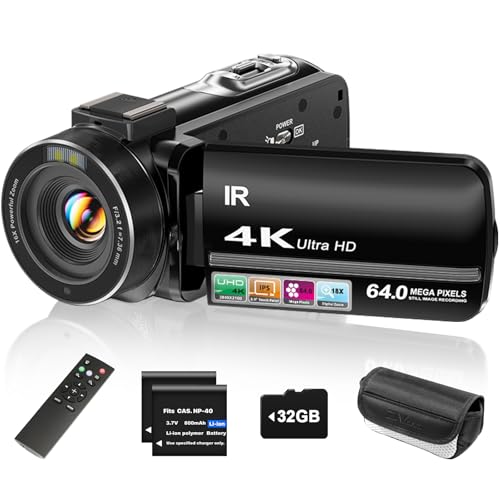
The ZYDIIE camcorder bundles a 32GB card and two batteries, making it the accessory-focused alternative to the Vivitar. It records 4K video, offers 64MP stills and has an 18X digital zoom with a 3-inch touchscreen that rotates 270 degrees. The features also describe infrared night vision. A digital zoom enlarges the picture electronically rather than providing optical reach, so it may not suit buyers who want a lens to magnify distant subjects.
Bottom line: Choose this if the included memory card and second battery matter to your setup.
Duluvulu 4K Compact Camera

The Duluvulu is a compact photography camera rather than a camcorder, with autofocus and a 180-degree flip screen for selfies or vlogging. It captures 4K video and 48MP stills, and includes a 16X digital zoom. The smaller zoom figure separates it from the two 18X camcorders, but neither figure indicates optical magnification. Choose this model if you want a compact camera with autofocus; look elsewhere if infrared night vision is essential.
Bottom line: Pick this for compact photography with autofocus and a selfie-facing screen.
Kodak PIXPRO FZ45

The Kodak PIXPRO FZ45 is the only option here with optical zoom: its 4X lens magnifies through the optics instead of digitally enlarging the image. It has a 27mm wide-angle lens, a 2.7-inch LCD, a 16MP sensor and records 1080p Full HD video rather than 4K. It uses two AA alkaline batteries and supports Class 10 SD, SDHC or SDXC cards up to 512GB. Choose it for optical framing and straightforward family photos, not 4K capture.
Bottom line: Choose this if optical zoom matters more than 4K video.
8K Digital Camera

The 8K camera offers a higher top video mode than the Vivitar, with additional 4K recording at 30 fps and a 3.5-inch 180-degree flip screen. Its features include 96MP stills, autofocus, Wi-Fi transfer and 20X digital zoom. The zoom is electronic rather than optical, so it does not add lens reach. Choose this model if you want the option of 8K recording and wireless transfers; the Vivitar is the named-brand match for shoppers specifically seeking Vivitar.
Bottom line: Pick this if 8K mode and a larger flip screen are priorities.
How to choose a 4K digital camera
Start with the recording format and the kind of framing you need. 4K UHD is 3,840 × 2,160 pixels; a camera advertising 8K may also offer 4K, but check the specific frame rate when motion matters. Optical zoom uses lens movement, while digital zoom crops or enlarges the image electronically. If you regularly film distant subjects, prefer optical zoom; if a selfie-facing screen or night recording matters more, prioritize the screen orientation or infrared feature instead. Still-photo megapixels do not establish video resolution, so compare those as separate capabilities.
Battery and storage affect how long you can record away from an outlet. A 32GB card is included with one camcorder in this group, while another camera supports SD-family cards up to 512GB. As a practical rule, bring spare batteries for a full day of recording, and verify card compatibility and capacity before a long shoot.
Digital zoom and optical zoom compared
Optical zoom changes magnification through the lens; digital zoom enlarges a crop of the image. That difference matters more than the X number when you need detail at a distance. Among these choices, only the Kodak has optical zoom, at 4X; the others specify digital zooms from 16X to 20X or do not give a zoom type.
Use this quick guide to choose by shooting need rather than comparing unlike zoom figures.
| Need | What to prioritize | Why |
|---|---|---|
| Distant subjects | Optical zoom | Magnifies with the lens rather than enlarging a crop |
| Self-recording | Rotating or flip screen | Lets you see framing from in front of the camera |
| Dark scenes | Infrared night vision | Designed for recording after dark |
| High-resolution video | Confirm the mode and frame rate | Resolution options may have different frame rates |
Flip screens, focus and camera size
A flip or rotating screen helps when the lens faces you, but rotation angles differ: a screen that flips 180 degrees and one that rotates 270 degrees are not interchangeable specifications. Check whether the screen can face forward in the position you use for vlogging. Compact point-and-shoot cameras can suit travel and everyday photos, while camcorders emphasize video capture and controls.
Autofocus is useful when subjects or camera distance change, but the word alone does not establish tracking speed or low-light performance. For a moving subject, test focus behavior before relying on it for an important recording. Match the camera type to your main use instead of assuming a higher megapixel figure means better video.
Night recording and safe camera handling
Infrared night vision is a distinct feature from a standard flash: the Vivitar and ZYDIIE camcorders describe infrared recording, while the 8K camera describes a flash for low light. Check whether monochrome infrared footage suits the scene before choosing it for night work.
Long recordings can warm camera bodies and drain batteries faster than short clips. Keep ventilation openings clear, avoid leaving battery-powered cameras in hot cars, and carry charged spares for extended sessions. If filming people in private settings, get permission and observe local privacy rules.
Frequently Asked Questions
What resolution is 4K UHD video?
4K UHD video measures 3,840 by 2,160 pixels. Frame rate is a separate setting, so check both resolution and frames per second for fast action.
Is digital zoom as good as optical zoom?
No: optical zoom magnifies through the lens, while digital zoom enlarges a crop of the image. For distant subjects, prefer an optical zoom when available.
Can infrared night vision record in color?
Infrared night vision commonly produces monochrome footage rather than ordinary color video. Confirm the mode behavior for the specific camera before choosing it for a color-critical scene.
How much memory does a 4K camera need?
Storage use depends on the camera’s bitrate and clip length, so there is no single capacity that fits every recording plan. Bring a compatible spare card for longer shoots and confirm the camera’s supported card format and maximum capacity.
Do more megapixels mean better video?
No: still-photo megapixels and video resolution measure different output formats. Compare the camera’s actual video modes and frame rates for moving footage.