
Medicube Deep Vita C Capsule Cream Compared

Medicube Deep Vita C Capsule Cream, 1.94 oz is the closest match for shoppers seeking Medicube Deep Vita C Capsule Cream because it is the standalone 1.94-ounce cream with 5% niacinamide and 50% sea buckthorn extract.
Choose Medicube Deep Vita C Serum & Cream Duo if you want a serum-and-cream routine, or Medicube Deep Vita C & PDRN Duo or Medicube TXA & Deep Vita C Capsule Duo if you want a second moisturizer in the set; those bundles are not the single cream alone.
We earn a commission if you buy through links on this page. As an Amazon Associate I earn from qualifying purchases. Products are compared on manufacturer specifications, not hands-on testing.
- Best overall: Medicube Deep Vita C Capsule Cream, 1.94 oz – The standalone 1.94-ounce cream contains 5% niacinamide and 50% sea buckthorn extract.
- Best for serum pairing: Medicube Deep Vita C Serum & Cream Duo – Pairs the capsule cream with a matching Deep Vita C capsule serum.
- Best for TXA pairing: Medicube TXA & Deep Vita C Capsule Duo – Combines Deep Vitamin C cream with a TXA moisturizer for a two-product routine.
| Product | Best for | Format | Key actives | Shop |
|---|---|---|---|---|
| Medicube Deep Vita C Capsule Cream, 1.94 oz | Cream-only routine | Gel cream | 5% niacinamide; 50% sea buckthorn | Check Price on Amazon |
| Medicube Deep Vita C & PDRN Duo | PDRN moisturizer set | Cream duo | 5% niacinamide; PDRN | Check Price on Amazon |
| Medicube Deep Vita C Serum & Cream Duo | Serum and cream | Serum-and-cream duo | Vitamin C capsules | Check Price on Amazon |
| Medicube TXA & Deep Vita C Capsule Duo | TXA moisturizer pair | Moisturizer duo | TXA; 5% niacinamide | Check Price on Amazon |
Medicube Deep Vita C Capsule Cream Options
Compare the standalone cream with related capsule-care sets by format and formula.
Medicube Deep Vita C Capsule Cream, 1.94 oz

Medicube Deep Vita C Capsule Cream, 1.94 oz is the only standalone cream in this group, making it the direct choice when you do not want to add a serum or second moisturizer. Its capsule-and-gel format lets you adjust the blend, and the formula includes 5% niacinamide, 50% sea buckthorn extract, and pure vitamin C. Medicube says skin radiance improved 34.8% immediately and 32.6% after 24 hours; these are the maker’s claims, not a guarantee for an individual. The 1.94-ounce jar suits a cream-focused routine, but buyers wanting a coordinated serum should consider a set instead.
Bottom line: Choose this for the standalone capsule cream without an added serum or moisturizer.
Medicube Deep Vita C & PDRN Duo

Medicube Deep Vita C & PDRN Duo adds a PDRN capsule moisturizer alongside the Deep Vitamin C cream, so it is a two-moisturizer set rather than a single-jar purchase. The vitamin C formula shares the capsule-and-gel blend concept and includes 5% niacinamide and 50% sea buckthorn extract; its companion formula is described as salmon DNA PDRN for firming and hydration care. That pairing may suit someone building a two-step moisturizer routine around different formulas.
Bottom line: Pick this if you specifically want the PDRN moisturizer paired with the vitamin C cream.
Medicube Deep Vita C Serum & Cream Duo
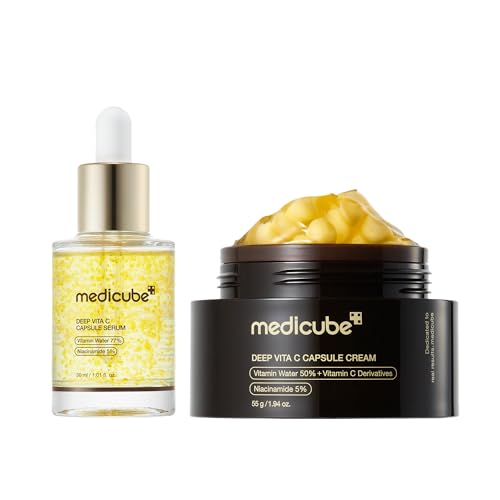
Medicube Deep Vita C Serum & Cream Duo is the serum-layering option: it pairs a Deep Vita C capsule serum with the capsule cream rather than supplying the cream by itself. The capsule format is intended to dissolve on contact, while the set combines a fast-absorbing serum with a customizable cream blend. It fits a routine that already uses a serum step and wants matching vitamin C products. The serum amount and exact active percentages for this duo are not included, so shoppers comparing potency or amount with the single cream should verify those before buying.
Bottom line: Choose this when you want a matching vitamin C serum and cream together.
Medicube TXA & Deep Vita C Capsule Duo

Medicube TXA & Deep Vita C Capsule Duo pairs the Deep Vitamin C capsule cream with a TXA moisturizer, giving it a different second formula from the PDRN set. Its vitamin C cream includes 5% niacinamide and 50% sea buckthorn extract, while TXA is the distinguishing ingredient in the companion moisturizer. The feature description characterizes the duo as a daily moisturizer set with a lightweight, non-sticky finish and says it is designed for all skin types. Because the product is a pair rather than one cream, it is less suited to someone who only needs a replacement jar.
Bottom line: Choose this for the vitamin C cream paired with a TXA moisturizer.
How to choose a vitamin C cream
For a first vitamin C cream, choose a single formula if you want to limit routine changes; add a serum only if you already use and tolerate a serum step. Vitamin C formulas can vary from pure L-ascorbic acid to derivatives, and L-ascorbic acid is most stable in an opaque, airtight package at a low pH, commonly below 3.5. Capsules can help separate ingredients from the base until mixing, but they do not eliminate irritation risk. Start with use every other day, then increase only if skin tolerates it. If a formula causes persistent stinging or redness, stop using it rather than adding more active products.
How to introduce vitamin C into a routine
Apply vitamin C to clean, dry skin, then use moisturizer; in the morning, finish with broad-spectrum SPF 30 or higher. Sunscreen matters because vitamin C is not a substitute for UV protection. Introduce one new active product at a time and patch test a small area for several days, especially if skin is sensitive. A capsule-to-gel moisturizer lets the user vary the blend, but changing the ratio does not guarantee a more comfortable result. Keep vitamin C away from eyes and broken skin, and avoid layering multiple strong actives until tolerance is clear.
What capsule packaging changes
Capsule-and-gel creams separate the visible capsule material from a gel base until the user blends them; the main practical difference is the mixing step, not a promise that a formula penetrates more deeply. Pure vitamin C can oxidize when exposed to air, light, or heat, so close the jar promptly and keep it in a cool, dry cabinet rather than a sunny bathroom shelf. Color changes can signal oxidation, though a slight natural tint may come from botanical ingredients. Do not assume a capsule format makes an active product suitable for every skin type; concentration and the rest of the formula still matter.
How long to assess a tone-care routine
Give a new tone-care routine about 8 to 12 weeks of consistent use before judging gradual appearance changes, while immediate hydration or radiance claims describe a different timeframe. Take a baseline photo in similar lighting and avoid switching several products at once, which makes it harder to know what affected the skin. If a cream is used in the morning, pair it with SPF 30 or higher and reapply sunscreen about every two hours outdoors. A product’s test results do not predict an individual result, and persistent irritation is a reason to stop use rather than wait out the trial.
Frequently Asked Questions
Can vitamin C capsule cream be used every day?
Daily use may suit some people, but a new active cream is safer to introduce every other day first. Increase frequency only if the skin remains comfortable, and stop if redness or burning persists.
Should vitamin C cream go on before moisturizer?
A vitamin C cream is itself a moisturizer, so it generally follows lighter watery products and precedes sunscreen in a morning routine. Use broad-spectrum SPF 30 or higher after it during daytime.
How should vitamin C capsule cream be stored?
Keep the jar tightly closed in a cool, dry place away from direct sunlight and heat. Light, air, and warmth can degrade vitamin C over time.
Can vitamin C cream irritate sensitive skin?
Yes, vitamin C and other actives can sting or irritate sensitive skin, especially when introduced alongside exfoliating acids or retinoids. Patch test first and add only one new active product at a time.
How long does vitamin C cream take to show results?
Hydration or surface radiance may look different sooner, while gradual tone changes commonly need about 8 to 12 weeks of consistent use. Daily sunscreen helps keep sun exposure from undermining a tone-focused routine.