
Sand Glow in the Dark: Types Compared by Use

For loose, reusable play sand, Glow Sensory Sand, 7.5 lb is the closest match because it is a 7.5-pound set of five glow-in-the-dark colors. Choose a craft kit instead if you want templates or bottles for making sand art, or pigment powder if your project needs a mix-in rather than play sand.
We earn a commission if you buy through links on this page. As an Amazon Associate I earn from qualifying purchases. Products are compared on manufacturer specifications, not hands-on testing.
- Best overall: Glow Sensory Sand, 7.5 lb – Five colors arrive in five 1.5-pound bags for sensory bins and sand tables.
- Best for group bottle crafts: 12-Pack Glow Sand Art Kit – The set includes 12 bottles, funnels, sticks and 60 bags of colored sand.
- Best for guided designs: JOVA Klever Kits Sand Art Set – Six themed boards and four blank sheets support both guided and open-ended crafts.
- Best for mixing into mediums: Green Glow Pigment Powder, 4 oz – The 4-ounce green powder is described as mixable with most clear mediums.
| Product | Best for | Format | Colors | Quantity (lb) | Shop |
|---|---|---|---|---|---|
| Glow Sensory Sand, 7.5 lb | Sensory bin play | Loose sensory sand | 5 colors | 7.5 lb | Check Price on Amazon |
| 12-Pack Glow Sand Art Kit | Group bottle crafts | Bottle craft kit | Colorful sand | — | Check Price on Amazon |
| JOVA Klever Kits Sand Art Set | Template-led crafts | Template craft kit | 14 colors | — | Check Price on Amazon |
| Green Glow Pigment Powder, 4 oz | Clear-medium projects | Pigment powder | Green | 0.25 lb | Check Price on Amazon |
| Green Glow Rocks, 250 g | Small décor projects | Resin pebbles | Green | 0.55 lb | Check Price on Amazon |
Glow in the Dark Sand Options
Choose between loose play sand, guided craft kits, decorative pieces and pigment powder based on how you plan to use it.
Glow Sensory Sand, 7.5 lb

For loose sand play rather than a craft activity, this set provides five colors in five separate 1.5-pound bags, totaling 7.5 pounds. The maker says the sand glows after exposure to light and is intended for sensory bins, sand tables and classroom activities. Separate bags help keep colors apart between sessions. The set suits buyers who need a larger quantity of play material; it does not include craft bottles, templates or other sand art tools. For sand tables, choose a stable, washable container and supervise children so sand is kept out of mouths and eyes.
Bottom line: Pick this for loose, multicolor sensory play in a bin or sand table.
12-Pack Glow Sand Art Kit

For making individual sand art bottles, this kit differs from loose sensory sand by including 12 bottles, funnels and sticks alongside 60 bags of colorful sand. The maker says the creations glow after dark. Its 12-bottle format suits a group activity or a project where each child can layer a separate design. Unlike a bulk refill, it is organized around finished bottle crafts, so it is less suited to filling a large sensory bin. Keep the small sand portions away from young children who may put craft materials in their mouths.
Bottom line: Choose this for a group making individual layered sand bottles.
JOVA Klever Kits Sand Art Set

For guided picture-making, this kit stands apart with six pre-cut themed boards and four blank sheets, rather than bottles or bulk sand for a sensory table. It includes 14 colors, including two glow-in-the-dark colors, and a tray for the activity. The maker recommends it for ages 5 and up. This format suits children who want a ready-made outline and some room to create their own designs. It is not a large-volume play-sand refill, and only two of its 14 colors are identified as glow-in-the-dark.
Bottom line: Pick this for children who want themed outlines plus a few glow colors.
Green Glow Pigment Powder, 4 oz

For a project that needs a powder to mix into a medium, this is different from ready-to-play sand or a children’s craft kit. The product is green, comes in a 4-ounce quantity and is described as UV black-light reactive and mixable with most clear mediums. The maker claims a 30–40-hour glow duration and lists strontium aluminate with europium and dysprosium as its composition. It suits project makers who can choose and handle a compatible medium; it is not a loose sensory sand refill. Avoid breathing airborne powder during measuring and mixing.
Bottom line: Choose this when your project calls for pigment to blend into a clear medium.
Green Glow Rocks, 250 g
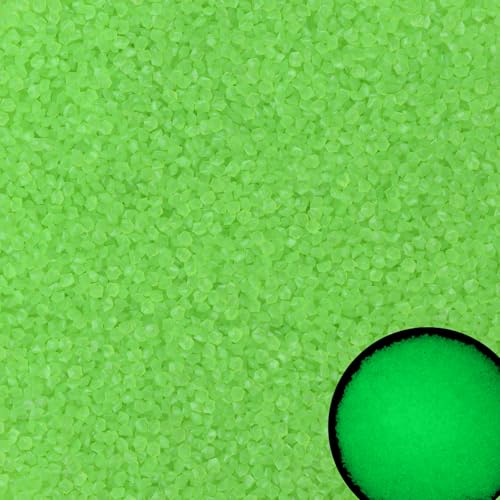
For small decorative projects, these are 3–5 mm resin pebbles rather than granular play sand or craft sand. The maker says they can recharge in sunlight or artificial light and glow for 3–5 hours; the suggested charging time is more than an hour. A 250-gram quantity suits small containers, terrariums or other miniature arrangements. The tiny pieces make this a poor choice for young children or any setting where pieces could be swallowed, and it is not a substitute for sensory sand. The maker also identifies aquarium use, but confirm material compatibility for any aquatic setup before use.
Bottom line: Pick these for miniature decorative arrangements, not children’s sand play.
How to Choose Glow in the Dark Sand
Start with the material and task: loose sensory sand is for bins and tables, sand art kits are for bottle or sheet crafts, and pigment powder is a project ingredient. Glow products need light exposure before dark use; a brighter charge generally comes from stronger light, though glow time varies with material and conditions. A useful rule is to choose a bulk set when you need more than a few small craft portions, and a kit when the tools or templates matter more than volume. Pebbles and powder are not interchangeable with play sand: check particle form and intended use before choosing. For small children, avoid tiny loose pieces that can be swallowed, and supervise craft and sensory play.
Glow Sand Formats and Uses
Format determines whether a product works for a specific activity: sand grains can be poured, craft kits organize them into designs, and pigment is meant to mix with a compatible medium. This comparison separates those jobs so a buyer does not mistake decorative pieces for a sensory refill.
| Format | Useful for | Check before choosing |
|---|---|---|
| Loose sensory sand | Bins and sand tables | Stated weight and color count |
| Sand art kit | Bottles, boards or sheets | Included tools, templates and glow-color count |
| Pigment powder | Mixing into a project medium | Medium compatibility and safe handling |
| Resin pebbles | Small decorative arrangements | Piece size and suitability for the setting |
Charging Glow Sand Before Use
Expose glow material to light before expecting it to shine in darkness; the resin pebble maker specifically recommends more than an hour under sunlight or artificial light. Phosphorescent materials store light energy and release it gradually, so glow fades rather than staying equally bright all night. Light intensity, distance and exposure time affect the result, and a short exposure may produce a weaker display. For displays, arrange or spread the material so light reaches more of its surface, then test the effect in a darkened space before relying on it for a planned activity. Black-light reactivity is a separate feature from ordinary charging and is only identified for the pigment powder here.
Safe Use for Children’s Sand Activities
Keep small craft sand and decorative pieces out of mouths, noses and eyes; small parts are a choking risk for children under 3. Adult supervision matters especially when activities use funnels, loose grains or 3–5 mm pebbles. Store leftovers in closed containers to limit spills and accidental access, and wash hands after play. Pigment powder calls for extra care because airborne dust can be inhaled while pouring or mixing, so handle it gently and avoid creating a cloud. Use only a medium suited to the powder and keep craft materials separate from food-preparation surfaces.
Frequently Asked Questions
How long does glow in the dark sand stay bright?
Glow duration depends on the material and how much light it receives before use. The decorative pebble maker claims 3–5 hours after charging, while the pigment maker claims 30–40 hours; these are product-specific claims, not a general duration for all glow sand.
Does glow sand need sunlight to charge?
No; the pebble maker says sunlight or artificial light can charge its resin pieces. More than an hour of exposure is recommended for those pieces, and a longer or stronger exposure can improve the glow.
Can glow sand be used in a sensory bin?
Loose sensory sand is the suitable format for a sensory bin; craft boards and pigment powder are designed for different jobs. Use a contained bin, supervise children, and keep sand away from mouths and eyes.
What is the difference between glow sand and glow pigment?
Glow sand is a loose granular material for play or pouring, while pigment powder is an ingredient intended to mix with a compatible medium. Choose powder for a project requiring a blend, and avoid inhaling dust during mixing.
Is glow sand safe for toddlers?
Loose grains and small decorative pieces can pose choking risks for children under 3, so keep them away from toddlers. Use age-appropriate activities with direct adult supervision.