
Mouse Sticky Pad Traps: 5 Options Compared

Tomcat Mouse-Size Glue Traps is the most direct match for mouse sticky pad traps because it is a mouse-size, ready-to-use board with eugenol-enhanced stickiness. Choose a larger tray or multipack instead if you need more boards or want the product’s specific tray dimensions.
Glue boards are adhesive traps placed along pest travel routes; they do not kill quickly, so choose a different control method if you need a more humane or hands-off approach.
We earn a commission if you buy through links on this page. As an Amazon Associate I earn from qualifying purchases. Products are compared on manufacturer specifications, not hands-on testing.
- Best overall: Tomcat Mouse-Size Glue Traps – Mouse-size boards with eugenol-enhanced stickiness and a six-trap pack.
- Best for larger rodents: LULUCATCH Larger Plastic Glue Traps, 12 Pack – The maker describes its heavier, larger plastic trays as intended for larger rodents.
- Best for bulk coverage: Catchmaster Max-Catch Glue Traps, 36 Pack – A 36-pack provides the most boards among these options.
| Product | Best for | Pack size | Board dimensions | Intended pests | Shop |
|---|---|---|---|---|---|
| Tomcat Mouse-Size Glue Traps | Mouse-size boards | 6 traps | 10 × 7.88 × 3.63 in | Mice, insects | Check Price on Amazon |
| LULUCATCH Mouse & Insect Traps, 12 Pack | Scented mouse boards | 12 traps | — | Mice, insects | Check Price on Amazon |
| LULUCATCH Larger Plastic Glue Traps, 12 Pack | Larger rodent trays | 12 traps | 10.6 × 4.5 × 5.5 in | Mice, rats | Check Price on Amazon |
| Catchmaster Max-Catch Glue Traps, 36 Pack | High-count coverage | 36 traps | 8.5 × 5.25 × 0.05 in | Mice, insects | Check Price on Amazon |
| Catchmaster Mouse Glue Traps, 16 Pack | Damp-area placement | 16 traps | 5.19 × 3.4 × 0.32 in | Mice, insects | Check Price on Amazon |
Mouse Sticky Pad Traps Compared
Compare these indoor glue-board options by their size, count and target pests.
Tomcat Mouse-Size Glue Traps

Tomcat Mouse-Size Glue Traps is the clearest mouse-specific choice here: the package contains six mouse-size glue traps, and the maker says its formula includes eugenol for enhanced stickiness. The ready-to-use boards are pesticide-free and can also capture cockroaches, spiders and scorpions. Place them along walls or in cupboards where rodent activity is suspected, such as kitchens, basements or garages. Their defined mouse-size format suits buyers who want a smaller pack rather than a bulk supply. The limitation is the six-board count, which may not cover several rooms or a larger area at once.
Bottom line: Choose this for a mouse-size, ready-to-use six-pack.
LULUCATCH Mouse & Insect Traps, 12 Pack

LULUCATCH Mouse & Insect Traps, 12 Pack stands out for its peanut-butter scent, unlike the other options whose product wording does not mention a scent. The 12-pack is aimed at small mice and insects including roaches and ants, and the maker describes the glue as non-toxic. That makes it a fit for buyers seeking scented boards for indoor household pests, rather than a mouse-only product. The maker gives no board dimensions, so compare the physical tray against the routes and spaces where you plan to place it before choosing. A scented attractant is not a substitute for putting boards where pests travel.
Bottom line: Pick this when a peanut-butter scent and 12-count pack matter.
LULUCATCH Larger Plastic Glue Traps, 12 Pack
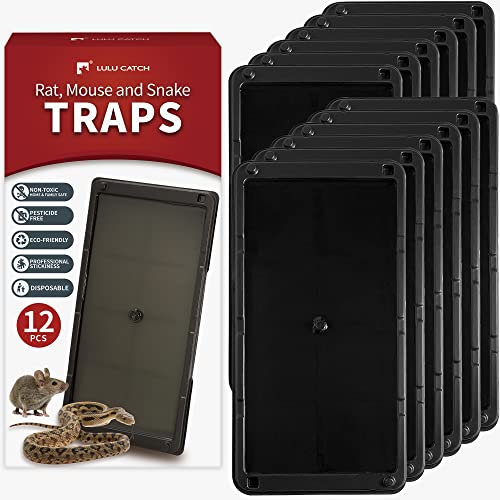
LULUCATCH Larger Plastic Glue Traps, 12 Pack differs from the mouse-size boards by using a larger, heavier plastic tray that the maker says is designed for larger rodents. Each tray measures 10.6 × 4.5 × 5.5 inches, and the 12-pack is pre-baited with peanut-butter scent. The maker also says the adhesive can withstand cold weather. This is the relevant alternative when larger tray dimensions matter, but the product is described for indoor use and its wider purpose includes rats, not only mice. Measure narrow passages first: a larger tray can be harder to position close to a wall or inside a confined space.
Bottom line: Choose this for a larger plastic tray and a 12-pack.
Catchmaster Max-Catch Glue Traps, 36 Pack

Catchmaster Max-Catch Glue Traps, 36 Pack offers the largest pack here, with 36 glue boards measuring 8.5 × 5.25 inches. The maker says the pesticide-free traps are intended for mice, rats and crawling pests including ants, roaches, spiders and crickets. They are designed for indoor placement along known or suspected rodent pathways, and the maker says boards in normal conditions can last up to a year. That longevity claim does not remove the need to inspect boards regularly for a catch or accumulated dust. These boards are a better fit for broad indoor coverage than for buyers who only need a few mouse traps.
Bottom line: Pick this when a 36-board supply is the priority.
Catchmaster Mouse Glue Traps, 16 Pack

Catchmaster Mouse Glue Traps, 16 Pack is the more compact Catchmaster option, with 16 boards measuring 5.19 × 3.4 inches. The maker says these pesticide-free traps suit damp or humid indoor areas such as basements and bathrooms, and can catch mice, crickets, roaches and other crawling pests. The maker also advises against adding bait because it decreases the trap’s effectiveness. That no-added-bait guidance distinguishes this choice from products sold with a scent. Its smaller footprint can suit tight routes, but the compact board provides less adhesive surface than the larger trays.
Bottom line: Choose this for compact boards in damp indoor areas.
How to choose mouse sticky pad traps
Start with target size and placement, then choose pack count. Glue boards work by holding an animal or insect that steps onto the adhesive; they do not snap shut. Boards are most useful on established travel routes, such as along a wall or behind an appliance, rather than in the middle of an open floor. For a narrow route, a board around 5 inches long is easier to position than a tray over 10 inches long; for broader coverage, a larger surface may intercept more of the path. Pack counts in this comparison range from 6 to 36. Choose a small pack for a contained problem and more boards only when you have multiple indoor routes to cover.
Where to place glue boards indoors
Place boards flush to walls and near signs of activity, since mice commonly travel close to edges rather than across open rooms. Kitchens, basements and garages are examples named for one mouse-size option; damp basements and bathrooms are named for another. Avoid locations where children or pets can reach the adhesive, and do not put boards where dust, water or routine foot traffic will foul them. A practical rule is to use a board only where it can lie flat and remain inaccessible to children and pets. Inspect placement frequently: a trapped animal can suffer, and a board covered in dust may stop functioning as intended. Glue traps are not a humane hands-off method.
Glue boards compared by size and purpose
Board dimensions and intended prey separate the choices more clearly than pack count alone. Smaller boards can fit tight paths, while a larger tray may suit a more open route or larger rodent target. The table compares dimensions stated for these products; confirm that the measured board will fit the exact spot you have in mind.
| Board size or format | Useful distinction | Example choice |
|---|---|---|
| 5.19 × 3.4 in | Compact board | Catchmaster Mouse Glue Traps, 16 Pack |
| 8.5 × 5.25 in | Mid-size glue board | Catchmaster Max-Catch Glue Traps, 36 Pack |
| 10.6 × 4.5 in | Larger plastic tray | LULUCATCH Larger Plastic Glue Traps, 12 Pack |
| Mouse-size format | Six-board pack | Tomcat Mouse-Size Glue Traps |
Measurements are most useful when paired with the route: length helps cover the direction of travel, while width determines whether the board fits beside a cabinet or wall.
How often to check sticky traps
Check glue boards at least daily rather than treating a long-lasting adhesive claim as permission to leave them unattended. Some manufacturers say a board can remain usable for up to a year in normal indoor conditions, but dust, moisture and a catch can make it ineffective much sooner. Frequent checks also reduce the time an animal remains stuck. Replace a board if its surface is dirty, wet or no longer tacky. Keep spare traps sealed until use so the adhesive is not exposed to lint or debris. If mouse activity continues despite well-placed boards, consider sealing entry gaps and removing food access; traps alone do not block a route into the home.
Frequently Asked Questions
Are sticky mouse traps humane to use?
Glue boards are not a humane hands-off method because an animal may remain stuck and suffer. Choose a different control method if avoiding prolonged restraint is important.
Should mouse glue boards have extra bait added?
Not every board needs added bait: one Catchmaster option says not to add bait because it reduces effectiveness, while two LULUCATCH options are pre-scented with peanut butter. Follow the guidance for the specific board you choose.
How far apart should mouse glue boards be placed?
There is no fixed spacing that fits every room; place boards along each separate wall route or area showing activity rather than using a universal interval. Add coverage where signs recur, and keep each board inaccessible to children and pets.
Can glue boards be used in a garage?
Yes, one mouse-size option names garages as a placement area when rodent activity is suspected. Keep boards flat, protected from dust and moisture, and out of reach of children and pets.
Do sticky mouse traps work in cold conditions?
One larger-tray option says its adhesive can withstand cold weather, but the products are otherwise described primarily for indoor use. For an unheated space, verify the intended temperature range before relying on the adhesive.