
Ozark Trail Camping Stove: 5 Models Compared by Fit

The Ozark Trail 2 Burner Camp Stove is the closest match for anyone seeking an Ozark Trail camping stove, with two independently controlled 10,000 BTU burners for cooking more than one item at once. Choose another stove if you need a smaller backpacking setup, a griddle, or different fuel compatibility.
We earn a commission if you buy through links on this page. As an Amazon Associate I earn from qualifying purchases. Products are compared on manufacturer specifications, not hands-on testing.
- Best overall: Ozark Trail 2 Burner Camp Stove – Two separately controlled 10,000 BTU burners provide a wider cooking surface for larger pots and pans.
- Best for backpacking: AOTU Portable Camping Stove – The compact stove weighs 0.24 lb and uses an adjustable valve for flame control.
- Best for griddle cooking: GasOne GS-1000G-KIT with Griddle – A nonstick diecast aluminum griddle comes with this butane stove.
| Product | Best for | Burners | Fuel | Weight | Shop |
|---|---|---|---|---|---|
| Ozark Trail 2 Burner Camp Stove | Two-pan cooking | 2 | 16.4 oz propane cylinder | 1.03 lb | Check Price on Amazon |
| Coleman Classic 1-Burner Butane Stove | Simple solo meals | 1 | 8.8 oz butane cylinder | 0.55 lb | Check Price on Amazon |
| Gas One GS-3400P Dual Fuel Stove | Fuel flexibility | 1 | 8 oz butane or 16.4 oz propane | 3.1 lb | Check Price on Amazon |
| GasOne GS-1000G-KIT with Griddle | Griddle meals | 1 | 8 oz butane | — | Check Price on Amazon |
| AOTU Portable Camping Stove | Light pack trips | 1 | — | 0.24 lb | Check Price on Amazon |
Ozark Trail camping stove and alternatives
Compare burner layout, fuel compatibility, and portability to choose a stove that fits your cooking setup.
Ozark Trail 2 Burner Camp Stove

The Ozark Trail model is the only two-burner option here, with two stainless steel burners rated at 10,000 BTU each and separate control knobs. Its extra-wide surface is intended for larger pots and pans, and a built-in handle helps with carrying. It uses a standard 16.4 oz propane cylinder, which is not included. This layout suits camp meals that need a pot and pan at the same time; the larger two-burner format matters less to solo campers who prioritize a compact packable stove.
Bottom line: Choose this for simultaneous pot-and-pan cooking with propane.
Coleman Classic 1-Burner Butane Stove
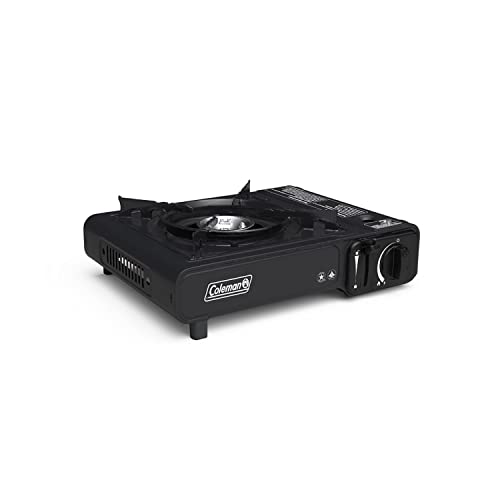
The Coleman is a single-burner butane option, unlike the Ozark Trail two-burner propane stove. Its adjustable burner produces 7,650 BTU, and the grate fits one 10-inch pan. The removable porcelain-coated grate and rust-proof aluminum burner are useful for cleanup, while a wind baffle shields the flame. Coleman says the stove runs up to 1.25 hours on high with one 8.8 oz butane cylinder, sold separately. It suits compact one-pan meals, but not cooks who need two burners or larger cookware.
Bottom line: Pick this for a lightweight one-pan butane setup.
Gas One GS-3400P Dual Fuel Stove
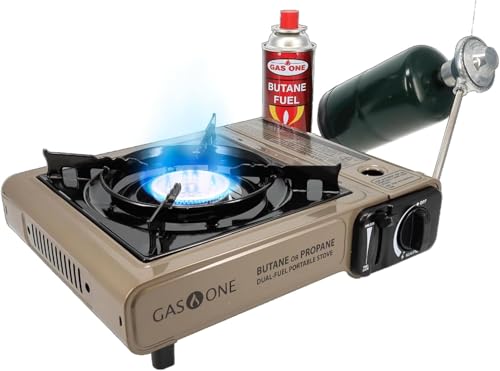
The GS-3400P stands apart by accepting either an 8 oz butane cartridge or a 16.4 oz propane cylinder, with a propane converter regulator included. Its automatic piezo ignition and adjustable heat dial provide match-free lighting and flame adjustment. A pressure sensor cartridge ejection system and gas-flow cutoff are built in for butane use. This single-burner stove can suit campers who want a choice of fuel formats, but its one-burner design cannot match the Ozark Trail model for cooking multiple dishes at once.
Bottom line: Choose it when the option to use butane or propane matters.
GasOne GS-1000G-KIT with Griddle

The GS-1000G-KIT includes a flat, nonstick diecast aluminum griddle, making it distinct from the Ozark Trail stove’s open two-burner surface. Its butane stove has piezo ignition and an adjustable heat dial, and the griddle is designed for breakfast foods or grilling. The 14-by-11.2-by-4.87-inch dimensions describe the stove kit. This setup suits cooks who want a griddle surface in a portable format; it is a less direct fit for meals that require two separate pots or pans.
Bottom line: Pick this if a dedicated griddle surface is the priority.
AOTU Portable Camping Stove

The AOTU is the lightest option at 0.24 lb and is described for camping and hiking, rather than as a two-burner camp kitchen stove. It has an adjustable control valve and four-dimensional support, with a 9.5 cm fire board that the maker says suits a 20 cm-diameter pot. Its burner is rated at 3,000 W. Fuel compatibility is not clear from the specifications, so confirm the fuel connection before ordering. The compact format suits hikers, but the small support surface is not for large cookware.
Bottom line: Choose it for a compact setup with a pot up to 20 cm.
Choosing a camp stove by burner layout
Choose a two-burner stove when you regularly cook a main dish and a side at the same time; a single burner is usually simpler for one-pot meals and smaller campsites. Burner count alone does not guarantee faster cooking: heat output, wind exposure, and pot diameter all affect how efficiently a stove transfers heat. Match pan bases to the grate or support surface, and keep flames from extending beyond cookware. For most camp use, a level, noncombustible surface reduces tipping risk and keeps cooking clear of dry grass and tent fabric.
Fuel format is another key decision. Butane canisters and propane cylinders are not interchangeable unless the stove is made for both; use only the fuel type and container specified for the stove. A windscreen can improve burner performance, but do not enclose a canister stove or place a wind barrier where it traps heat around the fuel container.
Matching cookware to a camp stove
Cookware fit depends on the burner spacing, grate size, and support arms, not just the advertised cooking area. A 10-inch pan is the largest fit stated for the Coleman single-burner model, while the AOTU maker says its 9.5 cm fire board supports a pot up to 20 cm in diameter. For a two-burner layout, measure the base of each pot and leave room for handles so they do not collide. With cookware wider than 10 inches on a compact single-burner stove, confirm the support surface before packing it.
Heavy pots need stable support. Center the pot over the burner, avoid shifting a loaded pan across a small grate, and do not use a pot that overhangs enough to make the stove unstable. Use the stove outdoors only; carbon monoxide from fuel-burning equipment can build up quickly in tents, vehicles, and enclosed shelters.
Propane and butane camp stoves compared
Propane and butane stoves differ in fuel containers, connectors, and cold-weather behavior. Butane canisters are compact, but butane vaporizes less readily in cold conditions; propane generally performs better as temperatures fall, though stove design still matters. A dual fuel stove needs the correct regulator or adapter for each fuel, and changing fuel types does not mean every container will fit.
The table compares the stove types represented in these options. Check that the container and regulator match the stove before lighting; never force a connection or use a damaged cylinder.
| Setup | Best fit | Tradeoff |
|---|---|---|
| Two-burner propane | Separate pot and pan | Wider format to transport |
| Single-burner butane | One-pan meals | One cooking vessel at a time |
| Dual fuel single burner | Choice of two fuel formats | Still one burner |
| Backpacking burner | Compact hiking kit | Smaller pot support |
Safe setup and stove care
Camp stoves must be operated outdoors because carbon monoxide is odorless and can be deadly in enclosed or partly enclosed spaces. Keep the burner away from tent walls, low branches, dry leaves, and other combustible material; allow clearance above the flame for pots and wind. A stable, level surface helps prevent spills and tip-overs, especially with a large pan on a small burner.
Before each use, check the hose, valve, and fuel connection for damage, and keep spare fuel away from heat. Let the stove cool fully before packing, then remove food residue from the grate or griddle so it does not burn onto the cooking surface next time. Do not attempt repairs to a leaking fuel connection; stop use and move the fuel container away from ignition sources.
Frequently Asked Questions
Can a camping stove be used inside a tent?
No, use a fuel-burning camp stove outdoors only. Carbon monoxide can accumulate in a tent or vehicle even when a door or window is partly open.
How large a pan fits a single-burner stove?
The cookware limit depends on the support surface and stability, not only burner size. One stove here is specified for a 10-inch pan, while another compact support is maker-rated for a 20 cm pot.
Does propane or butane work better in cold weather?
Propane generally vaporizes more reliably than butane as temperatures fall. Use only the container and fuel type compatible with the stove and regulator.
Can I use a windscreen with a canister stove?
A wind baffle can shield the flame, but do not enclose the fuel container or trap heat around it. Excess heat around a canister can create a serious hazard.