
Saw to Cut Baseboard: 4 Saw Types Compared

For most baseboard installation, Metabo HPT 10-Inch Compound Miter Saw is the best fit because its compound miter saw design and positive stops support repeatable angled cuts. Choose Hammerhead HAMT022 Oscillating Multi-Tool instead for flush cuts on installed trim, or CRAFTSMAN 12-Inch Hand Miter Saw and Box for manual cuts guided by a miter box.
Baseboard is trim installed along the bottom of a wall; the right saw depends on whether you are cutting loose pieces to length or trimming material already in place.
We earn a commission if you buy through links on this page. As an Amazon Associate I earn from qualifying purchases. Products are compared on manufacturer specifications, not hands-on testing.
- Best overall: Metabo HPT 10-Inch Compound Miter Saw – A 10-inch compound miter saw with positive stops suits repeatable angled cuts on loose trim.
- Best for installed trim: Hammerhead HAMT022 Oscillating Multi-Tool – The included flush-cut blade and compact oscillating design suit trimming close to a surface.
- Best for manual miters: CRAFTSMAN 12-Inch Hand Miter Saw and Box – The miter box guides hand saw cuts at 45- and 90-degree angles.
- Best for varied hand cuts: 8-in-1 Adjustable-Blade Hand Saw – Eight blades and a quick-change mechanism support several manual cutting tasks.
| Product | Best for | Cut style | Angle or blade details | Power | Shop |
|---|---|---|---|---|---|
| Metabo HPT 10-Inch Compound Miter Saw | Angled trim cuts | Compound miter | 10-inch blade; single bevel | 15 amps | Check Price on Amazon |
| Hammerhead HAMT022 Oscillating Multi-Tool | Installed trim cuts | Handheld oscillating | Flush-cut and semicircle blades | 2.2 amps | Check Price on Amazon |
| CRAFTSMAN 12-Inch Hand Miter Saw and Box | Manual miter cuts | Hand saw with miter box | 45° and 90° miters; 22.5° face angle | Manual | Check Price on Amazon |
| 8-in-1 Adjustable-Blade Hand Saw | Flexible hand sawing | Manual multi-blade hand saw | Eight blades; adjustable blade setup | Manual | Check Price on Amazon |
Saws to cut baseboard
Match the saw to whether the trim is loose or installed and whether the cut needs a guided angle.
Metabo HPT 10-Inch Compound Miter Saw
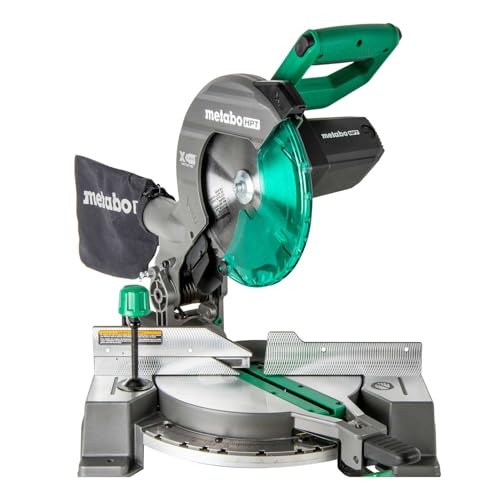
For cutting loose baseboard to length with angled ends, this 10-inch compound miter saw offers more angle control than the handheld options here. It has a single-bevel design, an improved miter scale, positive stops, a large work table, and a vice clamping system. Metabo HPT says its 15-amp motor reaches up to 5,000 RPM; the saw weighs 24.2 pounds. It suits trim work where repeatable cuts matter. Its single-bevel format may be less convenient when a project calls for bevels in both directions without repositioning the trim.
Bottom line: Choose this for repeatable angled cuts on loose baseboard.
Hammerhead HAMT022 Oscillating Multi-Tool
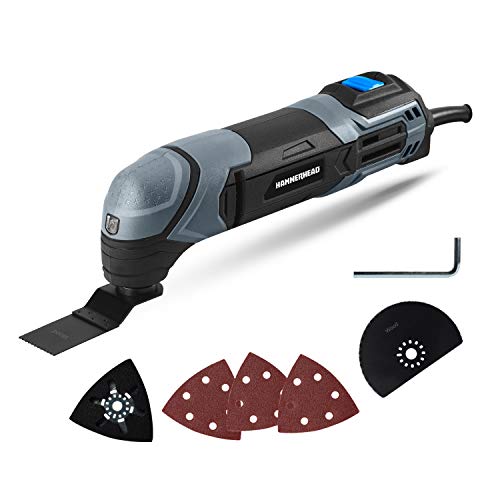
Unlike a stationary miter saw, this oscillating multi-tool is suited to close, localized cuts, including flush cuts with its included blade. It also comes with a semicircle saw blade, sanding pad, and three sanding papers, and its universal collet system accepts standard oscillating-tool accessories. Hammerhead says the 2.2-amp motor delivers up to 20,000 OPM; a variable-speed dial and LED light are built in. Choose it for adjustments near a wall or floor. It is not the natural choice for producing a stack of matching angled ends on loose trim.
Bottom line: Pick this for localized flush cuts or trim adjustments in place.
CRAFTSMAN 12-Inch Hand Miter Saw and Box

This hand saw-and-box set provides a guided manual alternative to a powered miter saw. Cam-shaped pins lock into the honeycomb base to secure the work, while the box guides 45- and 90-degree miter cuts and 45- and 22.5-degree face cuts for octagonal shapes. An extended base lip helps hold the box in place, and a saw stop helps limit cutting into the box. It suits occasional cuts or a workspace without a power saw. Manual cutting takes more effort, and the angles limit it compared with an adjustable powered saw.
Bottom line: Choose this for occasional guided cuts without powered equipment.
8-in-1 Adjustable-Blade Hand Saw

For buyers who want a manual saw with more than one blade option, this tool includes eight blades and a quick-change mechanism. The product features describe high-speed-steel blades, a lockback mechanism, and a non-slip TPR handle; the blades cover wood and other materials. It can serve for hand-cutting baseboard when the selected blade and cut are suitable. The broad blade assortment is the main difference from the dedicated miter-box set. Unlike a miter box, it does not provide a guide for holding trim at a set angle, so angled joints require a separate guide and careful layout.
Bottom line: Pick this for manual cutting when blade flexibility matters more than a built-in angle guide.
Choose a saw by the baseboard cut
For loose baseboard with angled ends, use a miter saw or a hand saw paired with a miter box; for a cut close to an installed surface, an oscillating tool is more suitable. Baseboard corners are commonly joined with a miter or a coped joint, and those methods need different cuts: a miter saw makes angled end cuts, while coping requires removing material along the profile. A straight crosscut is enough when a piece ends at a doorway or meets a square stop. Before choosing, identify whether the trim can be removed and clamped. With installed trim, avoid forcing a large saw into the wall-floor corner; check for hidden wiring or plumbing before cutting into a wall area.
Match the cut angle to the joint
For a typical 90-degree outside corner, two matching 45-degree cuts form the joint; an inside corner may instead be coped so the profile follows the adjoining piece. Wall corners are not always exactly 90 degrees, so measure the corner rather than assuming a perfect square. A bevel cut tilts the blade across the board thickness, while a miter changes the angle across the board face; baseboard corners usually need a miter, not a bevel. A single-bevel saw tilts in one direction, so flipping or repositioning trim may be needed for opposing bevel cuts. Dry-fit both pieces before fastening, especially when walls or trim profiles are uneven.
Compare baseboard saw types
The best tool depends on whether the trim is loose, whether the cut needs a set angle, and how close the cut is to a surface. A miter box guides a hand saw but requires manual effort; an oscillating multi-tool reaches localized flush-cut areas but is not designed here as an angle-cut station. Use this guide to match the tool to the task.
| Need | Suitable tool type | Why |
|---|---|---|
| Repeated angled ends on loose trim | Compound miter saw | Table support and angle controls help repeat cuts |
| Occasional guided angle cut | Hand miter saw and box | Slots guide the blade at set angles |
| Localized cut against a surface | Oscillating multi-tool | A flush-cut blade can work close to an adjoining surface |
| Varied manual sawing tasks | Multi-blade hand saw | Blade options suit different cut tasks |
Set up and cut baseboard safely
Secure loose trim before sawing, keep hands clear of the blade path, and support the offcut so it cannot pinch the blade. On a powered miter saw, clamp short or narrow workpieces instead of holding them close to the blade. Wear eye protection: sawdust and small chips can travel during cutting. For installed trim, first check the area for concealed cables or pipes, and stop if the cut would enter an unknown wall or floor cavity. Make a shallow test cut on scrap of the same profile when possible; a test confirms the orientation and fit before you cut the finished length.
Frequently Asked Questions
What saw angle cuts baseboard corners?
A 45-degree miter is the usual starting angle for a 90-degree outside corner, with one matching cut on each piece. Measure the actual corner because walls may not meet at exactly 90 degrees.
Can I cut baseboard while it is installed?
An oscillating multi-tool with a flush-cut blade can make localized cuts close to a surface. Before cutting installed trim, check for concealed wiring or plumbing and keep the blade path away from unknown cavities.
Should inside baseboard corners be mitered or coped?
Either method can work, but coping follows the profile of the adjoining trim and can handle imperfect corners more forgivingly. A miter uses matching angled ends, commonly 45 degrees at a square corner.
How do I prevent baseboard from moving while sawing?
Clamp loose trim to the saw table or secure it in a miter box before cutting. Keep the work supported on both sides of the cut so the offcut does not shift or bind the blade.
What is the difference between a miter and a bevel cut?
A miter changes the angle across the face of the board, while a bevel tilts the cut across its thickness. Most baseboard corner joints use a miter angle.