
Best Corsets for Lower Back Pain: 4 Braces Compared

BraceAbility Lumbar Support Belt is the strongest match for most people because its adjustable waist range spans 28 to 60 inches and its dual-pulley system lets you tune compression. Choose a different brace if you want a specific waist-size option or a product that highlights a knitted fabric and removable lumbar pad.
Back support corsets are lumbar braces that wrap the torso to add compression and limit some movement; they do not diagnose or treat the cause of back pain.
We earn a commission if you buy through links on this page. As an Amazon Associate I earn from qualifying purchases. Products are compared on manufacturer specifications, not hands-on testing.
- Best overall: BraceAbility Lumbar Support Belt – Its adjustable 28-to-60-inch waist range suits more body sizes than the other specified fits.
- Best for knitted fabric: FREETOO 3D Knitted Back Brace – Its 3D knitted construction includes a removable lumbar pad.
- Best for reinforced stays: TESETON Back Brace, Medium – It combines six reinforced bones with two elastic compression straps.
| Product | Best for | Waist fit | Support design | Construction | Shop |
|---|---|---|---|---|---|
| BraceAbility Lumbar Support Belt | Broad waist range | 28–60 in. | Dual-pulley system | — | Check Price on Amazon |
| FREETOO 3D Knitted Back Brace | Knitted construction | 33.4–40.5 in. | Removable lumbar pad | 3D knitted fabric | Check Price on Amazon |
| TESETON Back Brace, Medium | Six reinforced bones | 28–31 in. | 6 reinforced bones | — | Check Price on Amazon |
| Sparthos Adjustable Back Brace, Large | Lumbar pad | Large; range — | Vertical support stays | Breathable fabric | Check Price on Amazon |
Corsets for Lower Back Pain
Compare fit ranges and support features before choosing a lumbar brace for routine wear or activity.
BraceAbility Lumbar Support Belt

The 28-to-60-inch fit range is the widest specified here, making this adjustable belt the most flexible choice if a fixed size is a poor match. The maker describes it as an LSO brace with a dual-pulley system for adjusting compression, and the product is labeled FSA eligible. It is suited to adults or teens who want a broad size range and adjustable tension. The tradeoff is that the features do not identify a fabric or stay count, which matters if you are choosing primarily by material or a particular reinforcement style.
Bottom line: Choose this if a broad adjustable waist range matters more than a named fabric or stay configuration.
FREETOO 3D Knitted Back Brace

The 3D knitted fabric distinguishes this brace, while its medium size is specified for a 33.4-to-40.5-inch waist. The maker says the design includes a removable lumbar pad and a support system with one bionic bone lumbar panel, four memory-aluminum stays, and two flexible springs. That combination may suit someone whose priority is a defined reinforcement layout and a removable pad. The limitation is fit: the waist interval is narrower than the adjustable range of BraceAbility Lumbar Support Belt, so measure at the location the manufacturer specifies before selecting this size.
Bottom line: Pick this if your waist falls within its range and you want knitted fabric with a removable pad.
TESETON Back Brace, Medium
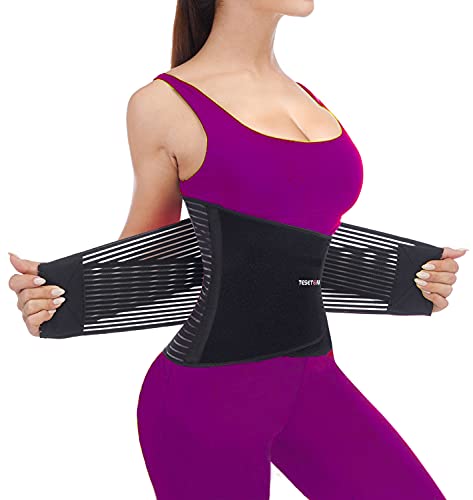
Six reinforced bones set this medium-size TESETON belt apart, with two elastic straps intended to add compression. Its waist fit is 28 to 31 inches, and its 39.4-inch length and 9.84-inch width describe a broad wrap-style belt. This option suits shoppers whose measured waist falls in that narrower interval and who specifically want multiple stays. Its main limitation is sizing: unlike the universal adjustable option, it covers only a small stated waist range, so a measurement outside 28 to 31 inches calls for another size or model.
Bottom line: Choose this if your waist measures 28 to 31 inches and you want a six-bone support layout.
Sparthos Adjustable Back Brace, Large
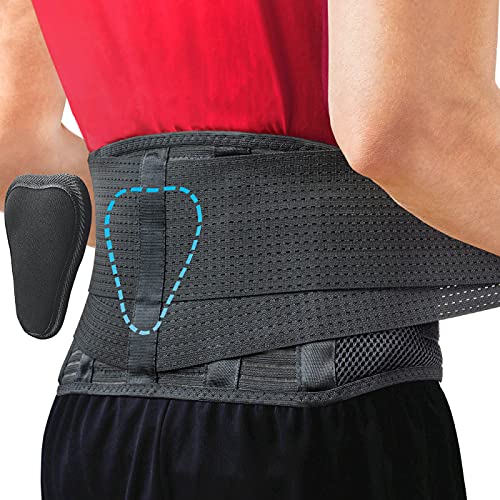
The adjustable lumbar pad and vertical support stays are the defining features of this Sparthos brace. The maker says the brace uses breathable fabric and is designed to allow movement while worn; the product is a large, black, single-pack brace. It may suit a buyer seeking a pad plus stays rather than a brace specified by a broad waist interval. Its limitation is fit clarity: the size is identified only as Large, so confirm its waist range before ordering, particularly if you are near a size boundary.
Bottom line: Pick this if you want a lumbar pad and vertical stays and can confirm the Large size fits.
How to choose a lower back corset
Start with fit, then compare how each brace adds support. A wraparound lumbar brace uses tension across the abdomen and lower back; stays or panels add structure, while elastic straps or pulleys let you adjust compression. Measure your waist at the location the maker specifies, not by guessing from clothing size. With a waist outside a product’s range, choose a different size or design rather than tightening a too-small brace. A removable pad is useful when you want to change the contact at the lumbar area, while a stay count helps distinguish reinforcement layouts. Ask a clinician before relying on a brace for persistent or worsening pain, since a belt cannot identify the underlying cause.
Measure for a brace that fits
Use a flexible tape and the exact measuring position named by the manufacturer; waist and hip measurements are not interchangeable. Keep the tape level and snug without pulling it tight, then compare the number with the product’s range. As a practical rule, if your measurement is less than 1 inch from either edge of a size range, check whether the maker gives a second measurement method or adjacent size before choosing. A brace that is too loose can shift, while excessive tightening can cause discomfort or interfere with movement. For a broad stated range, adjust tension in small increments and make sure you can breathe and sit normally. Stop wearing a brace if it causes numbness, tingling, skin irritation, or increased pain.
Brace materials and support features
Support features affect feel and structure, but a larger stay count alone does not establish that a brace is right for a particular condition. Flexible stays can help a wrap hold its shape, while firmer panels can resist bending more strongly; elastic straps and pulley systems mainly change how tightly the belt closes. Knitted fabric is a construction choice that may feel different from a wide wrap, though material alone does not predict comfort for every wearer. Compare the elements that matter to you: waist interval, removable pad, reinforcement layout, and adjustment method. No lumbar brace should be treated as a substitute for professional evaluation when pain follows a fall, comes with leg weakness, or affects bladder or bowel control.
Wear and care considerations
Begin with a short period of wear and check your skin and comfort before using a brace for longer stretches. Tighten only enough to keep the belt from slipping; more compression is not automatically better support. A brace can restrict motion, so do not assume it makes heavy lifting safe or removes the need for good lifting technique. Avoid wearing the belt over wet or irritated skin, and follow the maker’s care directions for its particular fabric and components. If you use a brace during work or exercise, take it off periodically to check for rubbing and to move without restriction. Seek clinical advice if pain is new, severe, persistent, or accompanied by weakness or numbness.
Frequently Asked Questions
How tight should a lower back brace feel?
A lower back brace should feel secure without making breathing or normal sitting difficult. Loosen it if you notice numbness, tingling, skin irritation, or increasing pain.
Can I wear a back corset while sleeping?
Do not assume a lumbar brace is meant for overnight wear; these braces can restrict movement and prolonged pressure can irritate skin. Ask a clinician whether nighttime use is appropriate for your situation.
How do I measure my waist for a lumbar brace?
Use a flexible tape at the measurement location specified by the maker and keep it level around your body. Compare the measurement directly with the range rather than relying on clothing size.
Can a lumbar brace make lifting safe?
No brace removes lifting risk or replaces sound technique. Keep loads close, avoid twisting while carrying, and get help with a load that you cannot control comfortably.
When should I stop wearing a back brace?
Stop wearing it if the brace causes numbness, tingling, skin irritation, or greater pain. New weakness, loss of bladder or bowel control, or pain after a fall needs prompt medical attention.