
Cooper Discoverer AT3 265/70R17 Tire Alternatives

The Cooper Discoverer Road + Trail AT in 265/70R17 suits shoppers who want the named size in a standard-load 115T tire with an all-terrain tread. The Stronghold AT is an LT alternative with a higher 123/120R load rating, while the Rugged Trek is an XL-rated option; check your vehicle placard for the required size and load rating.
We earn a commission if you buy through links on this page. As an Amazon Associate I earn from qualifying purchases. Products are compared on manufacturer specifications, not hands-on testing.
- Best overall: Cooper Discoverer Road + Trail AT 265/70R17 – It is the named 265/70R17 Cooper tire in standard-load 115T form.
- Best for LT loads: Cooper Discoverer Stronghold AT LT265/70R17 – Its LT265/70R17 size carries a 123/120R load rating and 10-ply construction.
- Best for snow rating: Cooper Discoverer Rugged Trek 265/70R17XL – It is marked Three-Peak Mountain Snowflake certified.
| Product | Best for | Construction | Shop |
|---|---|---|---|
| Cooper Discoverer Road + Trail AT 265/70R17 | Standard-load fit | Standard load | Check Price on Amazon |
| Cooper Discoverer Stronghold AT LT265/70R17 | LT-rated use | 10-ply radial | Check Price on Amazon |
| Cooper Discoverer Rugged Trek 265/70R17XL | Snow-rated tread | Extra load | Check Price on Amazon |
Cooper Discoverer AT3 265/70R17 tires
Compare the named-size Cooper choices with one related all-terrain alternative by load rating and construction.
Cooper Discoverer Road + Trail AT 265/70R17

The Road + Trail AT is the Cooper option here in the requested 265/70R17 size and standard-load 115T rating. Its continuous tread pattern extends onto the sidewall, and the connected center lugs are designed to add stability on uneven terrain. Interlocking tread blocks target traction in wet and dry conditions, making this a fit for drivers who want an all-terrain pattern without switching to LT construction. The main limitation is its standard-load rating: buyers whose vehicle placard calls for an LT tire or higher load rating should choose accordingly rather than treating the matching size as sufficient.
Bottom line: Choose this when the vehicle calls for standard-load 265/70R17 tires.
Cooper Discoverer Stronghold AT LT265/70R17

The Stronghold AT differs from the standard-load match by using LT265/70R17 sizing and a 123/120R, 10-ply radial construction. Wide tread grooves are intended to clear soft surfaces, while 3D sipes help provide stability; the tread is also designed to resist cracking, tearing, and rounding. That construction may suit a truck whose placard specifies an LT tire and the corresponding load capacity. LT fitment is not a universal upgrade, though: an LT tire can ride differently, and the vehicle’s required load rating and inflation guidance still govern the choice.
Bottom line: Choose this if your vehicle requires the LT size and load rating.
Cooper Discoverer Rugged Trek 265/70R17XL
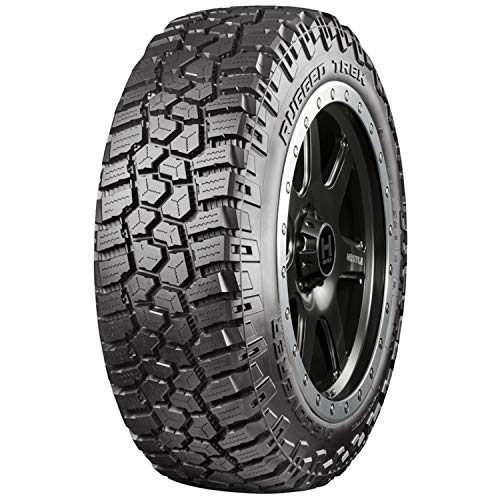
The Rugged Trek provides a different construction from the other Cooper choices: it is 265/70R17XL with a 116T extra-load rating and carries a Three-Peak Mountain Snowflake certification. The dual-sidewall design offers two appearance choices, and the tread is described as deeper than Cooper’s traditional all-terrain tires. A 60,000-mile treadwear warranty is included. Choose it when the extra-load specification and snow certification match your needs; buyers seeking an LT-rated tire should note that XL and LT are distinct designations and confirm the required type against the vehicle placard.
Bottom line: Choose this for an XL tire with a snow certification and listed treadwear warranty.
Choosing the right 265/70R17 load rating
Match the tire type and load index on the vehicle placard before weighing tread features. A 265/70R17 marking gives nominal width, aspect ratio, and wheel diameter; the 70 is a sidewall height equal to 70% of the nominal 265-mm section width, and the final 17 is the wheel diameter in inches. Load index is not interchangeable across tires just because the size matches. For example, 113 corresponds to 2,535 pounds per tire under its rating conditions, but actual capacity also depends on inflation pressure. Never fit a lower load capacity than the vehicle specifies. LT and XL are distinct constructions, not automatic upgrades for every SUV or truck.
| Need | Compare | Decision point |
|---|---|---|
| Standard-load fit | 115T SL or 113T SL | Placard load index and size |
| LT tire requirement | LT265/70R17, 123/120R | LT specification on placard |
| Extra-load option | 265/70R17XL, 116T | XL allowed and required capacity |
Reading tire size and sidewall markings
The 265/70R17 code describes nominal dimensions, while the letters and numbers after it identify construction and service ratings. The R means radial construction, and 17 inches is the wheel diameter—not the tire’s outside diameter. A 265/70R17 tire has a nominal sidewall height of about 7.3 inches, though actual dimensions vary by model and rim width. Load index and speed symbol must also suit the vehicle; the 115T and 116T markings are not identical to 123/120R. When replacing tires, keep the same size and service type required by the placard or owner’s manual, and avoid mixing mismatched sizes on an axle or drivetrain.
All-terrain tread and snow certification
All-terrain tread balances road use with traction on loose surfaces, but tread pattern alone does not establish winter certification. The Three-Peak Mountain Snowflake symbol indicates a tire met a defined snow-traction performance threshold; it does not guarantee ice grip or replace appropriate winter driving. Open grooves and interlocking blocks can aid traction in soft ground, while larger voids may make road noise more noticeable than on highway-focused tread. Choose based on your regular surface: mostly paved driving favors a road-oriented pattern, while frequent gravel or soft trails can benefit from more open tread. For winter conditions, look for the specific snow certification rather than relying on the all-terrain label.
Replacing and maintaining all-terrain tires
Check tire pressure at least monthly when tires are cold, using the vehicle placard value rather than the maximum molded on the sidewall. Rotate tires about every 5,000 to 7,500 miles as a common service interval, adjusting for the vehicle maker’s schedule and wear pattern; all-wheel-drive systems can require tighter matching of tread depth. Inspect tread and sidewalls for cuts, bulges, embedded stones, or uneven wear, especially after trail driving. The U.S. legal minimum tread depth is 2/32 inch, but wet-weather stopping can worsen before that point. Replace tires with damage that compromises the casing, and have persistent vibration or uneven wear checked promptly.
Frequently Asked Questions
What does 265/70R17 mean on a tire?
The code gives a nominal 265-mm section width, a sidewall height equal to 70% of that width, radial construction, and a 17-inch wheel diameter. Actual mounted dimensions can differ by tire model and rim width.
Can I use an XL tire instead of an LT tire?
XL and LT identify different tire constructions, so they are not interchangeable by size alone. Use the type and load capacity required on the vehicle placard; do not substitute solely because an XL or LT number appears higher.
How much tread is safe for wet roads?
The U.S. legal minimum is 2/32 inch, but wet traction can decline before that level. Many drivers replace tires around 4/32 inch when frequent rain is expected.
How often should all-terrain tires be rotated?
A common rotation interval is every 5,000 to 7,500 miles, though the vehicle maker’s schedule and drivetrain can change it. Rotate sooner if tread wear becomes uneven.
Does a Three-Peak Mountain Snowflake tire work on ice?
The symbol certifies a defined snow-traction threshold, not ice performance. Ice grip still depends on conditions, tread state, temperature, and driving speed.