
X-Pro Dirt Bike Models Compared by Power and Fit

For a gas-powered X-Pro dirt bike with a moderate-size engine, choose X-PRO X19 125cc for its 125cc four-stroke engine and clutch-free shifting. Riders seeking larger-wheel enduro geometry or an electric powertrain should consider a different model, since those are substantially different bike types.
We earn a commission if you buy through links on this page. As an Amazon Associate I earn from qualifying purchases. Products are compared on manufacturer specifications, not hands-on testing.
- Best overall: X-PRO X19 125cc – The 125cc engine and four-speed semi-automatic transmission make it the straightforward gas choice.
- Best for electric range: X-PRO Drax 6600W – The maker claims up to 70 miles per charge, and its battery is removable.
- Best for enduro fit: X-PRO Cavalier 250 – Its 21/18-inch wheels and 5-speed manual transmission suit a full-size enduro setup.
| Product | Best for | Powertrain | Wheel size | Transmission | Shop |
|---|---|---|---|---|---|
| X-PRO X19 125cc | Gas trail riding | 125cc 4-stroke | 17/14 in | 4-speed semi-automatic | Check Price on Amazon |
| X-PRO Drax 6600W | Longer electric rides | 6600W peak electric | 19/17 in | — | Check Price on Amazon |
| X-PRO Cavalier 250 | Enduro wheel fit | 250 enduro | 21/18 in | 5-speed manual | Check Price on Amazon |
X-Pro Dirt Bikes Compared
Match engine type and chassis size to the terrain and riding experience you want.
X-PRO X19 125cc

X-PRO X19 125cc is the gas-powered option here with a 125cc Zongshen four-stroke engine and a semi-automatic gearbox, so riders shift without operating a clutch. Its 17-inch front and 14-inch rear wheels create a taller stance than smaller-wheel pit bikes, and hydraulic disc brakes are specified at both ends. The air-cooled single-cylinder layout suits regular off-road use without adding a liquid-cooling system. This model fits riders who want a conventional gas bike and gear changes, but the clutch-free transmission will not suit someone specifically seeking full manual control.
Bottom line: Choose this for gas power with clutch-free gear changes.
X-PRO Drax 6600W

X-PRO Drax 6600W stands apart as an X-PRO electric model with larger 19/17-inch tires and a removable 72V 30Ah battery. The maker claims up to 70 miles of range, a six-hour full charge, and three speed modes topping out at 55 mph. Hydraulic brakes and dual shock absorption are among its specified chassis features. Those larger wheels may appeal to riders seeking a more full-size feel than the 17/14-inch electric alternative, while a claimed maximum range is not a promise for every ride: terrain, speed, rider load and temperature affect battery use. Pick it for electric drive and a removable battery.
Bottom line: Choose this for an X-PRO electric bike with a removable battery.
X-PRO Cavalier 250
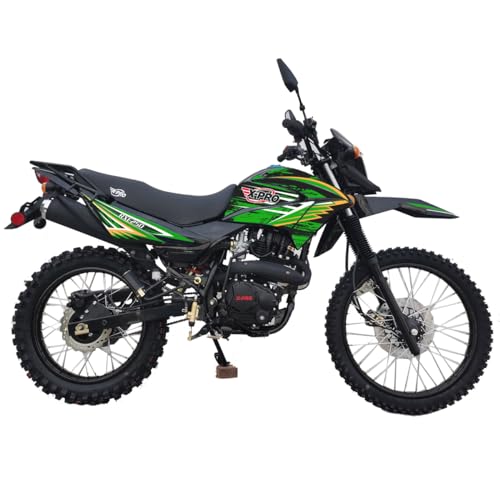
X-PRO Cavalier 250 is the full-size enduro-style choice, with 21-inch front and 18-inch rear wheels and a five-speed manual transmission. Its dimensions are 82.1 by 36.2 by 55.1 inches, a useful distinction for riders comparing garage space or overall bike footprint. The motocross-style seat is described as low, with room for rider movement. Assembly is required, including components such as the handlebar brackets, wheels and brakes, so plan for setup before riding. Unlike the smaller-wheel X19, this model calls for manual clutch-and-gear coordination; riders wanting a simpler semi-automatic setup may prefer another bike.
Bottom line: Choose this for large enduro wheels and manual shifting.
How to choose an X-Pro dirt bike powertrain
Choose gas for refueling flexibility and familiar engine maintenance; choose electric if you can charge the battery and want to avoid gasoline. A four-stroke gas engine needs periodic oil changes, while an electric bike trades that service for battery charging and condition checks. A manual gearbox requires clutch coordination; a semi-automatic still needs gear selection but removes the clutch lever task. Electric range and top speed are maker claims, not guaranteed trail results: speed, hills, rider weight, temperature and tire pressure can change energy use. For riding on public roads, verify registration and equipment requirements for your location; an off-road label does not establish street legality.
Wheel size and rider fit for dirt bikes
Wheel size is a useful first filter, but it is not a complete fit measurement: seat height, suspension sag and rider inseam also matter. The options range from 17/14-inch wheels to 21/18-inch enduro wheels, so compare the actual bike dimensions and seat reach before selecting. As a practical test, a rider should be able to balance the bike at a stop without being forced to tip it sharply; boots and suspension sag change how much foot reach is available. Larger wheels roll over obstacles differently and raise the chassis, while smaller wheels generally place the bike lower. Use this table to separate the configurations by their powertrain and wheel format.
| Need | Configuration to compare |
|---|---|
| Clutch-free gas shifting | 125cc, 17/14-inch, semi-automatic |
| Full-size manual enduro | 250 enduro, 21/18-inch, 5-speed |
| Electric with larger wheels | 72V, 19/17-inch configuration |
Measure storage width and door clearance as well as rider fit; a full-size bike can be difficult to maneuver in a tight shed.
What to check before riding a dirt bike
Before every ride, check tire condition and pressure, brake operation, throttle return, chain slack and fasteners; a loose chain or ineffective brake can cause loss of control. Dirt riding also calls for a properly fitted helmet, eye protection, gloves, boots and protective clothing, plus a riding area appropriate for the bike. Electric models add a battery check: inspect the case and cables for damage, and charge only with the compatible charger in a dry, ventilated location. Keep gas bikes away from ignition sources when refueling, and allow hot engine or exhaust parts to cool before service. Required assembly is another safety checkpoint: do not ride until controls, wheels and brakes are secured and verified.
Frequently Asked Questions
How does a semi-automatic dirt bike shift gears?
A semi-automatic transmission still requires the rider to select gears, but it does not require clutch-lever operation. It differs from a fully automatic bike, which shifts without rider gear selection.
What changes an electric dirt bike’s real-world range?
Speed, hills, rider load, tire pressure and temperature all affect battery use, so a maker’s maximum range is a best-case figure rather than a fixed distance. Frequent high-speed riding or steep climbs can shorten the distance between charges.
How often should a dirt bike chain be checked?
Inspect chain slack and lubrication before each ride, especially after muddy or wet use. A chain that is too loose can derail, while excessive tightness increases wear on the chain and sprockets.
What protective gear should dirt bike riders wear?
Wear a properly fitted motorcycle helmet, goggles or other eye protection, gloves, boots and abrasion-resistant riding gear. Dirt bikes can tip or throw debris even at low speeds, so street clothes and ordinary sneakers are not suitable protection.
Can an off-road dirt bike be ridden on public streets?
Off-road equipment does not automatically meet public-road requirements, which can include registration, lighting, mirrors and other local rules. Confirm the regulations where the bike will be operated before taking it onto a public road.