
Tougher Than Tom Mice Eliminator Pouches Compared

Tougher Than Tom Mice Eliminator, 20 Pouches suits most shoppers seeking Tougher Than Tom mouse-repellent pouches because its 20-count pack includes peppermint, cedarwood and cinnamon oils. Choose Tougher Than Tom Peppermint Pouches, 10 Pack for the same brand’s 10-count peppermint pouch option, or consider Tougher Than Tom Mouse Repellent Spray, 8 fl oz if you prefer a spray rather than pouches.
These products are repellents, not a way to remove mice already inside; seal entry gaps and secure food as well.
We earn a commission if you buy through links on this page. As an Amazon Associate I earn from qualifying purchases. Products are compared on manufacturer specifications, not hands-on testing.
- Best overall: Tougher Than Tom Mice Eliminator, 20 Pouches – The 20-pouch pack combines peppermint, cedarwood and cinnamon oils.
- Best for a smaller pack: Tougher Than Tom Peppermint Pouches, 10 Pack – The 10-count option uses peppermint oil in pouch form.
- Best for spray application: Tougher Than Tom Mouse Repellent Spray, 8 fl oz – The 8 fl oz bottle is a spray with peppermint, cinnamon and cedarwood oils.
| Product | Best for | Pack size | Format | Listed oils | Shop |
|---|---|---|---|---|---|
| Tougher Than Tom Mice Eliminator, 20 Pouches | Larger pouch pack | 20 pouches | Pouches | Peppermint, cedarwood, cinnamon | Check Price on Amazon |
| Tougher Than Tom Peppermint Pouches, 10 Pack | Peppermint-only option | 10 pouches | Pouches | Peppermint | Check Price on Amazon |
| Tougher Than Tom Mouse Repellent Spray, 8 fl oz | Spray application | 8 fl oz | Spray | Peppermint, cinnamon, cedarwood | Check Price on Amazon |
| Botanical Rodent Repellent Pouches, 10 Pack | Alternative pouch blend | 10 pouches | Pouches | Peppermint, cinnamon, rosemary | Check Price on Amazon |
Tougher Than Tom Mice Eliminator Pouches and Alternatives
Compare pouch counts, formats and listed oils to find the repellent style that matches your needs.
Tougher Than Tom Mice Eliminator, 20 Pouches

The 20-count pouch pack is the larger of the two Tougher Than Tom pouch options here, and its blend includes peppermint, cedarwood and cinnamon essential oils. The maker says the pouches are for indoor use and intended to repel mice without harming them. This format suits someone who wants ready-to-place pouches rather than a spray bottle.
Bottom line: Choose this if you want the larger pouch count and the three-oil blend.
Tougher Than Tom Peppermint Pouches, 10 Pack

The 10-count pack is the smaller Tougher Than Tom pouch option, and peppermint oil is the only oil identified in its product name and features. The maker describes the pouches as an all-natural, non-harmful mouse deterrent for home use. Choose this format if you want the brand’s peppermint pouch rather than the larger mixed-oil pack.
Bottom line: Pick this if a 10-pack of peppermint pouches fits your preference.
Tougher Than Tom Mouse Repellent Spray, 8 fl oz

The spray changes the application method: instead of placing a pouch, you apply liquid from an 8 fl oz bottle with a sprayer. Its formula includes peppermint, cinnamon and cedarwood oils with water. The maker says it is intended for indoor mouse deterrence and that rodents are not harmed. This is a related option if you want to apply a spray around places where you have seen activity. It is not a pouch, and the specifications give no surface-compatibility or reapplication guidance, so check those before applying it around household materials.
Bottom line: Choose this if you prefer a spray bottle to a pouch.
Botanical Rodent Repellent Pouches, 10 Pack
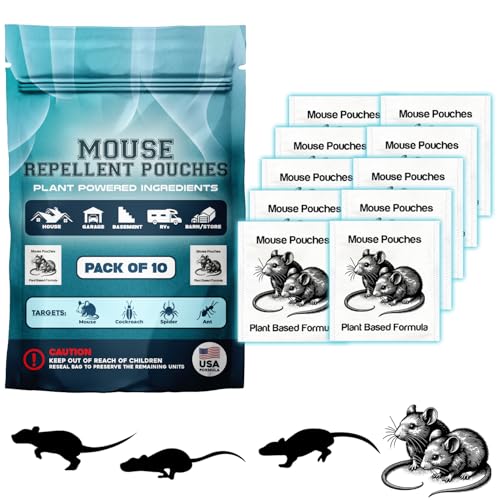
This alternative pouch pack differs from the Tougher Than Tom options by adding rosemary oil to its peppermint-and-cinnamon blend. Its maker says the carrier is soil-based rather than corncob and describes the rosemary as an air-freshening addition. The 10-pack pouch format may suit shoppers comparing a different botanical blend.
Bottom line: Consider this if you want a 10-pack with rosemary in the oil blend.
How mouse repellents fit into a control plan
Repellent pouches and sprays are deterrents, not substitutes for blocking access to food and shelter. House mice can squeeze through gaps about 1/4 inch wide, so inspect around pipes, doors, vents and foundation penetrations; close small openings with rodent-resistant materials such as steel wool backed by sealant. Store pantry food and pet food in tight-lidded containers, and remove crumbs and standing water. A repellent can be one part of a plan, but a scent product alone does not close an entry route or remove an established nest. If activity continues after entry points and food sources are addressed, consider a licensed pest professional.
Choosing between pouches and spray
Choose the format based on where you can apply it and how often you are willing to refresh it. Pouches can be placed without spraying a surface, while a spray can target a specific area but may require checking whether that surface is suitable. The specifications here provide no coverage area or duration for either format, so do not estimate room coverage from pouch count or bottle volume. Keep any essential-oil product away from children and pets, and avoid contact with eyes, skin and food-contact surfaces unless its label permits it. Use the product label for placement and handling directions.
This quick guide separates the options by application style and the oil blend identified for each.
| Need | Format to consider | Product distinction |
|---|---|---|
| Ready-to-place pouch | Pouch | Choose by count and listed oil blend |
| Apply to a specific area | Spray | Check surface suitability and label directions |
| Compare an added botanical oil | Pouch | Look for the blend that includes rosemary |
Where to place mouse deterrents
Place deterrents near signs of mouse travel rather than assuming a product treats an entire room. Look for droppings, gnaw marks and activity along walls, behind appliances or near stored goods, then use the label’s spacing and placement directions. Mice commonly travel along edges and can enter through openings as narrow as 1/4 inch, which makes sealing gaps more consequential than placing a pouch in the room’s center. Keep repellents away from food, dishes and areas children or pets can reach. If droppings are present, avoid sweeping or vacuuming them dry; dampen and disinfect according to public-health guidance before cleanup.
Common mistakes with mouse pouches
The most common mistake is treating a repellent as a stand-alone fix while leaving food, nesting material and access gaps untouched. A 1/4-inch opening is enough for a mouse to pass through, so inspect small utility penetrations as well as obvious door gaps. Another mistake is assuming that a pouch count equals a coverage area or that a scent will last a set number of days; those figures are not provided for these products. Do not open pouches or spray oils onto surfaces unless the label directs it, and store products where children and pets cannot mouth or spill them. Persistent signs warrant a broader exclusion and sanitation plan.
Frequently Asked Questions
Can peppermint pouches get rid of mice already inside?
Peppermint pouches are marketed as deterrents, not as a way to remove mice already nesting indoors. Close openings as small as 1/4 inch and secure food alongside any repellent.
How many mouse repellent pouches do I need per room?
There is no reliable count-per-room rule without a product’s coverage and spacing guidance. Follow the label, and target areas where you see activity rather than assuming one pouch covers a whole room.
Are essential oil mouse repellents safe around pets?
Keep repellents and essential oils out of pets’ reach and prevent licking or contact with spills. Use only as the label directs, because exposure risk depends on the ingredients and the animal.
Should I use pouches or spray around mice?
Pouches suit placement without spraying, while spray lets you apply liquid to a targeted area. Before spraying, check the label for surface suitability and keep it away from food-contact areas unless allowed.
What size gap can a house mouse squeeze through?
A house mouse can pass through an opening about 1/4 inch wide. Seal small gaps around pipes, vents and doors with rodent-resistant materials rather than relying on scent alone.