
Australian Bee Venom Cream: 5 Options Compared

For Australian bee venom cream, Australian Bee Venom & Bone Balm is the closest match by name and is aimed at applying cream to joints and other areas. Choose Wild Ferns Bee Venom Moisturizer instead for facial moisturizing, or CHANGARLOAD Bee Venom Body Cream for a daily body-care cream; bee venom products are not interchangeable with medical treatments.
We earn a commission if you buy through links on this page. As an Amazon Associate I earn from qualifying purchases. Products are compared on manufacturer specifications, not hands-on testing.
- Best overall: Australian Bee Venom & Bone Balm – Its name explicitly identifies Australian bee venom and the cream is intended for joints and other areas.
- Best for facial moisturizing: Wild Ferns Bee Venom Moisturizer – A bee venom moisturizer paired with Manuka honey, sweet almond, and apricot kernel oils.
- Best for daily body care: CHANGARLOAD Bee Venom Body Cream – Formulated for routine moisturizing across hands, feet, arms, legs, back, neck, and shoulders.
| Product | Best for | Package size | Intended use | Highlighted ingredients | Shop |
|---|---|---|---|---|---|
| Australian Bee Venom & Bone Balm | Joint-area application | 1 fl oz, 3-pack | Joints and other areas | Bee venom, camellia, vitamin K2 | Check Price on Amazon |
| Wild Ferns Bee Venom Moisturizer | Facial moisturizing | 3.52 oz, 1 jar | Face, complexion care | Bee venom, Manuka honey, almond oil | Check Price on Amazon |
| CHANGARLOAD Bee Venom Body Cream | Daily body moisturizing | 1 fl oz, 1 jar | Hands, feet, limbs, back, neck | Bee venom, botanicals | Check Price on Amazon |
| 5Kind Maximum Strength Bee Venom Cream | Massage-area care | 3.4 fl oz, 1 jar | Joints and muscles | Bee venom | Check Price on Amazon |
| Bee Venom Skin Treatment Cream | Face and skin care | 2.12 fl oz, 1 jar | Face and skin care | Bee venom, Manuka honey | Check Price on Amazon |
Australian Bee Venom Cream Options
Compare these bee venom creams by where you plan to use them and the formula details that matter to your routine.
Australian Bee Venom & Bone Balm

The formula calls out bee venom extract, camellia extract, and vitamin K2; each jar is 1 fluid ounce, with three jars in the pack. Its directions suggest applying three to four times daily for seven to ten days, then adjusting frequency. The main limitation is its joint-focused positioning, so choose a facial moisturizer if your goal is daily complexion care.
Bottom line: Pick this for the Australian bee venom name and joint-area use.
Wild Ferns Bee Venom Moisturizer

Wild Ferns Bee Venom Moisturizer stands apart as a face-oriented moisturizer rather than a joint balm or general body cream. It combines bee venom with Active Manuka honey, sweet almond, and apricot kernel oil, and the container holds 3.52 ounces. The maker says daily use can help reduce the appearance of fine lines and support a smoother-looking complexion. Bee-sting allergy is a clear reason to avoid it, and the maker also recommends a patch test first; this is not a suitable pick for someone seeking a joint-area cream.
Bottom line: Choose this for facial moisturizing if bee-derived ingredients are suitable for you.
CHANGARLOAD Bee Venom Body Cream

CHANGARLOAD Bee Venom Body Cream is positioned for daily body-skin moisturizing across a wider set of areas than the joint-specific balm. Its formula pairs bee venom with botanical ingredients, and the directions say to apply to clean, dry skin and massage until absorbed. The package size is one 1-fluid-ounce jar. This is a body-care choice, not a facial anti-aging moisturizer or a product with a joint-care routine.
Bottom line: Pick this for routine moisturizing over several body areas.
5Kind Maximum Strength Bee Venom Cream

5Kind Maximum Strength Bee Venom Cream is aimed at massage over joints and muscles, including the lower back, knees, neck, shoulders, hips, and feet. The maker says its bee venom is HPLC-analyzed for potency and purity and describes its sourcing process, making sourcing and analysis its distinguishing points among the body-care options here. The jar contains 3.4 fluid ounces. The maker does not establish a specific application schedule, so buyers who need a defined routine should choose a product with directions that match that need.
Bottom line: Choose this for massage over the joint and muscle areas.
Bee Venom Skin Treatment Cream
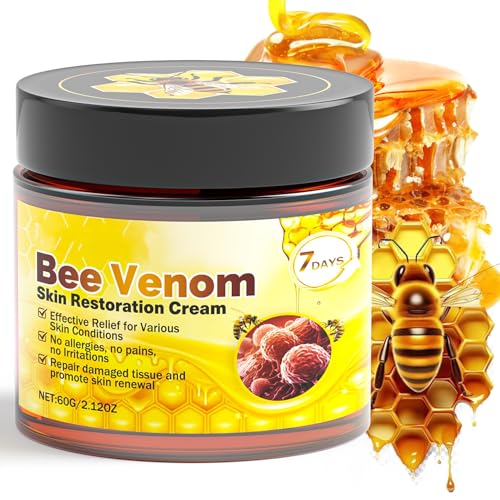
Bee Venom Skin Treatment Cream is the closest fit here for someone seeking a face-and-skin treatment cream, with Manuka honey and plant essences in its formula. The maker describes it for day and night use and also mentions acne and dry skin, but those are maker claims rather than established medical effects. At 2.12 fluid ounces, it is smaller than the Wild Ferns moisturizer. The maker does not give a patch-test or allergy warning, so people with bee-sting allergy should avoid bee venom cosmetics unless a clinician advises otherwise.
Bottom line: Choose this for a face-oriented cream with day-and-night use.
How to choose an Australian bee venom cream
Choose by intended area first: face moisturizers, body creams, and joint massage products serve different routines. A face moisturizer such as Wild Ferns Bee Venom Moisturizer is paired with oils and honey, while joint-focused formulas such as Australian Bee Venom & Bone Balm and 5Kind Maximum Strength Bee Venom Cream are described for application over joints or muscles. If you have a bee-sting allergy, avoid bee venom products; Wild Ferns Bee Venom Moisturizer specifically warns against use for people allergic to bee stings. Patch-test a small area before applying a new cosmetic broadly, and stop if irritation develops. Do not use a cosmetic cream as a substitute for diagnosis or treatment of pain, inflammation, or a skin condition.
Face moisturizer versus body cream
Face products are usually selected for a complexion routine, while body creams are formulated and positioned for broader areas such as limbs and back. Wild Ferns Bee Venom Moisturizer is the explicitly named moisturizer, with Manuka honey, sweet almond, and apricot kernel oil; CHANGARLOAD Bee Venom Body Cream targets daily moisturizing on hands, feet, arms, legs, back, neck, and shoulders. A practical decision rule is to choose a product that names your intended area rather than extending a joint cream to the face. Cosmetic claims about wrinkles or firmness do not mean a cream has demonstrated a medical effect, and sensitivity can vary with fragrance, botanical ingredients, and bee-derived ingredients.
Using bee venom cream more cautiously
Bee venom can trigger severe allergic reactions in people with bee venom allergy, including anaphylaxis; avoid topical bee venom if you have that history. Patch-test a small amount on an inconspicuous area and wait 24 hours before broader use, especially with botanical blends. Keep cream away from eyes, lips, broken skin, and mucous membranes, then wash hands after application. Australian Bee Venom & Bone Balm gives a frequency of three to four applications daily for seven to ten days, but that instruction belongs to that product only. Stop use and seek urgent care for breathing difficulty, swelling of the tongue or throat, or widespread hives.
Comparing the cream types
Match the product format to the routine, not just to the words bee venom on the container. This quick comparison separates the intended uses and their distinguishing formula emphasis.
| Routine | Useful product distinction | Decision point |
|---|---|---|
| Joint-area use | Joint balm or massage cream | Look for the body areas and directions that fit your routine |
| Daily body care | Lightweight moisturizing body cream | Confirm the application areas include yours |
| Facial care | Moisturizer with oils or honey | Patch-test first and avoid if bee-sting allergic |
Packaging size alone does not determine suitability: a larger jar may simply serve a different area or routine. If you need a cream for a particular skin concern, check with a qualified clinician rather than relying on cosmetic claims.
Frequently Asked Questions
Can bee venom cream cause an allergic reaction?
Yes; bee venom can cause severe allergic reactions, including anaphylaxis, in people with bee venom allergy. Avoid topical products containing bee venom if you have that allergy, and seek emergency care for breathing trouble or throat swelling.
How should I patch-test a new bee venom cream?
Apply a small amount to a discreet patch of intact skin and wait 24 hours before broader use. Do not test on broken skin, and stop if redness, itching, or swelling develops.
Can I put bee venom cream near my eyes?
No; keep topical creams away from the eyes, lips, and other mucous membranes. If cream gets into an eye, rinse promptly with clean water.
How often should joint cream be applied?
Application frequency depends on the specific product; Australian Bee Venom & Bone Balm gives a routine of three to four applications daily for seven to ten days. Do not transfer that schedule to another cream.
Is bee venom cream a treatment for joint pain?
Cosmetic creams should not replace medical evaluation or treatment for persistent joint pain. Seek medical advice for pain lasting more than a few days, swelling, or limited movement.