
Best Monk Fruit Without Erythritol: 3 Pure Picks

Morning Pep Pure Monk Fruit Extract suits most people seeking pure monk fruit without erythritol because it is a single-ingredient powder with no fillers or sugar alcohols. Choose Monk Fruit Drops instead if you mainly sweeten drinks and prefer drops; concentrated monk fruit extract is far sweeter than sugar, so start with a tiny amount and adjust.
We earn a commission if you buy through links on this page. As an Amazon Associate I earn from qualifying purchases. Products are compared on manufacturer specifications, not hands-on testing.
- Best overall: Morning Pep Pure Monk Fruit Extract – A 5-ounce powder made exclusively from monk fruit extract, with no fillers or sugar alcohols.
- Best for organic certification: DureLife Organic Pure Monk Fruit – A 5-ounce pure extract with USDA Organic certification and no fillers or sugar alcohols.
- Best for baking: WHYZ Organic Monk Fruit Powder – A pure powdered extract marketed for baking, with 458 servings in a 5-ounce package.
| Product | Best for | Form | Package size | Certifications | Shop |
|---|---|---|---|---|---|
| Morning Pep Pure Monk Fruit Extract | Pure powder | Powder | 5 oz | Non-GMO Project Verified; Keto Certified | Check Price on Amazon |
| DureLife Organic Pure Monk Fruit | Organic powder | Powder | 5 oz | USDA Organic; Non-GMO Project Verified | Check Price on Amazon |
| WHYZ Organic Monk Fruit Powder | Baking extract | Powder | 5 oz | Organic; Non-GMO | Check Price on Amazon |
| Monk Fruit Drops | Liquid sweetening | Liquid drops | 1.7 fl oz | Non-GMO | Check Price on Amazon |
Monk Fruit Sweeteners Without Erythritol
Compare pure extracts by format and certifications, then measure carefully because concentrated monk fruit takes only a small amount to sweeten.
Morning Pep Pure Monk Fruit Extract
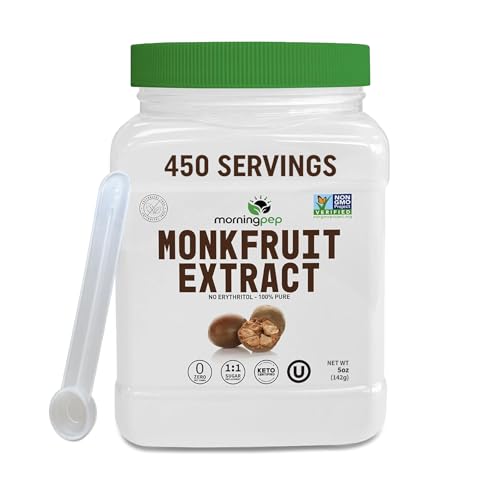
Morning Pep Pure Monk Fruit Extract is the straightforward pick for a single-ingredient powder: it contains pure monk fruit extract and excludes erythritol, other sugar alcohols and fillers. The 5-ounce package is labeled as over 450 servings, so it suits cooks who want a concentrated sweetener on hand for beverages and recipes. The brand also identifies it as Non-GMO Project Verified, Keto Certified and OU kosher. Its main limitation is the highly concentrated powder form; anyone expecting a spoon-for-spoon sugar replacement will need to measure sparingly and adjust sweetness gradually.
Bottom line: Choose this if you want a pure, certified powdered extract without added ingredients.
DureLife Organic Pure Monk Fruit

DureLife Organic Pure Monk Fruit adds USDA Organic certification to a pure, single-ingredient monk fruit powder. The 5-ounce package contains no erythritol, sugar alcohols or fillers, and the brand says the extract blends into beverages and batters. It is a useful fit for buyers who prioritize organic certification alongside a no-erythritol formula; it also carries Non-GMO Project Verified, Keto Certified and OU kosher certifications. Like other concentrated pure extracts, it does not provide the bulk or texture of granulated sugar, so it is less convenient when a recipe depends on sugar volume as well as sweetness.
Bottom line: Pick this if USDA Organic certification is a priority in a pure powder.
WHYZ Organic Monk Fruit Powder

WHYZ Organic Monk Fruit Powder is the baking-oriented choice among the pure powders, with a 5-ounce package marketed as 458 servings. It contains monk fruit extract without erythritol, added sugar or fillers, and the brand says it is 200 times sweeter than sugar. That concentration can suit cooks making small sweetness adjustments, but the product is not a bulk sugar substitute: it will not supply sugar’s volume in a recipe. Begin with a very small amount and taste as you go, especially when adapting a baked recipe that relies on sugar for structure.
Bottom line: Choose this for a highly concentrated pure powder intended for recipe use.
Monk Fruit Drops

Monk Fruit Drops offers monk fruit extract in liquid-drop form rather than a powder, making it the distinct option for sweetening coffee or tea without dissolving a dry ingredient. The brand says six drops provide sweetness equivalent to 1 teaspoon of sugar and the bottle contains 167 servings; it also claims 15–20 times the sweetness of sugar. Its 1.7-fluid-ounce size is compact, but drops are less suited than powders when a recipe needs a dry ingredient or sugar-like bulk. Add a few drops at a time and adjust to taste.
Bottom line: Pick this for measured drops in drinks rather than bulk baking.
How to choose monk fruit without erythritol
Start by deciding whether you need pure extract or a bulk sugar-style blend. Pure monk fruit extract is highly concentrated and contributes sweetness without replacing sugar’s volume, while blends may be designed to measure more like sugar. Read the ingredient name carefully: a product can say “monk fruit” on the front while combining the extract with another sweetener. For a strict no-erythritol choice, confirm erythritol is absent from the ingredient list; these picks use pure extract or drops. Also choose a format that matches the task: powder is easier to portion into dry mixes, while drops are convenient for drinks. If a recipe relies on sugar for bulk or texture, pure extract alone will not reproduce that function.
Powder and liquid drops compared
Choose powder when you want a dry ingredient for drinks or recipe testing, and choose drops when you mainly sweeten liquids. A concentrated extract delivers sweetness without the bulk of ordinary granulated sugar, so substituting it cup for cup can upset a recipe’s proportions. Liquid drops can be easy to add incrementally to coffee or tea, but they do not contribute dry mass to batter. The package’s serving guidance is a better starting point than assuming a standard spoon of sugar equals a spoon of extract. The table summarizes the practical format distinction; neither form should be treated as a one-to-one bulk sugar replacement.
| Need | Format to consider | Reason |
|---|---|---|
| Sweeten a drink | Powder or drops | Both are concentrated; drops allow small additions to liquids. |
| Keep a dry ingredient | Powder | Fits dry mixes better than liquid drops. |
| Replace sugar’s bulk | Neither pure extract form | Pure extract adds sweetness, not sugar-like volume. |
How to measure concentrated monk fruit
Use a small starting amount, then increase it gradually; concentrated extract can overwhelm a drink or recipe when treated like table sugar. Some product guidance gives its own equivalence, such as six drops equaling 1 teaspoon of sugar, but that direction is specific to that drops product rather than a universal conversion. For powders, a pinch-sized trial in a single serving is a cautious way to calibrate sweetness before scaling up. Baking requires extra care because sugar contributes volume and texture in addition to sweetness. If a recipe depends on those properties, use a formulation developed for concentrated sweetener or keep the original sugar structure rather than simply swapping in pure extract.
What to check before baking with pure monk fruit
Check whether the recipe needs sugar for more than flavor: sugar can add bulk, help browning and affect moisture and texture. Pure monk fruit extract supplies sweetness but does not replace those functions, so cakes, cookies and meringues may not behave as expected after a direct substitution. Use a baking recipe designed around a concentrated extract, or choose a sugar-style blend if the recipe requires comparable volume and its ingredients meet your dietary preferences. Make a small test batch before changing a full recipe. For drinks and simple toppings, where bulk matters less, adjusting a tiny amount to taste is more straightforward.
Frequently Asked Questions
Can pure monk fruit replace sugar cup for cup?
Use a recipe formulated for the extract or choose a blend intended for bulk substitution.
How much monk fruit should I add to coffee?
Begin with a very small amount and adjust by taste because pure extract is much sweeter than sugar. One drops product gives six drops as the equivalent sweetness of 1 teaspoon of sugar, but that conversion is product-specific.
Does monk fruit powder dissolve in cold drinks?
Powdered sweeteners may dissolve more slowly in cold liquids than in warm ones. Stir thoroughly or dissolve the portion in a little warm liquid first, then add it to the cold drink.
Can I bake with monk fruit drops?
Drops can add sweetness but do not supply the dry bulk that sugar contributes to many baked goods. Use them only in recipes that account for that difference, and test a small batch before scaling up.
What should I check to avoid erythritol?
Check the ingredient list for erythritol and other sugar alcohols rather than relying only on the front label. Pure monk fruit extract avoids added bulk sweeteners, while blends can include them.