
Plug-In Repellent for Spiders: 4 Options Compared

The named product is not among these options, but Fooxem 7-Pack Ultrasonic Repeller is the most adaptable plug-in repellent for spiders because it offers three modes and gives indoor placement guidance. These ultrasonic devices are marketed for spiders, but airborne ultrasound is not a dependable way to control them; choose a different approach if you need reliable removal.
Ultrasonic repellers plug into outlets and emit high-frequency sound. Spiders sense vibrations through their legs and body rather than hearing like humans, so a plug-in unit should not replace sealing entry points or removing webs.
We earn a commission if you buy through links on this page. As an Amazon Associate I earn from qualifying purchases. Products are compared on manufacturer specifications, not hands-on testing.
- Best overall: Fooxem 7-Pack Ultrasonic Repeller – Three selectable modes and a recommended indoor outlet height give more setup control.
- Best for coverage claims: Ultrasonic Pest Repeller 2-Pack – The maker claims coverage up to 1,500 square feet per device.
- Best for simple setup: Ultrasonic Repeller 4-Pack – The maker says it plugs into a standard wall outlet and signals operation with a beep and blue light.
| Product | Best for | Pack size | Modes | Shop |
|---|---|---|---|---|
| Fooxem 7-Pack Ultrasonic Repeller | Mode selection | 7 units | 3 modes | Check Price on Amazon |
| Ultrasonic Pest Repeller 2-Pack | Coverage claim | 2 units | 3 modes | Check Price on Amazon |
| Ultrasonic Repeller 6-Pack | Six-unit set | 6 units | — | Check Price on Amazon |
| Ultrasonic Repeller 4-Pack | Simple setup | 4 units | — | Check Price on Amazon |
Plug-In Repellent for Spiders
Compare the advertised features and setup differences, while keeping expectations realistic about ultrasonic spider control.
Fooxem 7-Pack Ultrasonic Repeller

Three adjustable modes distinguish this seven-unit set, and the maker recommends plugging each unit into an unobstructed outlet about 10–50 inches above the floor. The maker says the ultrasonic devices are designed for indoor areas including kitchens, basements, and garages, and include spiders among the pests targeted. That setup guidance may suit someone who wants to place units across several rooms. The limitation is that ultrasound is not a reliable standalone spider-control method; spiders respond to surface vibrations, so use physical exclusion and web removal for a more dependable plan.
Bottom line: Choose this set if mode options and placement guidance matter more than relying on sound alone.
Ultrasonic Pest Repeller 2-Pack

The coverage figure is the distinguishing feature: the maker claims up to 1,500 square feet per device, alongside three modes. The maker also notes that some people or animals may hear sound in modes 2 and 3, and suggests mode 1 as the quietest setting. This two-unit set may appeal to buyers comparing advertised area claims or concerned about audible sound. The coverage figure is a maker claim, not a guarantee that spiders will leave; ultrasound does not replace sealing cracks, reducing clutter, or removing webs.
Bottom line: Pick this if comparing the maker’s coverage and having a quieter mode are priorities.
Ultrasonic Repeller 6-Pack
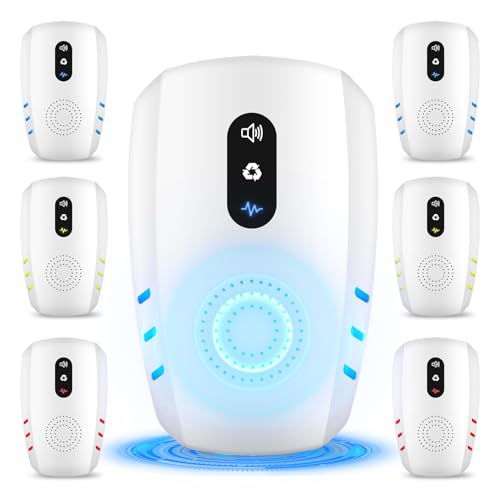
The six-unit pack is its clearest distinction among these choices, with a compact listed height of 3.23 inches. The maker says its devices use multiple ultrasonic frequencies from 10 kHz to 65 kHz and are intended for common indoor pests including spiders. That frequency range may help buyers distinguish the unit’s advertised approach from models that emphasize modes or placement. More importantly, ultrasonic sound should not be treated as a proven way to clear a spider infestation.
Bottom line: Choose this if a six-unit pack and the frequency range fit your comparison needs.
Ultrasonic Repeller 4-Pack

A straightforward outlet setup and a startup signal set this four-pack apart: the maker says a short beep and pulsing blue light indicate operation. The maker also says fewer pests may be noticed within 2–4 weeks and that activity can rise during the first 1–2 weeks; treat those as product claims, not reliable timelines for spider control. This option may suit someone who values an operating indicator. Its limitation is the same as other ultrasonic units: a light or beep confirms power, not that spiders are being driven away.
Bottom line: Pick this if you want an outlet unit with a visible and audible power signal.
How ultrasonic plug-in spider repellents work
Ultrasonic repellers convert electrical power into high-frequency sound, but that mechanism does not establish effective spider control. Spiders detect movement and vibration through sensory hairs and slit organs, especially through surfaces they touch; they do not hear airborne sound like people do. Sound also loses strength with distance and is blocked or reflected by walls, furniture, and other solid objects, so a single outlet unit cannot be assumed to affect a whole home. Treat advertised spider deterrence as a product claim rather than a dependable outcome. If spiders are appearing in one room, removing webs and checking gaps around windows, doors, and utility penetrations targets the routes and places they use.
What to compare before choosing a plug-in repellent
Compare control options and setup claims, not just pack count: the products here differ in selectable modes, stated coverage, or placement instructions. A coverage number is useful for comparing manufacturer claims, but it does not prove spider repellency across that area. Sound-frequency labels also do not tell you whether a device will work through a wall or behind furniture. One measurable decision rule is to choose a product with explicit placement guidance if you want to follow a defined setup; otherwise, do not infer a usable range from its size or frequency alone. For dependable spider management, pair any plug-in device with exclusion and regular web removal rather than relying on sound.
Use this comparison to match the advertised feature to your priority.
| Priority | Relevant feature | What it does not establish |
|---|---|---|
| Placement guidance | Suggested outlet height and unobstructed positioning | Spider-control effectiveness |
| Large stated area | Maker’s coverage claim per device | Real-world spider removal |
| Operation signal | Beep or pulsing light | That pests have left |
Better ways to reduce spiders indoors
Physical exclusion and habitat cleanup are more dependable starting points than an ultrasonic plug-in. Seal gaps around doors, windows, and pipes with appropriate caulk or weatherstripping, and repair screens so spiders and their prey have fewer routes inside. Remove webs and egg sacs with a vacuum or broom, then empty the vacuum outdoors; reducing insects and undisturbed corners can also make a room less attractive. Avoid scattering pesticides or essential oils without checking the product label: household chemicals can pose risks to people, pets, and surfaces. If you see many spiders, recurring egg sacs, or a spider you cannot identify, keep people and pets away and contact a licensed pest professional.
Frequently Asked Questions
Do ultrasonic plug-ins reliably keep spiders away?
No plug-in ultrasonic device should be relied on as a proven spider-control method. Spiders sense vibrations through contact and the evidence does not support expecting airborne ultrasound to clear a room.
How high should a spider repeller plug in?
Use the specific placement guidance for the device; one option here recommends about 10–50 inches above the floor in an unobstructed outlet. Avoid assuming that one outlet covers rooms separated by walls or furniture.
Can ultrasonic repellers work through walls?
Do not count on ultrasound to travel effectively through walls. Solid barriers and furniture interfere with sound, so a device in one room should not be assumed to affect another.
What should I do if spiders keep returning?
Remove webs and egg sacs, then seal gaps around doors, windows, and utility openings. Repeated activity or multiple egg sacs can justify help from a licensed pest professional.