
Aventik Fly Rods: 4 Models Compared by Use

Aventik Troutflow 9-foot 5-weight Kit suits most anglers seeking a conventional fly rod because its 9-foot, 5-weight kit comes with a reel and floating line. Anglers focused on trout-water versatility should consider Aventik Heritage Trout 9-foot 5-weight, while casting practice or tenkara calls for a different rod style.
We earn a commission if you buy through links on this page. As an Amazon Associate I earn from qualifying purchases. Products are compared on manufacturer specifications, not hands-on testing.
- Best overall: Aventik Troutflow 9-foot 5-weight Kit – The 9-foot, 5-weight kit includes a reel, backing and weight-forward floating line.
- Best for trout waters: Aventik Heritage Trout 9-foot 5-weight – Its 9-foot 5-weight model has a 5-piece travel design.
- Best for casting practice: Aventik 4-foot Practice Fly Rod – The 4-foot rod includes integrated fly line and leader.
- Best for tenkara: Aventik FreshStart 8-foot Tenkara Rod – The 8-foot rod weighs 70 grams and collapses to 15.56 inches.
| Product | Best for | Length | Line weight | Sections | Shop |
|---|---|---|---|---|---|
| Aventik Troutflow 9-foot 5-weight Kit | Ready-to-fish setup | 9 ft | 5 wt | 4 pieces | Check Price on Amazon |
| Aventik Heritage Trout 9-foot 5-weight | Trout-water travel | 9 ft | 5 wt | 5 pieces | Check Price on Amazon |
| Aventik 4-foot Practice Fly Rod | Casting practice | 4 ft | — | 3 pieces | Check Price on Amazon |
| Aventik FreshStart 8-foot Tenkara Rod | Tenkara fishing | 8 ft | — | — | Check Price on Amazon |
Aventik fly rods compared
Match rod length, line weight and included components to your fishing style before choosing.
Aventik Troutflow 9-foot 5-weight Kit
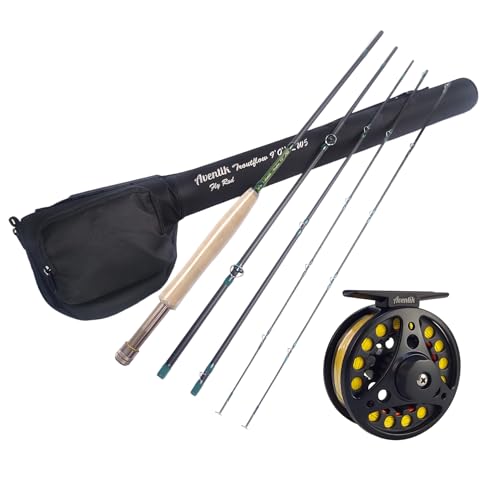
For a conventional fly-fishing setup with reel and line included, Aventik Troutflow 9-foot 5-weight Kit is the most complete option here. Its 9-foot, 5-weight, 4-piece rod uses a fast-action carbon blank, and the kit includes a SADC 7/9 reel, backing and weight-forward floating line. Chrome-plated snake guides and a ceramic-insert stripping guide round out the rod. The maker says its Toray 46T graphite construction and blank design balance sensitivity and power. This kit suits anglers who want a travel-friendly outfit in one package; its 5-weight configuration is less suited to anglers specifically seeking a light 4-weight or a specialized tenkara rod.
Bottom line: Choose this kit if you want a conventional 9-foot 5-weight rod with reel and line included.
Aventik Heritage Trout 9-foot 5-weight

For a multi-section travel rod aimed at trout water, Aventik Heritage Trout 9-foot 5-weight differs from the 4-piece kit by using a 5-piece, 2-in-1 configuration. The 9-foot 5-weight version is described as a fast-action rod for dry flies, nymphing and streamers across rivers and open water. Its series also includes other lengths and line weights, but the selected model here is the 9-foot 5-weight. The maker says the X-Cross carbon blank supports its casting performance. This rod suits anglers who prioritize a compact travel format; unlike Aventik Troutflow 9-foot 5-weight Kit, the product name and features do not identify an included reel or fly line.
Bottom line: Pick this rod if a 5-piece travel format matters more than an included reel-and-line setup.
Aventik 4-foot Practice Fly Rod

For short-range casting drills rather than ordinary fishing, Aventik 4-foot Practice Fly Rod is the specialized choice among these rods. The 4-foot, 3-piece rod has an integrated fly line and leader, so it is built around practice without a separate leader. The maker says its carbon-fiber blank provides casting feedback and its cork handle supports a secure grip. Its compact length makes it a practice tool, not a substitute for the longer rods intended for fishing rivers or open water. Follow the maker’s casting setup note: keep 6 to 8 feet of line extending past the tip top for control during practice.
Bottom line: Choose it for casting practice, not as your primary fishing rod.
Aventik FreshStart 8-foot Tenkara Rod

For line-and-rod tenkara fishing rather than a conventional reel setup, Aventik FreshStart 8-foot Tenkara Rod is the style-specific option. The 8-foot rod weighs 70 grams and collapses to 15.56 inches, making its compact transport size its clearest distinction from the longer multi-piece fly rods. Its 24T carbon-fiber blank is described by the maker as medium-fast action. The shorter length can suit younger or newer anglers who prefer a more manageable rod. Tenkara uses a fixed line rather than a fly reel, so anglers who want a reel-based conventional fly-fishing outfit should choose another model.
Bottom line: Choose it for compact tenkara fishing without a conventional reel.
How to choose an Aventik fly rod
Choose by fishing style first, then match rod length and line weight to the water and flies. A 9-foot rod is a common all-around length for trout because it balances reach, line control and manageable casting; a 5-weight line is a frequent trout choice. Smaller streams and light presentations often favor shorter rods or 3- to 4-weight outfits, while wind, larger flies or bigger fish can call for heavier line weights. For standard fly fishing, the rod’s line weight should match the fly line. Tenkara is different: it uses a fixed line and has no reel, so a tenkara rod is not interchangeable with a reel-based setup. For travel, compare collapsed section count as well as fishing length.
Fly rod length and line weight
Rod length changes reach and line control, while line weight helps determine how much fly line the rod is designed to cast. A 9-foot, 5-weight outfit is a practical starting point for general trout fishing; shorter 3- or 4-weight rods can be easier to manage on narrow streams. Match the line weight printed for a rod rather than assuming any fly line will cast well. The rods include 9-foot 5-weight options, a 4-foot practice rod, and an 8-foot tenkara rod. The practice rod’s description gives no conventional line weight, so do not assume a standard fly line match. For a 4-piece or 5-piece rod, align each ferrule fully and avoid twisting sections together under load.
| Need | Typical choice | Reason |
|---|---|---|
| General trout fishing | 9 ft, 5 wt | Balances reach and presentation versatility |
| Small stream handling | Shorter rod, 3–4 wt | More manageable in confined spaces |
| Casting drills | Short practice rod | Designed for practice rather than fishing |
| Reel-free tenkara | Tenkara rod | Uses a fixed line instead of a reel |
Travel rod sections and care
Multi-piece fly rods break down for transport, but more sections mean more ferrule joints to check before casting. Assemble a graphite rod by aligning and seating the joints securely; loose ferrules can separate during a cast, while forced or dirty joints can become difficult to disassemble. Rinse grit from ferrules and guides with fresh water after exposure to sand or salt, then dry the rod before storage. Keep rods in their tube or protective sleeve during transport, and avoid leaning a loaded rod against hard edges. Carbon and graphite blanks can be damaged by sharp impacts even when no crack is immediately visible, so inspect the blank and guides before fishing.
Safe fly casting around people
Fly lines and hooks can injure eyes or skin, so cast only when the area behind and beside you is clear. A fly line loop can travel farther than the rod tip, and wind can carry a hook toward the caster; wear eye protection and a brimmed hat, especially when practicing with a fly attached. Barbless hooks or flattened barbs are easier to remove if a hook catches clothing or skin. Check wind direction before each cast and pause when another person enters the casting area. For practice, use the rod maker’s recommended line extension and never use a weighted fly where a controlled casting space is unavailable.
Frequently Asked Questions
What line weight should I use for trout fishing?
A 5-weight is a common all-around trout line weight, while 3- or 4-weight outfits suit smaller water and lighter presentations. Match fly line weight to the rod’s marked line weight.
Is a 9-foot fly rod good for beginners?
A 9-foot rod is a useful general-purpose length because it provides reach and line control. A 5-weight setup is a common trout starting point, though tight, brushy streams may favor a shorter rod.
How do I assemble a multi-piece fly rod?
Align each section’s ferrule and seat the joints firmly without forcing or twisting them excessively. Check that every joint remains secure before casting, since a loose section can separate under the load of a cast.
What is the difference between tenkara and fly fishing rods?
A tenkara rod uses a fixed line and no reel, while a conventional fly rod is designed to cast line from a reel. Choose tenkara for a reel-free approach and match a conventional rod with its intended fly-line weight.
How much line should extend past a practice rod tip?
For the 4-foot practice rod here, the maker recommends 6 to 8 feet of line beyond the tip top for control. Keep the casting area clear and wear eye protection when practicing.