
Best Bottled Water Dispenser Pump Systems Compared

TDRFORCE 5-Gallon Pump System suits most people because its maker specifies 2 GPM flow, 40 PSI pressure and automatic shutoff when the jug empties. Choose a different system if you need dual inlets, a higher stated pressure or a simpler single-inlet setup.
A bottled-water pump draws water from a jug and pushes it through tubing to a faucet or compatible appliance; the appliance’s inlet requirements and the pump’s tubing connections decide fit.
We earn a commission if you buy through links on this page. As an Amazon Associate I earn from qualifying purchases. Products are compared on manufacturer specifications, not hands-on testing.
- Best overall: TDRFORCE 5-Gallon Pump System – Its maker specifies 2 GPM flow, 40 PSI pressure and dry-pumping shutoff.
- Best for dual-inlet setups: TDRSUPER 20-Foot Dual-Inlet Pump – Its dual-inlet design suits buyers who need two water inlets.
- Best for pressure range: VEVOR Single-Inlet Pump System – Its maker specifies a 40–60 PSI working-pressure range.
| Product | Best for | Pressure | Flow | Inlet design | Shop |
|---|---|---|---|---|---|
| TDRFORCE 5-Gallon Pump System | Everyday appliance use | 40 PSI | 2 GPM | Single inlet | Check Price on Amazon |
| TDRSUPER 20-Foot Dual-Inlet Pump | Dual-inlet connections | 40 PSI | 2 GPM | Dual inlet | Check Price on Amazon |
| VEVOR Single-Inlet Pump System | Pressure range preference | 40–60 PSI | 0.67 GPM | Single inlet | Check Price on Amazon |
| TDRSUPER Self-Priming Single-Tube Pump | Quick-connect installation | 40 PSI | — | Single tube | Check Price on Amazon |
| TDRRICH Double-Tube Pump System | Double-tube setup | 60 PSI | — | Double tube | Check Price on Amazon |
Bottled Water Dispenser Pump Systems
Compare the pressure, flow and inlet setup against the appliances and tubing you plan to connect.
TDRFORCE 5-Gallon Pump System
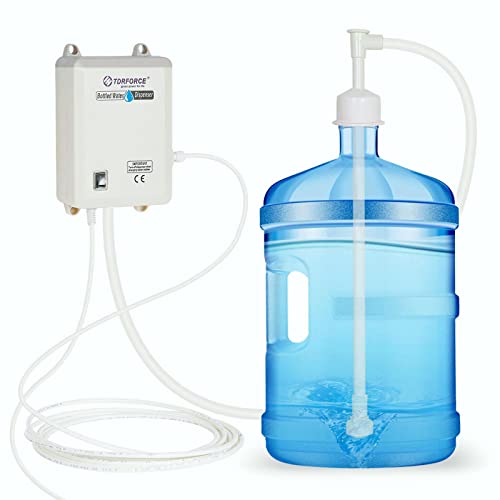
TDRFORCE 5-Gallon Pump System stands out for pairing a specified 2 GPM flow rate with automatic dry-pumping shutoff. The maker says it delivers 40 PSI and shuts off when the jug runs dry, restarting after the jug is refilled. Its 66-inch inlet assembly and 20-foot outlet hose can help with an under-counter installation, and it is intended for a 5-gallon jug. Choose it when those hose lengths suit the route to your faucet, refrigerator or other compatible appliance. The pump does not include a faucet, so buyers needing a complete tap assembly must provide one separately.
Bottom line: Pick this for a 5-gallon setup where the specified 2 GPM flow and dry-pumping shutoff fit your needs.
TDRSUPER 20-Foot Dual-Inlet Pump

TDRSUPER 20-Foot Dual-Inlet Pump is the dual-inlet choice, unlike the single-inlet systems in this group. Its maker specifies 40 PSI and 2 GPM, and says the pump shuts off when the bottle is empty. Food-grade materials are specified for parts that contact water. The system is intended for a commercial 5-gallon jug and can supply compatible appliances or a separate drinking-water tap. Select it when two inlets suit your plumbing arrangement; the product does not include a faucet, so a tap must be sourced separately if your setup needs one.
Bottom line: Choose this when your installation calls for a dual-inlet pump and a separate faucet is already planned.
VEVOR Single-Inlet Pump System
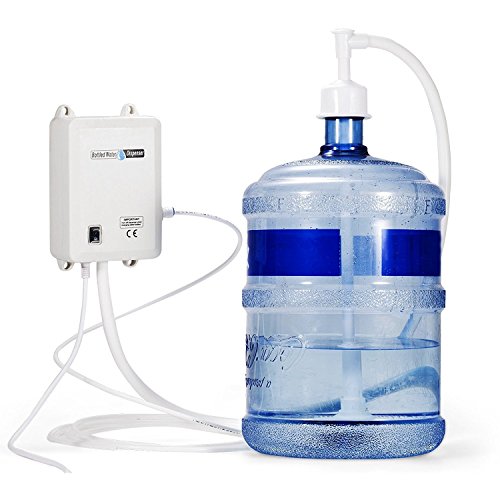
VEVOR Single-Inlet Pump System differs with a maker-specified working-pressure range of 40–60 PSI and a flow rate of 0.67 GPM. It has a single inlet for a 5-gallon jug and is powered by a cord. That lower specified flow makes it a fit for buyers whose appliance demand is modest rather than those prioritizing the 2 GPM ratings of two other options here. Check that the connected appliance accepts the pump’s operating pressure and flow before choosing it; the specifications do not give those appliance compatibility limits.
Bottom line: Pick this for a single-inlet setup when its 0.67 GPM flow matches the connected appliance.
TDRSUPER Self-Priming Single-Tube Pump

TDRSUPER Self-Priming Single-Tube Pump emphasizes quick-connect ports, four mounting holes and a universal sealing cap rather than a flow rate. Its maker specifies 40 PSI and describes the pump as a 110V AC system for a 5-gallon commercial water bottle. Rubber feet are intended to reduce operating noise. Confirm that your bottle opening works with the cap before ordering.
Bottom line: Choose this when quick-connect ports and mounting options matter more than comparing a flow rating.
TDRRICH Double-Tube Pump System

TDRRICH Double-Tube Pump System is a double-tube system with a specified 60 PSI pressure value, making its pressure higher than the 40 PSI ratings of two other systems here. It is designed for 1- to 5-gallon plastic bottles and includes a built-in check valve to help prevent backflow, according to its maker. The maker also specifies thermal protection and food-grade materials for water-contact parts. Consider it when the bottle range or double-tube configuration fits your installation. Its flow is given as 2 L without a time unit, so it cannot be compared directly with rates expressed per minute.
Bottom line: Choose this if you need a double-tube system compatible with bottles up to 5 gallons.
How to choose a bottled water pump system
Choose by matching the pump’s pressure, flow and inlet arrangement to the equipment it will serve. Pressure is measured in PSI; flow is commonly given in gallons per minute, and a higher number can replenish a connected appliance faster only if that appliance accepts the rate. A single-inlet pump serves one water line, while a dual-inlet design is for a setup that needs two. Start with the appliance’s required inlet pressure and connection size, then compare those requirements with the pump and tubing. If your appliance’s acceptable pressure range is below 40 PSI or above 60 PSI, verify compatibility before ordering rather than assuming a pump will work.
Jug size, tubing and installation fit
Use a pump rated for the jug size you intend to use, and measure the actual tubing route before installing it. A full 5-gallon jug holds about 42 pounds of water, so place it on a stable floor or shelf that can support the jug and make refilling manageable. Leave enough room to lift the jug out without bending or kinking the inlet tube. Under-counter installations also need a route for outlet tubing that avoids sharp edges and hot appliance surfaces. Keep the electrical pump and plug away from spills, and disconnect power before moving or servicing the system.
Single-inlet and dual-inlet systems compared
Single-inlet systems suit one jug-to-appliance line; choose dual inlets only when your plumbing arrangement actually needs two. A two-inlet pump is not automatically a better fit for a single line, and its ports should not be assumed to accept a particular tubing diameter unless the manufacturer provides that size. Pumps also differ by flow: a 0.67 GPM rating is substantially below 2 GPM, so the lower-flow model is a better match when the appliance demand is modest. Use this comparison to narrow the configuration, then verify connection sizes and appliance pressure requirements.
| Setup need | What to prioritize |
|---|---|
| One water line | Single inlet |
| Two water inlets | Dual inlet |
| Higher stated flow | Compare models specifying 2 GPM |
| Known appliance pressure requirement | Match its PSI range |
Priming, leaks and routine checks
Check connections for leaks after installation and whenever tubing is disturbed. Secure push-fit connections fully, keep the inlet end submerged in the jug, and avoid running the pump dry unless its design explicitly includes dry-pumping protection. A check valve can reduce backflow, but it does not replace a sound connection or a stable jug. Inspect tubing periodically for kinks, discoloration or cracks, and replace damaged sections with tubing compatible with drinking water and the pump’s fittings. Because water and household electricity are close together in these systems, keep the plug and motor dry and unplug the pump before handling wet connections.
Frequently Asked Questions
How much water does a 5-gallon jug weigh?
Five gallons of water weighs about 42 pounds, before adding the bottle. Put the jug on a stable surface that can bear the combined load and leave room to lift it safely.
Can a bottled water pump run a refrigerator?
A pump can serve a refrigerator only if its pressure, flow and tubing connections match the refrigerator’s requirements. Compare the appliance’s acceptable inlet pressure and connection size before connecting the pump.
What does a pump’s PSI rating mean?
PSI measures water pressure, not the volume delivered per minute. Compare the pump’s pressure with the appliance’s inlet range; a higher PSI number is not automatically a better match.
How often should pump tubing be checked?
Inspect tubing during installation and periodically afterward, especially after moving the jug or pump. Replace a section if it kinks, cracks or shows signs of leaking, and check connections again after replacement.
Is a dual-inlet pump needed for one appliance?
A single-inlet system is generally the simpler choice for one jug-to-appliance line. Choose a dual-inlet pump only when the installation actually requires two separate inlets.