
Best Anti-Static Hair Brush: 4 Picks by Hair Type

The Bsisme Boar Bristle Hair Brush suits most people seeking an anti-static brush because its maker describes it as a paddle brush with boar bristles and rounded nylon pins for detangling. Choose a different style if you prefer wooden pins or want a softer boar-bristle brush for fine hair.
Hairbrushes can help smooth hair, but static also depends on conditions such as dry air and friction from clothing.
We earn a commission if you buy through links on this page. As an Amazon Associate I earn from qualifying purchases. Products are compared on manufacturer specifications, not hands-on testing.
- Best overall: Bsisme Boar Bristle Paddle Brush – Its boar bristles and rounded nylon pins are designed for detangling, and the maker calls it anti-static.
- Best for wooden pins: Wooden Hair Brush with Rounded Bristles – Its rounded wood bristles and flexible rubber cushion are intended to brush gently.
- Best for thick hair: BESTOOL Bamboo Boar-Nylon Brush – The maker says its nylon pins add detangling power for long, thick hair.
- Best for wet or dry hair: HALOVIDA Detangler Brush – The maker says the brush is intended for use on wet or dry hair.
| Product | Best for | Bristle type | Length | Weight | Shop |
|---|---|---|---|---|---|
| Bsisme Boar Bristle Paddle Brush | Mixed hair types | Boar and nylon | 9.6 in | 0.28 lb | Check Price on Amazon |
| Wooden Hair Brush with Rounded Bristles | Wooden bristles | Rounded wood | 8.75 in | 0.33 lb | Check Price on Amazon |
| BESTOOL Bamboo Boar-Nylon Brush | Long thick hair | 70% boar, 30% nylon | 9.8 in | 0.22 lb | Check Price on Amazon |
| HALOVIDA Detangler Brush | Wet or dry use | Boar bristles | 9.1 in | 0.19 lb | Check Price on Amazon |
Anti-Static Hair Brushes
Compare the bristle materials and brush sizes to match a brush to your detangling and smoothing routine.
Bsisme Boar Bristle Paddle Brush

The Bsisme Boar Bristle Paddle Brush combines natural boar bristles with smooth, round-tip nylon pins, unlike the all-wood-pin option. Its maker describes it as anti-static and says it is designed for thick, curly, straight, or thin hair, wet or dry. The solid wood handle has a rose pattern. This combination may suit someone who wants a paddle brush that detangles as well as smooths. The bristle mix is less suited to a buyer specifically seeking a brush with only wooden pins.
Bottom line: Choose it if you want a mixed-bristle paddle brush for detangling.
Wooden Hair Brush with Rounded Bristles
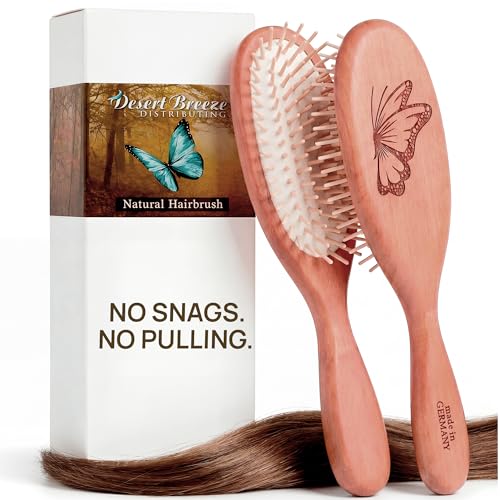
The Wooden Hair Brush uses rounded wood bristles rather than boar bristles, making it the option for shoppers who want a wooden-pin brush. Its maker describes the brush as anti-static and says the pins sit in a flexible rubber cushion. It has a pear wood handle and is made in Germany. The all-wood bristle design may appeal to someone seeking a simple daily brush, but it lacks the nylon pins found in mixed-bristle options that are intended to help with detangling.
Bottom line: Choose it if you prefer rounded wooden pins over a boar-bristle blend.
BESTOOL Bamboo Boar-Nylon Brush

The BESTOOL Bamboo Boar-Nylon Brush gives long, thick hair a dual-bristle option: its maker says the nylon pins add detangling power while the softer boar bristles help distribute natural oils. The brush has an oval bamboo paddle, a rubber cushion, and comes with a brush cleaner and cover bag. The maker says it can be used on wet or dry hair. Its mixed bristles may be more than necessary for someone who wants a softer brush for fine hair.
Bottom line: Choose it if long, thick hair needs a mixed-bristle brush and detangling support.
HALOVIDA Detangler Brush

The HALOVIDA Detangler Brush is the lightweight option here, with a hollow, flexible design rather than a traditional wooden handle. Its maker says the boar bristles help reduce static and frizz, and that the brush is intended for wet or dry hair and straight, wavy, curly, or coily textures. The ergonomic shape is designed to follow the scalp’s curves. Buyers who specifically want a wooden brush or a paddle with nylon pins should choose another style.
Bottom line: Choose it if you want a lightweight brush for wet or dry detangling.
How to Choose an Anti-Static Hair Brush
Start with the job you need the brush to do: detangling, smoothing, or distributing natural oils. Mixed boar-and-nylon brushes combine softer bristles with firmer pins; wooden-pin brushes offer a different feel and construction. Hair length and thickness matter too: longer or thicker hair usually takes more passes to detangle, so a wider paddle or firmer pins may be useful. Fine hair may suit softer bristles and lighter pressure. Static is also affected by the environment, not only the brush; low humidity and friction from hats or synthetic fabrics can increase flyaways. If static is worst in dry indoor air, improving humidity may matter as much as changing brushes.
What Causes Static in Hair
Static builds when friction transfers electrical charge between hair and another surface, such as a brush, clothing, or a hat. Dry air lets charge persist more readily than humid air, which is why flyaways can become more noticeable during dry indoor conditions. A brush described as anti-static is not a guarantee that hair will stay flyaway-free in every setting. Reduce repeated friction by brushing gently and avoiding unnecessary passes, especially on dry hair. A room humidity level around 30% to 50% is a common comfort range; a hygrometer can show whether indoor air is very dry. Hair texture, styling products, and clothing also affect the result.
Brush Types and Their Tradeoffs
Brush construction changes how a brush feels and what task it suits. Use this comparison to narrow the style before choosing by size or hair texture.
| Brush type | Typical use | Tradeoff |
|---|---|---|
| Boar and nylon mix | Detangling and smoothing | Firmer pins may feel less gentle on a sensitive scalp |
| Boar bristle | Smoothing and oil distribution | May not detangle dense knots as readily as firmer pins |
| Rounded wooden pins | Gentle brushing and scalp massage | Does not provide a boar-bristle surface for smoothing |
Brush on dry hair in small sections when working through knots, starting near the ends and moving upward. Pulling a brush from the roots through a dense knot can increase tension and breakage.
How to Clean and Store a Hair Brush
Remove loose hair after each brushing session, then clear residue from the bristles regularly; weekly cleaning is a practical starting point for daily-use brushes. Use a comb or brush-cleaning tool to lift trapped strands without bending or pulling bristles out of the cushion. Keep wood-handled brushes out of standing water, since soaking can damage wood and loosen components. For brushes with a rubber cushion, avoid pressing hard into the cushion while cleaning. Let a washed brush dry completely before storing it, bristles down or on its side, so water does not collect at the base.
Frequently Asked Questions
Can an anti-static hair brush stop all flyaways?
No brush can guarantee that hair will remain static-free in every condition. Dry air and friction from clothing or hats can still create flyaways, so reducing friction and addressing very dry indoor air can help.
Are boar bristle brushes good for detangling?
Boar bristles are commonly used for smoothing and distributing natural oils, while mixed boar-and-nylon brushes add firmer pins for detangling. For dense knots, work from the ends upward in small sections rather than pulling from the roots.
How often should I clean my hair brush?
Remove loose hair after each use and clean residue regularly; weekly cleaning is a useful starting point for a brush used every day. Let the brush dry fully before putting it away.
Does humidity affect static in hair?
Yes, dry air makes static more likely to linger, while moisture in the air helps charges dissipate. A common indoor comfort range is about 30% to 50% relative humidity.
Should I brush wet hair with a regular brush?
Wet hair stretches more easily than dry hair, so use gentle pressure and work through small sections from the ends upward. A brush whose maker says it is intended for wet use may suit that routine, but avoid yanking through knots.