
Quilt Frames for Hand Quilting: 4 Styles Compared

The Edmunds American Legacy frame suits quilters who want a full-length rectangular work area that can shorten from 24 by 90 inches to 24 by 45 inches. Quilt frames hold fabric layers in position while you stitch; choose a different style if you need an adjustable-height floor setup, a round hoop, or a compact lap frame.
We earn a commission if you buy through links on this page. As an Amazon Associate I earn from qualifying purchases. Products are compared on manufacturer specifications, not hands-on testing.
- Best overall: Edmunds American Legacy 5560-G – Its rods support a rectangular area up to 24 by 90 inches and can be shortened to 24 by 45 inches.
- Best for adjustable height: Dritz Quilter’s Floor Frame 39 × 28 – The floor frame adjusts from 30 to 37 inches and offers four leg angles.
- Best for a round work area: 22-Inch Rotating Wooden Quilting Hoop – The stand holds a 22-inch hoop and rotates 360 degrees.
- Best for lap quilting: Dritz Quilt-N-Go Lap Frame 14 × 14 – The 14-by-14-inch frame is designed for lap-method and quilt-as-you-go work.
| Product | Best for | Working area | Setup or adjustment | Material | Shop |
|---|---|---|---|---|---|
| Edmunds American Legacy 5560-G | Long rectangular quilts | 24 × 90 in; shortens to 24 × 45 in | Detachable rods | — | Check Price on Amazon |
| Dritz Quilter’s Floor Frame 39 × 28 | Adjustable floor setup | 39 × 28 in | 30–37 in high; 4 tilt angles | PVC | Check Price on Amazon |
| 22-Inch Rotating Wooden Quilting Hoop | Round hoop stitching | 22-in diameter | Adjustable floor stand; 360° rotation | Wood | Check Price on Amazon |
| Dritz Quilt-N-Go Lap Frame 14 × 14 | Lap-method quilting | 14 × 14 in | Lap frame; assembles and disassembles | — | Check Price on Amazon |
Quilt Frames for Hand Quilting
Compare the frame styles by the size and working position each one supports.
Edmunds American Legacy 5560-G

The Edmunds American Legacy is the only frame here that supports a long rectangular work area, making it a strong fit for a large quilt or group quilting. Its rods let the frame be set up at 24 by 90 inches or shortened to 24 by 45 inches, and the set includes instructions. That adjustable length can keep a broad section accessible without switching to a round hoop. The tradeoff is that the frame is 25 pounds, so it is less suited to frequent carrying than the lightweight lap option.
Bottom line: Choose this for a long rectangular work area that can be shortened as needed.
Dritz Quilter’s Floor Frame 39 × 28
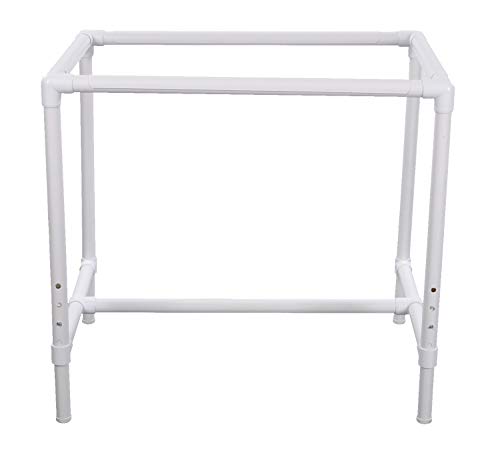
The Dritz floor frame stands apart with height and angle adjustments: it ranges from 30 to 37 inches and offers four leg positions. Its 39-by-28-inch surface gives hand quilters a broad rectangular work area, while the maker says the PVC frame assembles quickly and stores compactly. It is a practical alternative when a floor-standing setup matters more than a long frame that can be shortened. The frame is lightweight at 9 pounds, but its fixed 39-by-28-inch surface cannot be configured into the Edmunds frame’s longer rectangle.
Bottom line: Choose this when an adjustable floor height and tilt matter more than a long narrow frame.
22-Inch Rotating Wooden Quilting Hoop

The 22-inch rotating hoop offers a circular stitching area rather than the rectangular surface of the floor frames. Its maker says the floor stand raises, lowers, and tilts, and the hoop rotates 360 degrees, which can help reposition fabric without moving the whole stand. The wooden hoop suits projects that fit within a 22-inch circle, such as smaller quilt sections or decorative pieces. Its round working area is the main limitation: quilters handling long rectangular sections may prefer a rod-based frame.
Bottom line: Choose this if a rotating circular work area suits your project better than a rectangular frame.
Dritz Quilt-N-Go Lap Frame 14 × 14

The Dritz Quilt-N-Go is the compact choice here, with a 14-by-14-inch work area built for lap-method quilting and quilt-as-you-go projects. Its small size and 0.75-pound weight make it easy to move or put away, and it disassembles for storage or travel. That convenience comes with a smaller stitching window than the floor frames or full-size Edmunds setup. It suits quilters working on a section at a time, but is a poor match if you want a large area of a completed quilt held open at once.
Bottom line: Choose this for lap-method work or a frame that packs away between sessions.
How to Choose a Hand Quilting Frame
Start with the largest continuous section you want to stitch, then choose a rectangular frame, hoop, or lap frame that can hold it. A traditional quilting frame tensions fabric across rollers or rods; a hoop holds a smaller circular area, and a lap frame rests close to the quilter for sectional work. For long rows across a quilt, favor a frame that supports a long rectangle; for compact blocks, a hoop or lap frame can be easier to position. Keep the fabric taut but not stretched out of shape, since excessive tension can distort the quilt sandwich. A useful rule: if a section is wider than the frame’s working area, plan to reposition the fabric as you quilt.
| Work style | Frame shape | What to prioritize |
|---|---|---|
| Long rows or broad sections | Rectangular frame | Usable length and width |
| Small or round-area work | Hoop | Diameter and positioning |
| Section-by-section quilting | Lap frame | Compact working window |
Frame Size and Quilt Fit
Frame size should be judged by the fabric area held at one time, not by the frame’s outside dimensions alone. A 24-inch-wide frame accommodates a narrower working band than a 39-inch-wide surface, while a 22-inch hoop holds a circular area and a 14-inch lap frame is suited to smaller sections. Leave enough fabric outside the stitching zone to attach or secure it without crowding the needle path. If your quilt is wider than the frame, expect to advance or reposition the layers periodically. Measure the quilt section you plan to work on and compare it with the working area before choosing.
Floor Frames, Hoops, and Lap Frames Compared
Floor frames support larger work away from the lap, while hoops and lap frames trade working area for a different handling style. A floor stand can free both hands and place the quilt at a chosen angle; a hoop can be rotated to bring another section into reach. Lap frames keep a smaller section close and can be packed away between sessions. Frame style also affects how often fabric needs repositioning, so a smaller window can mean more setup changes during a large project. The table distinguishes the formats by their typical advantage and tradeoff.
| Type | Typical strength | Common tradeoff |
|---|---|---|
| Floor frame | Large supported area | Needs floor space |
| Hoop on stand | Rotatable local work area | Round, limited window |
| Lap frame | Compact, close work | Frequent repositioning on large quilts |
Set Up Tension and Position Safely
Set the frame so the quilt lies smooth and supported without pulling the fabric drum-tight; over-tension can distort the layers and make stitches harder to control. A comfortable setup keeps shoulders relaxed and elbows near the body, with the working surface high enough to avoid hunching but low enough for easy needle access. For floor frames, confirm the legs are fully assembled and stable before loading a quilt, and keep the frame clear of walkways. If the frame offers tilt or height adjustment, change one setting at a time and check that the quilt remains secure before continuing.
Frequently Asked Questions
How tight should fabric be on a quilting frame?
Keep the quilt layers smooth and lightly taut, not stretched drum-tight. Excessive tension can distort the fabric and make the quilt harder to handle as you stitch.
Can I hand quilt a large quilt on a hoop?
Yes, if you are comfortable moving the hoop as you finish each area. A 22-inch hoop holds a smaller round section at a time, so a rectangular frame may reduce repositioning for long rows.
What size quilting frame works for lap quilting?
A compact 14-by-14-inch frame is suited to lap-method work on a section at a time. For larger areas held open simultaneously, compare a floor frame’s working width and length.
Should quilt fabric be stretched on a frame?
No; secure it smoothly without pulling the quilt sandwich out of shape. Check the tension again after adjusting the frame or advancing the fabric.