
C129 V2 RC Helicopter: Models Compared by Features

The GoolRC C129 V2 RC helicopter suits shoppers seeking a compact 4-channel model with a 6-axis gyro; its 10.55-inch size is the deciding fit. Choose a different model if you want a Huey replica, a larger airframe, or a package that specifies three batteries.
For a named-model search, GoolRC C129 V2 is the C129 V2; GoolRC C129 Orange, 3 Batteries is a related C129, while the remaining options are different helicopter models.
We earn a commission if you buy through links on this page. As an Amazon Associate I earn from qualifying purchases. Products are compared on manufacturer specifications, not hands-on testing.
- Best overall: GoolRC C129 V2 – It is the named C129 V2 model, with 4-channel controls and a 6-axis gyro.
- Best for extra batteries: GoolRC C129 Orange, 3 Batteries – The product name specifies three batteries, unlike the C129 V2 option.
- Best for scale styling: RC ERA C032 UH-1 Huey – Its UH-1 Huey design is distinct from the compact C129 models.
| Product | Best for | Control channels | Length | Stabilization | Shop |
|---|---|---|---|---|---|
| GoolRC C129 V2 | Compact C129 flying | 4 | 10.55 in | 6-axis gyro | Check Price on Amazon |
| GoolRC C129 Orange, 3 Batteries | Spare batteries included | 4 | — | 6-axis gyro | Check Price on Amazon |
| RC ERA C032 UH-1 Huey | Scale-style appearance | 6 | 12.4 in | 6-axis gyro, optical flow, TOF lidar | Check Price on Amazon |
| Syma S107/S107G | Simple beginner flying | — | 17.7 in | Gyro | Check Price on Amazon |
| MD500 C189 Brushless | Larger brushless airframe | 4 | 13.19 in | Barometric and optical flow | Check Price on Amazon |
C129 V2 RC Helicopter and Alternatives
Compare the named C129 V2 with other RC helicopters by controls, size and stabilization features.
GoolRC C129 V2

The GoolRC C129 V2 is the exact model for this search, combining 4-channel controls with a 6-axis gyroscope in a 10.55-inch body. GoolRC describes the aileronless design as flexible and stable. Its compact size may suit someone prioritizing portability, but the specifications do not establish battery count or flight time, so those details may matter to buyers planning longer sessions.
Bottom line: Choose this if you want the named C129 V2 in a compact 4-channel format.
GoolRC C129 Orange, 3 Batteries
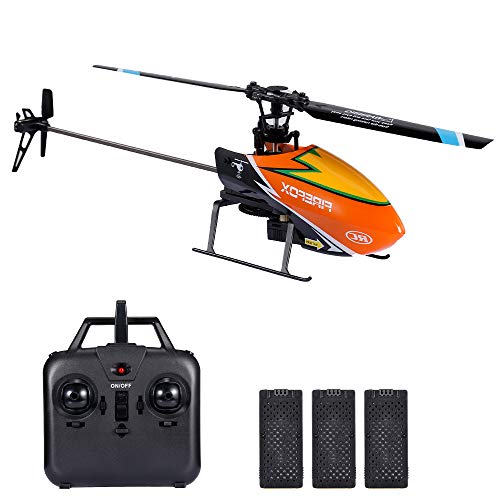
The orange GoolRC C129 differs from the V2 option by specifying three batteries in its product name, while retaining 4-channel control and a 6-axis gyro. The controls include up/down, turning, forward/backward movement and side-flying, and GoolRC describes its aileronless configuration as reducing drag and weight. This is a related C129, not the explicitly named V2, so buyers seeking that precise version should distinguish the model before choosing.
Bottom line: Pick this related C129 if the three-battery package is your priority.
RC ERA C032 UH-1 Huey
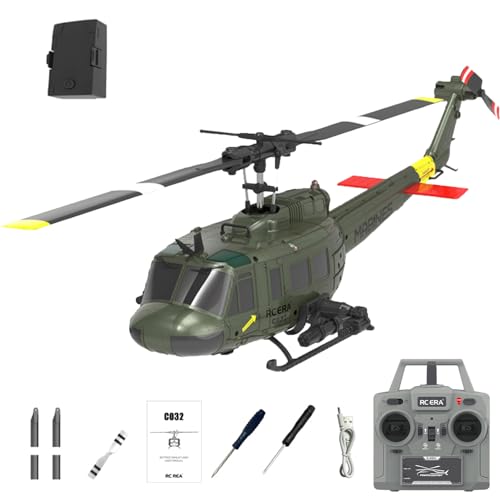
The RC ERA C032 is a larger, 6-channel UH-1 Huey replica rather than a C129-style compact helicopter. Its length is 12.4 inches, and its feature set includes a six-axis gyro, optical flow and TOF lidar; the maker describes these as supporting hover stability and height retention. Three flight speeds are also named, giving the pilot selectable speed settings. Its scale styling and multiple sensors suit buyers who want a different form and feature set, but its larger footprint and different model identity make it a less direct match for someone specifically set on the C129 V2.
Bottom line: Choose it for Huey styling, six channels and its sensor combination.
Syma S107/S107G
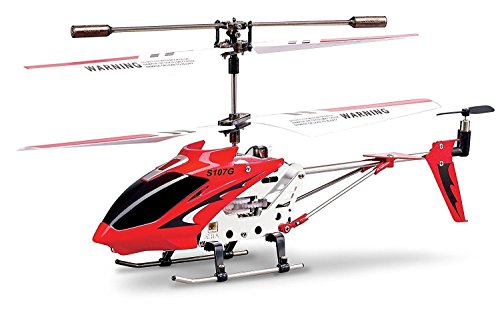
The Syma S107/S107G is a different beginner-oriented gyro helicopter, not a C129 variant. Its feature fields identify a brushed motor and lithium-polymer battery, and the product name indicates the red version. The maker characterizes its flight as stable and easy to fly, which positions it as a straightforward alternative for a buyer comparing basic helicopter formats. Syma says the S107 and S107G differ only in labeling and either label may be shipped.
Bottom line: Consider it if a brushed-motor beginner model matters more than matching the C129 name.
MD500 C189 Brushless
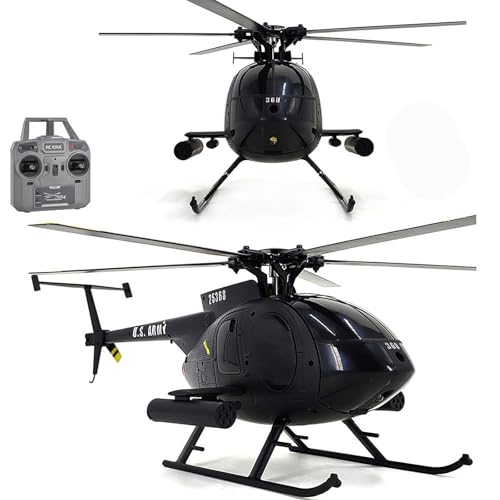
The MD500 C189 stands apart with a 13.19-inch body, 4-channel controls and dual barometric and optical-flow positioning. Its feature fields identify a double brushless motor and say the system performs best indoors in good light, with calm-wind outdoor use also suitable. The maker notes that some horizontal drift can occur and may require transmitter adjustments. This larger hobby-grade model is for buyers who want an MD500-style airframe and its sensor setup, not a direct C129 V2 substitute. Its product name specifies one battery, unlike the orange C129 package that specifies three.
Bottom line: Pick it for the larger MD500 form and brushless, dual-positioning setup.
How to Choose a Small RC Helicopter
Start with the control layout and the flying space, not the model’s marketing label. A 4-channel helicopter typically controls throttle, yaw, pitch and roll; the C129 models also describe side-flying among their functions. A 6-channel setup can add more pilot control, but it may demand more practice. Gyro stabilization helps manage rotation, while optical-flow positioning depends on visible ground texture and adequate light. A practical rule: if you are new to RC helicopters, prioritize a gyro-equipped model with fewer channels before choosing a higher-channel model for added control.
Also compare the package and physical size separately. The orange C129 name specifies three batteries, while other entries name one battery or do not give a count; battery count alone does not establish flight time. Measure the space you can safely use and leave room around the rotor path.
Size and Flying-Space Fit
Match the helicopter’s body dimensions to a clear flying area, and treat rotor diameter as a separate measurement from body length. The C129 V2 body is about 10.55 inches long, while the C032 is 12.4 inches and the C189 is about 13.19 inches; those figures do not tell you how much room the spinning rotor needs. Before a first flight, clear people, pets, fragile objects and loose material from the area. Indoor optical-flow sensors also need useful visual texture and light to hold position.
A calm outdoor area may offer more room, but small helicopters can be affected by moving air. Avoid flying near roads, overhead wires or people, and choose an open area where you can maintain visual control. Check the rotor span and the operating instructions for the specific model before selecting a room or outdoor space.
Gyro, Optical Flow and Altitude Hold
A 6-axis gyro senses angular movement and helps stabilize a helicopter’s attitude; it is not the same as a sensor that measures position over the ground. Optical flow uses visual changes in the surface below to estimate movement, so even a capable sensor may struggle over a blank floor or in poor light. Barometers estimate height from air pressure, while TOF lidar measures distance using light. A helicopter with several sensors may offer more kinds of stabilization, but sensor names alone do not guarantee a drift-free hover.
Altitude hold is intended to maintain height, not to keep a model fixed in one spot. Keep a hand on the controls, start in a clear area, and use small corrections. If the product’s sensor system is a deciding feature, compare the sensor types and the maker’s lighting or wind conditions.
Frequently Asked Questions
How many channels does the C129 V2 have?
The GoolRC C129 V2 is identified as a 4-channel helicopter. Its functions include vertical movement, turning, forward and backward travel, and side-flying.
What does a 6-axis gyro do on a helicopter?
A 6-axis gyro senses angular motion and supports attitude stabilization. It does not by itself mean that the helicopter can hold an exact position over the ground.
Can I fly a small RC helicopter outdoors?
Some models are described for calm-wind outdoor flight, but small helicopters are sensitive to moving air. Use an open area away from people, roads and overhead wires, and maintain visual control.
Does altitude hold keep a helicopter in one place?
Altitude hold is intended to maintain height, not to lock a helicopter’s position horizontally. Wind, sensor type and the surface below can affect how much drift occurs.
Why does optical flow need good lighting?
Optical flow estimates movement by tracking visual changes on the surface below, so low light or a plain, featureless floor can reduce useful visual cues. The C189 maker specifically says its optical-flow positioning works best indoors in well-lit conditions.