
Best Lubricant for Hedge Trimmer Blades: 4 Picks Compared

DEWALT Hedge Trimmer Oil, 8 oz suits most hedge-trimmer owners because it is specifically formulated for high-speed hedge trimmer blades and includes a sap-prevention additive.
We earn a commission if you buy through links on this page. As an Amazon Associate I earn from qualifying purchases. Products are compared on manufacturer specifications, not hands-on testing.
- Best overall: DEWALT Hedge Trimmer Oil, 8 oz – Formulated for high-speed hedge trimmers and includes a sap-prevention additive.
- Best for resin: Stihl Resin Solvent, 10.14 fl oz – The specifications identify resin dissolving as a function.
| Product | Best for | Size | Primary use | Shop |
|---|---|---|---|---|
| DEWALT Hedge Trimmer Oil, 8 oz | High-speed trimming | 8 oz | Lubricates hedge trimmer blades | Check Price on Amazon |
| Stihl Resin Solvent, 10.14 fl oz | Resin cleanup | 10.14 fl oz | Dissolves resin and rust | Check Price on Amazon |
| STA-BIL Blade Guard, 12 oz | Outdoor tool care | 12 fl oz | Cleans and protects outdoor tool blades | Check Price on Amazon |
| Hedge-pro Blade Cleaner and Lubricant | Combined blade care | — | Cleans and lubricates hedge trimmer blades | Check Price on Amazon |
Hedge Trimmer Blade Lubricants Compared
Choose by whether routine lubrication, sap or resin cleanup, or targeted joint care is the main task.
DEWALT Hedge Trimmer Oil, 8 oz
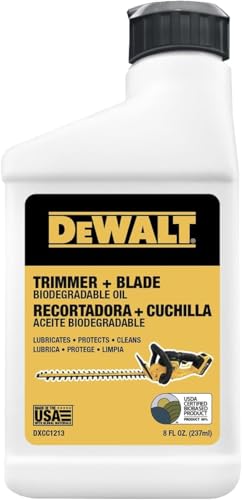
For high-speed hedge trimming, this oil is the most directly tailored choice in the group. The maker says it is designed for commercial high-speed trimmers and contains a bio-solvent additive to help limit sticky sap buildup. The 8-ounce bottle is made from soybean oil and is described as biodegradable. Its all-season, high-temperature stability is also a maker claim. Choose it for recurring blade lubrication where sap is a concern. The specifications do not identify an applicator style, so buyers who need a precision tip should choose a different format.
Bottom line: Choose it for frequent high-speed hedge trimming where sap buildup is a concern.
Stihl Resin Solvent, 10.14 fl oz

For blades coated with resin, this solvent is the distinct cleanup-oriented choice rather than a general-purpose oil. The specifications say it dissolves resin and rust, contains graphite, and is intended for hedge trimmer blades and cutting attachments as well as chainsaws. Its 10.14-fluid-ounce size suits buyers who want a dedicated solvent for sticky residue. The fields do not describe a delivery method or explicitly claim routine lubrication, so choose it for residue removal rather than assuming it replaces a blade oil after cleaning.
Bottom line: Pick it when dissolving resin or rust on cutting attachments is the priority.
STA-BIL Blade Guard, 12 oz

For broader outdoor-tool maintenance, this 12-fluid-ounce blade protectant is positioned beyond hedge trimmers alone. Its maker says the bio-based formula can be used on gas and electric tools and helps protect against rust and corrosion while cleaning blades. That makes it a reasonable fit for someone maintaining several types of yard equipment, not only hedge trimmer blades.
Bottom line: Choose it for general cleaning and corrosion protection across outdoor tools.
Hedge-pro Blade Cleaner and Lubricant

For a product explicitly combining cleaning and lubrication, Hedge-pro offers a straightforward hedge-trimmer-focused option. The maker says it will not harm bushes and says it reduces blade wear; the product is also identified as made in the USA. These claims make it relevant to routine blade care when both cleaning and lubrication are wanted in one product.
Bottom line: Pick it when combined cleaning and lubrication for hedge-trimmer blades is the goal.
How to choose hedge trimmer blade lubricant
Choose a product according to the job: routine lubrication, residue removal, or protection after cleaning. Hedge-trimmer teeth slide against each other, so clean away sap before applying lubricant; coating dirty blades can leave residue in the cutting area. A formula specifically intended for high-speed hedge trimmers is the clearest match for frequent trimming, while a solvent labeled to dissolve resin serves a different cleanup purpose. For several yard tools, a general blade protectant may be more versatile. If precise oil placement matters, favor a bottle with a narrow applicator tip. With visible sticky resin, clean first; with clean blades after routine work, use a lubricant suited to the blade rather than relying on a solvent alone.
Cleaning sap and resin from hedge trimmer blades
Remove sap and resin before lubricating, because residue can interfere with smooth blade movement. Unplug an electric trimmer or remove its battery; for a gas model, switch it off and let hot parts cool before handling the blade. Brush debris away and use a cleaner or solvent intended for cutting attachments when resin remains. Solvents and oils can be flammable, so keep them away from sparks, flames and hot engines, and follow the container’s safety directions. After cleaning, apply lubricant sparingly and wipe excess from exposed surfaces. Do not reach between teeth or handle sharp edges barehanded; wear suitable gloves and keep the tool disabled during care.
Oil, blade protectant and resin solvent compared
Blade oil is for lubrication, a protectant emphasizes cleaning and corrosion care, and a resin solvent is for dissolving buildup. Those purposes overlap only partly, so select by the blade’s condition rather than treating every product as interchangeable. Hedge trimmer teeth need clean contact surfaces; excess oil can attract dirt, while residual solvent may not provide the continuing lubrication a blade needs. The table gives a practical match by task.
| Need | Product type | Choose when |
|---|---|---|
| Routine blade lubrication | Hedge-trimmer oil | Blades are clean and need lubrication |
| General blade cleaning and protection | Blade protectant | Maintaining multiple outdoor tools |
| Sticky buildup removal | Resin solvent | Resin or rust needs dissolving |
| Small pivot or joint application | Precision oil | Targeting a hinge or narrow joint |
Safe care and storage for hedge trimmer blades
Disable the trimmer before cleaning or oiling: disconnect the plug or battery, or stop the engine and let the tool cool. Keep hands away from the teeth, even when the motor is off, because sharp blades can cut during handling. After trimming, remove plant matter and sap, then leave the blade clean and lightly protected before storage; wipe away pooled oil that could collect grit. Store oils and solvents in their original containers, away from heat and ignition sources. A product intended for exposed metal can help protect against corrosion, but do not assume that every cleaner provides the same storage protection as a lubricant.
Frequently Asked Questions
How often should hedge trimmer blades be lubricated?
Lubricate after cleaning when the blade surfaces are dry, and before storage if the product is intended to protect exposed metal. Sap-heavy trimming calls for cleaning and lubrication more often than light, dry clipping.
Can I use motor oil on hedge trimmer blades?
A purpose-made blade lubricant is the safer choice because blade care calls for lubrication without leaving excess that collects grit. Apply only a thin coating to clean blades and wipe off pooling.
Should I clean hedge trimmer blades before oiling?
Yes, remove sap, leaves and other residue before applying oil so the lubricant reaches the blade surfaces. Disable the tool first, and use a resin-dissolving product when sticky buildup remains.
Can hedge trimmer lubricant prevent rust during storage?
Some blade lubricants and protectants are described as protecting exposed metal from rust or corrosion, but not every cleaner makes that claim. Clean and dry the blade before storage, then use a product suited to metal protection.
Is blade lubricant safe around plants?
Plant compatibility depends on the formula, so use only a product whose maker explicitly claims plant-friendly use. Keep lubricant off foliage where possible and wipe excess from the blade.