
Best Brace for Forearm Pain: 4 Options Compared

The Bodyprox Elbow Brace 2 Pack suits most people seeking a brace for forearm pain because it pairs adjustable straps with compression gel pads and includes two braces. Choose another option if you want a single arm band, a detachable pad or a specified fit range instead.
We earn a commission if you buy through links on this page. As an Amazon Associate I earn from qualifying purchases. Products are compared on manufacturer specifications, not hands-on testing.
- Best overall: Bodyprox Elbow Brace 2 Pack – Includes two adjustable braces with compression gel pads.
- Best for a stated fit range: Sleeve Stars Tennis Elbow Brace – Fits arm circumferences from 9 to 23 inches.
| Product | Best for | Pack count | Pad design | Shop |
|---|---|---|---|---|
| Bodyprox Elbow Brace 2 Pack | Two-brace set | 2 braces | Compression gel pad | Check Price on Amazon |
| Sleeve Stars Tennis Elbow Brace | Broad fit range | 1 brace | Adjustable strap | Check Price on Amazon |
| FREETOO Tennis Elbow Brace | Detachable pad | 1 brace | Detachable gel pad | Check Price on Amazon |
| Two-Pack Tennis Elbow Brace | EVA pad pair | 2 braces | EVA compression pad | Check Price on Amazon |
Braces for Forearm Pain
Compare the support style and fit details to choose the brace that suits your forearm pain and activities.
Bodyprox Elbow Brace 2 Pack
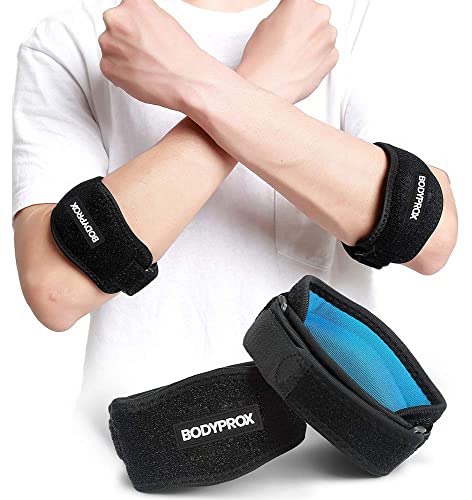
The two-brace pack sets this option apart for people who want a pair rather than one arm band. Each brace has an adjustable Velcro strap and a compression gel pad, with breathable, lightweight materials for sports, workouts, work or daily tasks. The maker says the design helps reduce forearm stress associated with repetitive motion. This format suits people who may need support on both arms or want a spare. The fit range and whether the straps accommodate a particular arm circumference are not established here, so buyers who need a precise fit should verify it before ordering.
Bottom line: Pick this if you want two adjustable gel-pad braces.
Sleeve Stars Tennis Elbow Brace

The 9-to-23-inch fit range distinguishes this single brace from the other options. Its adjustable hook-and-loop strap allows customized compression, and the product is positioned for tennis elbow, golfer’s elbow and forearm support. Choose this model for one black brace with a broad stated range, rather than a two-pack or a design built around a detachable gel pad.
Bottom line: Choose this when its circumference range matches your arm.
FREETOO Tennis Elbow Brace

A detachable gel pad is the distinguishing feature of this adjustable tennis- and golfer’s-elbow strap. The maker says the pad targets pressure around the painful elbow muscle and that overlapping the buckle and silicone pad provides double pressure. The product can be worn for activities such as tennis, golf, weightlifting and pickleball. This option suits someone seeking a pad-focused design who prefers a small/medium size designation.
Bottom line: Pick this if you want an adjustable brace with a detachable pad.
Two-Pack Tennis Elbow Brace

This two-pack uses an EVA pad rather than the gel-pad designs in some alternatives. Adjustable straps are intended to provide a tailored fit, and the maker positions the braces for elbow strain associated with sports or repetitive tasks. The pair suits buyers who want two braces and a pressure pad for activities such as tennis or golf. The specifications do not establish a size range or whether the straps fit a particular arm circumference, so people who need a measured fit should confirm it before ordering. It is a straightforward choice when pack count and EVA pad material matter most.
Bottom line: Choose this for a pair of adjustable braces with EVA pads.
How to choose a forearm pain brace
Choose by where pressure should sit, how the brace closes and whether the fit is measurable. Counterforce straps generally place a pad just below the elbow over forearm muscle; a snug band can redirect force during gripping, while excessive tightness can cause numbness or tingling. A pad-focused strap, a plate-based arm band and a pair of braces are different formats, not interchangeable size choices. Measure arm circumference at the placement point given by the maker, and compare that number with a range; when no range is available, verify the fit before ordering. For activity-related discomfort, prioritize a closure you can adjust and remove promptly if symptoms worsen.
| Need | Choice cue |
|---|---|
| Two supports | Choose a two-brace pack |
| Measured circumference | Choose the option with a 9–23-inch range |
| Detachable pressure pad | Choose a detachable gel-pad design |
Where an elbow counterforce strap sits
An elbow counterforce strap is usually positioned on the forearm muscle just below the elbow, not directly over the elbow joint. Placement matters because the strap’s pad is meant to compress soft tissue rather than pinch the joint crease. Keep the strap snug enough to stay in place during gripping, but loosen or remove it if the hand becomes numb, tingly, cold or discolored. Do not use a brace to mask pain that is severe, follows a major injury or continues to worsen; seek medical advice in those cases. A brace can change pressure during movement, but it does not identify the cause of forearm pain.
Forearm brace fit and safe wear
Fit should be secure without restricting circulation or hand movement. Measure circumference where the strap will sit, since upper-forearm and elbow measurements are not interchangeable; a range like 9 to 23 inches is useful only if the maker’s measurement location matches yours. Start with a comfortable, adjustable tension rather than pulling the strap as tight as possible. Remove the brace for skin checks, and stop wearing it if irritation or numbness develops. For ongoing pain, reduced grip strength or swelling, a clinician can help distinguish tendon irritation from other causes and advise whether compression is appropriate.
Frequently Asked Questions
Where should a forearm brace sit for tennis elbow?
A counterforce strap generally sits on the forearm muscle just below the elbow, rather than over the joint crease. Position the pad over the forearm muscle and adjust until the strap stays in place without numbness or tingling.
How tight should an elbow strap feel?
An elbow strap should feel snug enough to remain in place during movement, but it should not cause numbness, tingling, coldness or color change in the hand. Loosen or remove it if any of those symptoms appear.
Can I wear a forearm brace while exercising?
Many counterforce straps are intended for activity, including sports and repetitive tasks. Stop the activity and remove the brace if pain increases or hand sensation changes.
How do I measure for an elbow brace?
Measure circumference at the forearm placement point specified for the brace, not at an unrelated part of the elbow. A range is useful only when its measurement point matches where you plan to wear the strap.