
Best Vinyl Flooring Adhesive Removers for Old Glue

Sentinel Formula 626, 5 Gallons is the best fit for most sheet-vinyl adhesive removal because it is specifically made for carpet and sheet vinyl adhesive. Choose Max Strip Floor Adhesive Remover, 1 Gallon for a broader range of floor glues or Blue Bear BEAN-e-doo Concrete Mastic Remover, 1 Gallon when the adhesive is on concrete.
Floor adhesive removers soften glue so it can be lifted from a surface; the right choice depends on the adhesive and subfloor. If old flooring or mastic may contain asbestos, do not scrape or sand it—get qualified guidance before disturbing it.
We earn a commission if you buy through links on this page. As an Amazon Associate I earn from qualifying purchases. Products are compared on manufacturer specifications, not hands-on testing.
- Best overall: Sentinel Formula 626, 5 Gallons – Specifically targets carpet and sheet-vinyl adhesive.
- Best for varied floor glue: Max Strip Floor Adhesive Remover, 1 Gallon – Targets carpet and tile glues, mastic, construction adhesives, and more.
- Best for concrete mastic: Blue Bear BEAN-e-doo Concrete Mastic Remover, 1 Gallon – Made for concrete and covers about 125 square feet per gallon on horizontal surfaces.
| Product | Best for | Target adhesive | Suitable surface | Container | Shop |
|---|---|---|---|---|---|
| Sentinel Formula 626, 5 Gallons | Sheet-vinyl glue | Carpet and sheet-vinyl adhesive | — | 5 gallons | Check Price on Amazon |
| Max Strip Floor Adhesive Remover, 1 Gallon | Mixed floor glue | Carpet glue, tile adhesive, mastic | Concrete and wood | 1 gallon | Check Price on Amazon |
| Blue Bear BEAN-e-doo Concrete Mastic Remover, 1 Gallon | Concrete mastic | Mastic, tile and carpet adhesives | Concrete | 1 gallon | Check Price on Amazon |
Vinyl Flooring Adhesive Removers
Match the remover to both the glue and the floor beneath it before starting.
Sentinel Formula 626, 5 Gallons

For sheet-vinyl adhesive, this remover has the most directly matched target among these options. Sentinel says the formula is biodegradable and provides fast removal; it also targets carpet adhesive and vinyl decals. The 5-gallon container suits a larger project better than a small spot cleanup. Before applying any remover, identify the subfloor and test a small area, since adhesive products can affect flooring or finishes differently. This is a broad-use adhesive remover rather than a concrete-only mastic product, so choose another option if the job is specifically old mastic on concrete.
Bottom line: Choose it for a sheet-vinyl adhesive project with a larger area to cover.
Max Strip Floor Adhesive Remover, 1 Gallon

For varied floor glue, this remover covers more adhesive types than the sheet-vinyl-specific option: carpet and tile glue, mastic, construction adhesives, and Liquid Nails. The maker says it contains no methylene chloride or NMP and advises checking the surface every 90 minutes before scraping. It is intended for concrete and wood, which makes substrate compatibility a key part of the choice. Its broad target range does not make it the best match for every delicate or finished surface; confirm the floor beneath the adhesive can tolerate the application before treating a large area.
Bottom line: Pick it when the floor has mixed carpet, tile, or construction adhesive residue.
Blue Bear BEAN-e-doo Concrete Mastic Remover, 1 Gallon
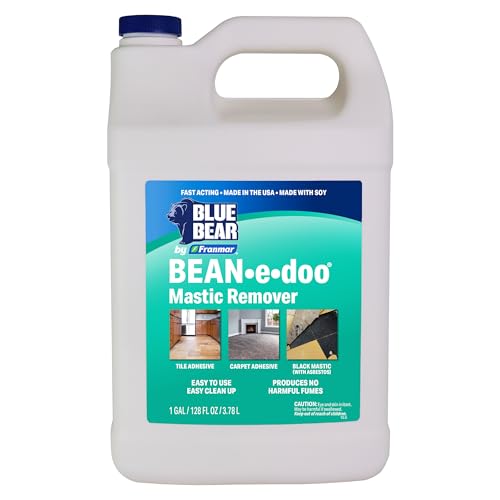
For mastic on concrete, this soy-based remover is the specialized choice; the maker says it softens old tile and carpet adhesives, including black mastic. It is designed for concrete restoration rather than general use across wood or finished flooring. The maker gives coverage of about 125 square feet per gallon on horizontal surfaces, a useful planning figure for a flat floor. That coverage does not establish how much product a particular adhesive needs, and this product is not a reason to disturb suspected asbestos-containing material; get qualified help first.
Bottom line: Choose it for adhesive or mastic removal from a concrete surface.
How to choose a vinyl flooring adhesive remover
Choose by adhesive type first, then confirm the surface is a suitable match. Carpet glue, tile adhesive, construction adhesive, and mastic are not interchangeable labels: a remover aimed at one may not be the right choice for another. Sheet vinyl can also be bonded with pressure-sensitive adhesive, while older floors may have different mastics. Work on a small test area before treating the whole floor, and allow enough time for the product to soften the glue rather than forcing it with a scraper. A practical decision rule is to choose a concrete-specific formula when the substrate is concrete; for wood, use a remover whose surface includes wood. Protect nearby finished surfaces from runoff and residue.
Check the floor and adhesive before scraping
Suspected asbestos changes the job: do not scrape, sand, grind, or dry-brush old flooring or mastic that may contain it. Asbestos fibers can become airborne when material is disturbed, and appearance alone cannot identify asbestos reliably. Flooring and adhesive in older buildings can warrant assessment before removal; contact an accredited asbestos professional for testing and next steps. Even when asbestos is not suspected, use a plastic scraper where practical and avoid gouging a wood subfloor. Concrete tolerates more aggressive scraping than a resilient finish, but deep scratches can still make later flooring installation uneven. Keep children and pets away from the work area, ventilate as the product label directs, and collect softened adhesive without spreading it to clean surfaces.
Plan coverage and cleanup for floor adhesive
Estimate the floor area before opening a container: the concrete mastic formula gives about 125 square feet per gallon on horizontal surfaces, while actual use depends on adhesive thickness and surface texture. Adhesive removers work by softening residue, so a thicker or uneven layer may need more product or time than a thin film. Remove softened glue with a scraper, then follow the remover’s label for residue cleanup and disposal; do not assume one cleanup method suits every chemical or subfloor. Avoid pouring leftover remover or adhesive residue into a drain. Before installing new flooring, make sure the subfloor is clean, dry, and compatible with the new flooring adhesive, since residue can interfere with bonding.
Frequently Asked Questions
How can I tell what kind of vinyl floor adhesive I have?
Start with the flooring age, adhesive color, and how firmly it is bonded, but none of those reliably identifies asbestos. Dark mastic can be a reason for caution; have suspect material assessed before scraping or sanding.
Can I remove vinyl flooring glue from a wood subfloor?
Yes, if the remover is intended for wood and the floor can tolerate its application. Test a small area first and use a scraper carefully, since gouges in wood can leave an uneven base for replacement flooring.
How much adhesive remover do I need for a floor?
Use the product’s coverage figure as a starting estimate, not a guarantee. For example, the concrete mastic formula gives about 125 square feet per gallon on horizontal surfaces, and thick or textured residue may require more.
Should I scrape old black floor mastic myself?
Not if asbestos may be present. Scraping can release fibers from asbestos-containing material; avoid disturbing it and consult an accredited asbestos professional about testing and removal.
What should I do after removing vinyl floor adhesive?
Remove softened residue and clean the subfloor using the remover label’s instructions. Before laying new flooring, confirm the surface is clean and dry because leftover adhesive or remover can interfere with bonding.