
Dial Vision Adjustable Glasses: 4 Models Compared

PUDOEN Flex Focal Adjustable Glasses is the closest match for dial vision adjustable glasses, with separate side dials and a stated +0D to +3.5D adjustment range. Choose Vi Shift Adjustable Glasses instead if you need a wider range that includes negative power; adjustable glasses are not a replacement for an eye-care professional’s prescription.
We earn a commission if you buy through links on this page. As an Amazon Associate I earn from qualifying purchases. Products are compared on manufacturer specifications, not hands-on testing.
- Best overall: PUDOEN Flex Focal Adjustable Glasses – Separate side dials adjust from 0D to +3.5D.
- Best for wider range: Vi Shift Adjustable Glasses – Each lens adjusts from -6.00D to +3.00D.
- Best for screen use: ASMZEN Adjustable Vision Glasses – The maker describes the glasses as blue-light blocking.
| Product | Best for | Focus range | Controls | Shop |
|---|---|---|---|---|
| PUDOEN Flex Focal Adjustable Glasses | Positive-power readers | 0D to +3.5D | Separate side dials | Check Price on Amazon |
| Vi Shift Adjustable Glasses | Wider focus range | -6.00D to +3.00D | Separate side dials | Check Price on Amazon |
| PUDOEN Adjustable Glasses | Simple positive range | 0D to +3.5D | Separate side dials | Check Price on Amazon |
| ASMZEN Adjustable Vision Glasses | Screen-time readers | 0D to +3.5D | Individual lens adjustment | Check Price on Amazon |
Dial vision adjustable glasses
Compare the adjustment ranges and controls to find a pair suited to your viewing needs.
PUDOEN Flex Focal Adjustable Glasses
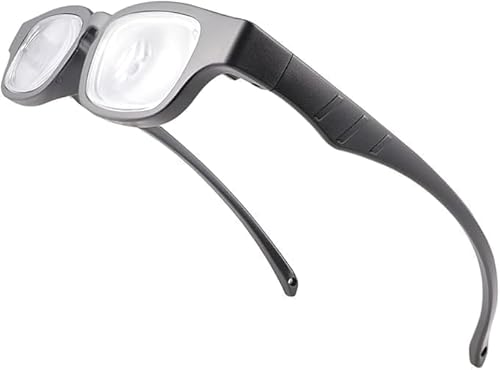
PUDOEN Flex Focal Adjustable Glasses has the same positive adjustment range as PUDOEN Adjustable Glasses, with its Flex Focal name distinguishing it in this pair of near-focused options. The maker says a dial on each side lets you adjust focus, and gives the range as 0D to +3.5D. That range may suit someone seeking adjustable magnification for reading rather than negative-power correction. The color is black. A limitation is that the range does not extend below 0D, so buyers needing negative correction should compare it with Vi Shift Adjustable Glasses.
Bottom line: Choose these if you want separate dials and a 0D to +3.5D positive range.
Vi Shift Adjustable Glasses

Vi Shift Adjustable Glasses is the only option here whose range includes negative as well as positive power: -6.00D to +3.00D for each lens. The maker says each side dial adjusts independently, and the package includes a black pouch and vision chart. PC lenses and a 91.3 g design are also specified. That broader range may suit a buyer who wants manual focus for both near and distance tasks. Its positive endpoint is +3.00D, below the +3.5D endpoint on PUDOEN Flex Focal Adjustable Glasses, PUDOEN Adjustable Glasses, and ASMZEN Adjustable Vision Glasses.
Bottom line: Choose these if your desired adjustment includes negative power.
PUDOEN Adjustable Glasses

PUDOEN Adjustable Glasses shares the same 0D to +3.5D range and separate side-dial setup as PUDOEN Flex Focal Adjustable Glasses, making the adjustment range—not a broader correction range—the key fit point. The maker describes the glasses as adjustable-focus readers for men and women, and the color is black. This positive-only range is aimed at near magnification rather than negative-power adjustment. If your viewing needs include negative correction, Vi Shift Adjustable Glasses is the distinct option in this group with a range below 0D.
Bottom line: Pick these for positive-only adjustment with a dial for each side.
ASMZEN Adjustable Vision Glasses

ASMZEN Adjustable Vision Glasses pairs a 0D to +3.5D range with individual lens adjustment, and the maker describes its lenses as blue-light blocking. It is the option to consider if that screen-use feature matters alongside adjustable positive power. The maker also describes a lightweight design for extended wear, but no weight figure is given. This pair does not offer the negative-power range stated for Vi Shift Adjustable Glasses, so it is a poorer fit for someone seeking that type of adjustment.
Bottom line: Choose these if you want adjustable positive power and the maker’s blue-light-blocking feature.
How to choose adjustable glasses by focus range
Start with the range you need: three options here adjust from 0D to +3.5D, while Vi Shift Adjustable Glasses spans -6.00D to +3.00D. Diopters measure optical power; positive power is commonly used for near magnification, while negative power is used for nearsighted correction. These dial glasses let the wearer tune lens power, but they do not establish a personalized prescription. If you need a known correction, compare the range with your prescription and ask an eye-care professional whether this lens type is appropriate. Choose a model with independent controls if your two eyes need different settings; confirm the glasses can be adjusted separately before relying on them for that purpose.
What adjustable lens diopters mean
A diopter is the reciprocal of focal length in meters: 2D corresponds to a nominal 0.5-meter focal length, and 3D to about 0.33 meter. That relationship is a lens-power reference, not a guaranteed working distance, since eye accommodation, the frame position, and the task affect comfortable focus. A positive range starting at 0D does not offer the same correction as a range that includes negative values. Use a target you can identify clearly at your usual reading distance, then adjust each side independently if the controls allow it. Stop if the view stays blurred, doubled, or uncomfortable rather than forcing a setting.
Where adjustable readers fit and where they do not
Adjustable readers can change focus for different tasks, but they are not a universal substitute for prescription eyewear. Ordinary spherical lens power does not correct astigmatism or prism, and a wide adjustment range alone cannot confirm that a pair matches an eye exam. These glasses should not be used for driving or other tasks where clear distance vision is safety-critical; near-focused settings can blur distant objects. For a screen, set the focus at the actual screen distance instead of assuming that a reading setting will work. Persistent blur, eye strain, or a sudden vision change calls for professional evaluation rather than more dial adjustment.
How to compare dial glasses before choosing
Use the table to match the adjustment range and a distinct feature to your purpose. Positive-only ranges suit buyers looking for near magnification; a range extending below 0D is the relevant distinction for a buyer seeking negative power. Lens material is specified only for Vi Shift Adjustable Glasses, so it is not a direct material comparison across all four. Do not infer prescription accuracy or safety from the number of available settings. Confirm that the exact range covers your intended correction, especially if you already use prescription lenses.
| Need | Relevant feature | Option |
|---|---|---|
| Positive adjustment | 0D to +3.5D | PUDOEN Flex Focal Adjustable Glasses, PUDOEN Adjustable Glasses, or ASMZEN Adjustable Vision Glasses |
| Negative and positive adjustment | -6.00D to +3.00D per lens | Vi Shift Adjustable Glasses |
| Screen-use feature | Maker describes lenses as blue-light blocking | ASMZEN Adjustable Vision Glasses |
Frequently Asked Questions
Can adjustable glasses replace prescription glasses?
No, not for everyone. Dial focus changes lens power, but it does not by itself correct astigmatism or prism, so match the range to your eye-care prescription when one is needed.
What does a 3.5D reading setting mean?
A 3.5D lens has a nominal focal length of about 0.29 meter, calculated as 1 divided by 3.5. Actual comfortable reading distance also depends on the eye and task.
Can each eye be adjusted separately?
Several models here specify individual lens adjustment or a dial on each side. Adjust one side at a time using a clear target, and do not assume a setting is correct if vision remains blurred.
Are adjustable reading glasses safe for driving?
Do not use near-focused reading glasses for driving. A near setting can blur distant road signs and hazards; use eyewear prescribed or approved for distance driving instead.
When should I stop adjusting the lenses?
Stop if the view remains blurred, doubled, or uncomfortable across the available settings. Sudden changes in vision or persistent symptoms warrant an eye-care professional’s assessment rather than continued dial adjustment.