
Best Ruger Pellet Rifle FPS: 3 Models Compared

Ruger Blackhawk .177 suits most adult buyers seeking high advertised FPS, with a maker-rated velocity of 1,000 feet per second. Choose Ruger Explorer Youth .177 instead for its youth-oriented shorter design and 495-fps limit, or Ruger Targis Hunter Max .22 if you specifically want a .22-caliber rifle with an adjustable scope.
Pellet rifles use compressed air or a spring-driven piston to propel pellets; choose by intended use and fit, not FPS alone.
We earn a commission if you buy through links on this page. As an Amazon Associate I earn from qualifying purchases. Products are compared on manufacturer specifications, not hands-on testing.
- Best overall: Ruger Blackhawk .177 – Its advertised velocity reaches 1,000 feet per second, and it includes a 4×32 scope.
- Best for smaller shooters: Ruger Explorer Youth .177 – The youth-oriented break-barrel design is rated up to 495 feet per second and has fiber-optic sights.
- Best for .22 scope users: Ruger Targis Hunter Max .22 – It pairs a .22 caliber with an included adjustable 3-9×32 scope.
| Product | Best for | Caliber | Advertised velocity | Sighting | Shop |
|---|---|---|---|---|---|
| Ruger Blackhawk .177 | Higher advertised velocity | .177 | 1,000 ft/s | 4×32 scope | Check Price on Amazon |
| Ruger Explorer Youth .177 | Smaller shooters | .177 | 495 ft/s | Fiber-optic sights | Check Price on Amazon |
| Ruger Targis Hunter Max .22 | .22 scope setup | .22 | — | Adjustable 3-9×32 scope | Check Price on Amazon |
Ruger Pellet Rifles by FPS
Compare the advertised velocity, caliber and sighting setup to find a rifle that fits your intended use.
Ruger Blackhawk .177
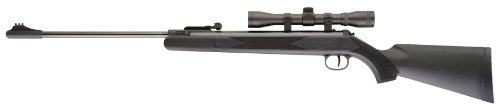
Ruger Blackhawk .177 has the highest velocity figure among these Ruger options: 1,000 feet per second in .177 caliber. The package includes a 4×32 scope, so it suits an adult buyer who wants an optic-equipped break-barrel-style pellet rifle rather than a lower-velocity youth model. The rifle weighs 3 pounds and measures 42 inches long. Ruger provides a one-year limited warranty. The main limitation is that FPS alone does not establish accuracy or suitability for a particular target; pellet weight and the intended use matter, too.
Bottom line: Pick this if the 1,000-fps rating and included scope are your priorities.
Ruger Explorer Youth .177

Ruger Explorer Youth .177 trades a high velocity figure for a youth-oriented fit: its maker rates it up to 495 feet per second, and its overall length is 37.125 inches. The spring-powered break-barrel uses a single-shot cocking mechanism and fiber-optic sights, with an all-weather synthetic thumbhole stock and rubber recoil pad. Its anti-slam trigger-barrel safety system and automatic safety are useful features to understand before use, but they do not replace adult supervision and safe handling. This is the clearest fit for a smaller shooter; its lower advertised velocity is a drawback for buyers prioritizing maximum FPS.
Bottom line: Choose this for a smaller shooter who needs a shorter, lower-velocity rifle.
Ruger Targis Hunter Max .22
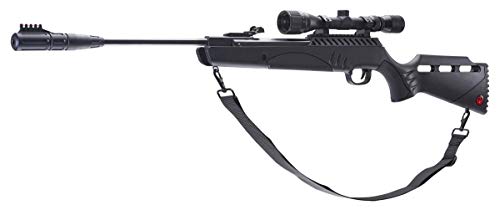
Ruger Targis Hunter Max .22 stands apart by pairing .22 caliber with an adjustable 3-9×32 scope, rather than the .177 caliber and fixed 4×32 scope supplied with Ruger Blackhawk .177. Its all-weather stock has checkered rubber inserts and a rubber recoil pad, and the package includes an adjustable sling. The maker says its Nucleus Rail Platform is designed to reduce scope movement and vibration, while the permanently affixed SilencAir dampener is intended to reduce down-range noise. Before choosing it for an FPS-based comparison, confirm its velocity rating; this rifle’s specifications do not give a figure.
Bottom line: Pick this when .22 caliber and an adjustable scope matter more than a FPS figure.
How to choose a Ruger pellet rifle by FPS
Choose by the job and shooter first, then use FPS to compare models intended for the same job. A higher advertised speed does not automatically mean better accuracy: pellet weight, fit, and the rifle’s consistency also affect results. Light alloy pellets can produce higher velocity readings than heavier lead pellets, so compare ratings only when the pellet type and test conditions match. For general target shooting, prioritize a manageable rifle and a sighting setup you can use comfortably; for a smaller shooter, length and cocking effort can outweigh a higher speed figure. Never aim at people or animals, and use a proper pellet-rated backstop that will stop both the pellet and any ricochet.
Understanding pellet rifle FPS ratings
FPS means feet per second, the speed at which a pellet leaves the muzzle. Manufacturers often advertise a maximum under chosen conditions, and the actual speed can change with pellet material, shape, and weight; heavier pellets generally travel slower than light pellets in the same rifle. That is why a bare FPS figure is not a complete measure of downrange energy or accuracy. Compare like with like: caliber, pellet weight, and whether the figure is a maximum or typical value. When the rating is a deciding factor, confirm the pellet used for the claim and look for a chronograph reading from the same pellet you plan to shoot.
Choosing caliber and sights
For a useful comparison, keep caliber and sight setup in view alongside velocity. A .177 rifle and a .22 rifle do not launch the same pellet size, so their FPS numbers are not a direct apples-to-apples performance ranking. A fixed 4x scope provides one magnification, while an adjustable 3-9x scope gives a range of magnifications; fiber-optic sights need no scope alignment but require the shooter to use the rifle’s open sights. Use this quick fit guide as a starting point, then match it to the intended target and shooter.
| Need | Compare | Reason |
|---|---|---|
| Higher listed speed | Advertised FPS | Compare values only under similar pellet conditions |
| Smaller shooter | Length and weight | A manageable fit supports controlled handling |
| Variable magnification | Scope range | Adjustable scopes offer multiple magnifications |
Safe handling and backstop basics
Handle every pellet rifle as if it is loaded, keep the muzzle pointed in a safe direction, and keep fingers off the trigger until ready to shoot. A pellet can penetrate soft targets and ricochet from hard surfaces, so choose a pellet-rated trap or backstop with a safe, clear area behind it; do not rely on a cardboard target alone. Wear eye protection when shooting, and keep the rifle secured from children when it is not in use. For youth-oriented rifles, adult supervision remains essential even when the rifle includes automatic or anti-slam safety features. Check local rules before shooting, since requirements for air guns and where they may be used vary by location.
Frequently Asked Questions
Does a higher pellet rifle FPS mean better accuracy?
No; FPS alone does not determine accuracy. Pellet fit, weight, rifle consistency, and the shooter’s sight alignment all matter, so choose a pellet the rifle handles consistently.
Why does pellet weight change a rifle’s FPS?
A heavier pellet generally leaves the same rifle more slowly than a lighter pellet. Compare velocity ratings only when the pellet type and weight are comparable.
Is .177 or .22 better for a pellet rifle?
Neither caliber is universally better; choose based on the intended target and the rifle’s suitability for it. The caliber changes pellet size, so compare speed figures cautiously across .177 and .22 models.
What backstop should I use for pellet rifle practice?
Use a pellet-rated trap or backstop sized for the rifle and target, with a safe area behind it. Avoid hard surfaces that can cause pellets to ricochet, and wear eye protection.
Can a youth pellet rifle be used without supervision?
No; a youth-oriented size or built-in safety does not replace adult supervision. Keep the muzzle pointed safely, control access when the rifle is stored, and use a proper backstop.