
Best Raw Sea Moss: 4 Wildcrafted Options Compared

Red’s Kitchen Sink Gold Sea Moss, 8 oz suits most people seeking raw sea moss because its 8-ounce pack is said to make more than 120 ounces of gel and is wildcrafted in St. Lucia. Choose another option if you want a smaller trial batch, Atlantic-sourced moss, or a larger pack.
Raw sea moss is dried seaweed that can be rinsed, soaked and blended into gel; it is not the same format as ready-made sea moss gel.
We earn a commission if you buy through links on this page. As an Amazon Associate I earn from qualifying purchases. Products are compared on manufacturer specifications, not hands-on testing.
- Best overall: Red’s Kitchen Sink Gold Sea Moss, 8 oz – Its 8-ounce pack is said to make more than 120 ounces of gel and is harvested in St. Lucia.
- Best for a small batch: Elderwise Golden Sea Moss, 1 oz – The 1-ounce pack is said to make 24 ounces of gel.
- Best for a large batch: TrueSeaMoss Atlantic Blend, 16 oz – The 16-ounce pack is said to make up to 200 ounces of gel.
| Product | Best for | Package size | Origin | Stated gel yield | Shop |
|---|---|---|---|---|---|
| Red’s Kitchen Sink Gold Sea Moss, 8 oz | High gel yield | 8 oz | St. Lucia | More than 120 oz | Check Price on Amazon |
| Belle Moss Golden Sea Moss, 3.5 oz | Small-batch trial | 3.5 oz | St. Lucia | About 75 oz | Check Price on Amazon |
| Elderwise Golden Sea Moss, 1 oz | Small trial batch | 1 oz | St. Lucia | 24 oz | Check Price on Amazon |
| TrueSeaMoss Atlantic Blend, 16 oz | Large batches | 16 oz | Atlantic | Up to 200 oz | Check Price on Amazon |
Raw Sea Moss Compared
Compare each raw sea moss option by package size, harvest origin and the maker’s gel-yield claim.
Red’s Kitchen Sink Gold Sea Moss, 8 oz
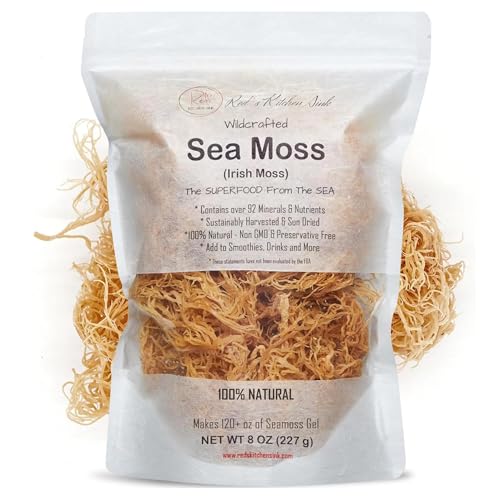
Red’s Kitchen Sink Gold Sea Moss, 8 oz stands out for its 8-ounce pack and stated yield of more than 120 ounces of gel. The maker identifies the seaweed as wildcrafted Kappaphycus alvarezii, harvested from St. Lucia and sun-dried by coastal divers; it also says the moss is not pool-grown or chemically treated. That combination suits households that want a larger batch and a named species. The tradeoff is the larger starting quantity: buyers who want to try a small amount before preparing gel may prefer a 1-ounce pack.
Bottom line: Choose this if you want an 8-ounce pack with a high stated gel yield.
Belle Moss Golden Sea Moss, 3.5 oz

Belle Moss Golden Sea Moss, 3.5 oz pairs a 3.5-ounce pack with a yield of about 75 ounces of gel, making it a middle-size starting point between the 1-ounce and 8-ounce options. The maker says this golden sea moss is wildcrafted in St. Lucia and sun-dried. Its origin and drying method may help buyers compare harvesting approaches, while the yield offers a rough guide to the batch size.
Bottom line: Choose this for a mid-size pack with a yield of about 75 ounces.
Elderwise Golden Sea Moss, 1 oz

Elderwise Golden Sea Moss, 1 oz is the smallest raw option here: its 1-ounce pack is said to make 24 ounces of gel. The maker calls it wildcrafted Gracilaria from Saint Lucia, sun-dried and prepared without chemicals or added flavors. That small pack is useful for someone who wants to prepare a limited amount rather than start with several ounces of dried seaweed. The tradeoff is less raw material overall, so it may not suit frequent gel preparation or a household that wants larger batches.
Bottom line: Choose this when you want the smallest package and a limited gel batch.
TrueSeaMoss Atlantic Blend, 16 oz

TrueSeaMoss Atlantic Blend, 16 oz offers the largest raw pack in this comparison at 16 ounces, with a yield of up to 200 ounces of gel. Its blend includes gold and purple Chondrus crispus, and the maker describes it as wildcrafted Atlantic sea moss that is sun-dried. The large pack may suit someone preparing gel regularly or in substantial batches. It is less suited to a first-time buyer who wants to test a small quantity, and the product carries a California Proposition 65 warning about reproductive harm from lead exposure.
Bottom line: Choose this for a large pack and a yield of up to 200 ounces.
How to Choose Raw Sea Moss
Choose raw sea moss by the amount you plan to prepare, the harvest origin and whether the maker identifies a species. Dried seaweed needs rinsing, soaking and blending before it becomes gel, so a small package is easier to trial than a 16-ounce bag. Yield claims can guide batch planning, but they are not guaranteed measures: water added during preparation changes the finished gel quantity and texture. Compare the yield with your intended batch size, and pick a smaller pack if you are uncertain how quickly you will use the finished gel. The table separates package size from each maker’s output so those two quantities are not confused.
| Need | Consider | Why |
|---|---|---|
| Try a small batch | 1 oz | Smallest raw pack here |
| Prepare a mid-size batch | 3.5 oz | Intermediate package size |
| Prepare more gel | 8–16 oz | Larger raw quantities |
Raw Sea Moss Types and Origins
Species and origin are useful comparison points, but a place name alone does not identify the seaweed. Gracilaria and Kappaphycus alvarezii are different seaweed names, while Chondrus crispus is identified as the Atlantic species in the 16-ounce blend. Product labels may also use “Irish moss” broadly, so look for a botanical name when species matters to your choice. Wildcrafted and sun-dried describe harvesting and drying claims, not a standardized finished-gel texture. Lucia harvest claims as well as an Atlantic-origin blend; choose based on the named species and origin you specifically want, rather than assuming all golden sea moss is the same species.
Preparing and Storing Sea Moss Gel
Raw dried sea moss needs preparation before use: rinse away visible grit, soak it in clean water, then blend it with fresh water to the texture you want. Use clean utensils and a clean, covered container, and refrigerate homemade gel rather than leaving it at room temperature. Because no single soak duration or water ratio fits every dried seaweed texture, begin with a small batch and adjust gradually instead of adding a large amount of water at once. Do not rely on appearance alone to establish safety; discard gel if it develops mold, an unusual odor or other signs of spoilage. Follow safe food-handling practices and keep raw seaweed separate from ready-to-eat ingredients during preparation.
Iodine and Seaweed Safety
Seaweed iodine content can vary widely by species and harvest conditions, so dried sea moss should not be treated as a precise iodine dose. The adult tolerable upper intake level for iodine is 1,100 micrograms per day from food and supplements; the limit is lower for children. Anyone with a thyroid condition, anyone pregnant, or anyone using iodine-containing supplements should ask a qualified clinician about regular seaweed intake. A “mineral-rich” description does not establish a measured amount of iodine in a serving. If you need to manage iodine intake, avoid estimating it from package size or gel yield; seek a product with a measured nutrition value and use that amount to guide your decision.
Frequently Asked Questions
How much gel can raw sea moss make?
The amount varies with the dry package size and how much water is blended in. Among these options, stated yields range from 24 ounces for a 1-ounce pack to up to 200 ounces for a 16-ounce pack.
Does raw sea moss need to be soaked before blending?
Yes, rinse and soak dried sea moss before blending it into gel. Use clean water and utensils, and refrigerate the prepared gel in a covered container.
What is the difference between Gracilaria and Chondrus crispus?
They are different seaweed species, not interchangeable names for the same plant. Choose by the named species if that distinction matters, since a general “Irish moss” label may not identify the species.
Can sea moss contain too much iodine?
Yes, iodine content in seaweed can vary, and excessive iodine can be harmful. The adult tolerable upper intake level is 1,100 micrograms per day; people with thyroid conditions should discuss regular seaweed intake with a clinician.
How should homemade sea moss gel be stored?
Keep homemade sea moss gel covered and refrigerated, using clean utensils to reduce contamination. Discard it if mold, an unusual odor or other spoilage signs appear.