
Best Oil Sprayer for Cooking: 4 Models Compared

YARRAMATE 16 oz Glass Sprayer is the best oil sprayer for cooking for most people because its 470 ml bottle combines spray and pour functions, reducing refills while covering different prep needs. Choose a dedicated mist sprayer instead if fine, even coverage matters more than a larger capacity or pouring option.
We earn a commission if you buy through links on this page. As an Amazon Associate I earn from qualifying purchases. Products are compared on manufacturer specifications, not hands-on testing.
- Best overall: YARRAMATE 16 oz Glass Sprayer – The 470 ml glass bottle offers both spray and pour dispensing.
- Best for measured misting: FLAIROSOL OLIVIA Signature 200 ml – Its 200 ml bottle sprays about 1 g per full stroke.
- Best for compact storage: FLAIROSOL OLIVIA 130 ml – The 130 ml bottle has a fan-spray nozzle and anti-drip trigger.
| Product | Best for | Capacity | Dispensing style | Bottle material | Shop |
|---|---|---|---|---|---|
| YARRAMATE 16 oz Glass Sprayer | Spray and pour | 470 ml | Spray and pour | Glass | Check Price on Amazon |
| FLAIROSOL OLIVIA Signature 200 ml | Measured misting | 200 ml | Fine mist spray | Glass | Check Price on Amazon |
| FLAIROSOL OLIVIA 130 ml | Compact misting | 130 ml | Continuous fan spray | Glass | Check Price on Amazon |
| TrendPlain 16 oz Dual Dispenser | Dual dispensing | 470 ml | Spray and pour | — | Check Price on Amazon |
Oil Sprayers for Cooking
Compare bottle capacity and dispensing style to find the right sprayer for your cooking routine.
YARRAMATE 16 oz Glass Sprayer

YARRAMATE 16 oz Glass Sprayer stands apart with a 470 ml capacity and a bottle that sprays and pours, unlike the dedicated mist formats. Its glass body has a wide opening for refilling and lets you see the remaining oil; the maker also identifies the PP components as BPA-free and food-grade. Choose it for routine kitchen prep when you want one container for dressing, frying, grilling, or roasting. Its larger footprint and capacity may be less convenient if you need a compact bottle for a small shelf or occasional use.
Bottom line: Choose it if you want a refill-friendly bottle that can both spray and pour.
FLAIROSOL OLIVIA Signature 200 ml
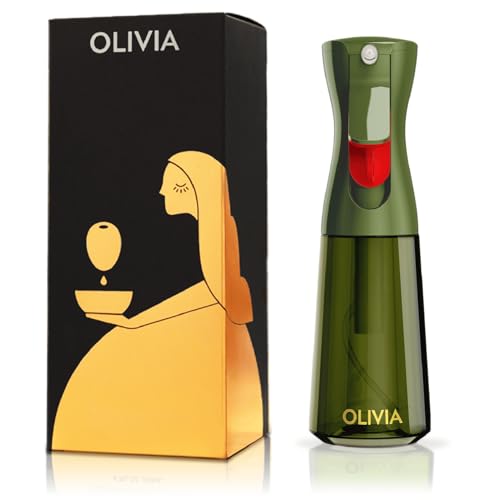
FLAIROSOL OLIVIA Signature 200 ml differentiates itself with a dose of about 1 g of oil per full stroke and a fan-spray nozzle intended for even coverage. The 200 ml glass bottle also has a filter system, anti-drip trigger, and buckle intended to limit accidental leakage. Its smaller capacity suits air-fryer seasoning, salad finishing, or taking a sprayer outdoors. The tradeoff is more frequent refilling than a 470 ml bottle, so it is less suited to cooks who use spray oil heavily every day.
Bottom line: Pick it when measured, even misting matters more than capacity.
FLAIROSOL OLIVIA 130 ml

FLAIROSOL OLIVIA 130 ml is the most compact option by capacity, with a 130 ml glass bottle and a fan-spray nozzle that dispenses about 1 g per full stroke. Its anti-drip trigger and filter system are useful features for repeated seasoning and refilling. The maker says it works with cooking oils as well as soy sauce, cooking wine, and water, which broadens its kitchen uses. Its small reservoir is the clear limitation: cooks who season large pans or grill often will need to refill it more frequently than the larger options.
Bottom line: Choose it for compact storage and controlled misting in smaller batches.
TrendPlain 16 oz Dual Dispenser

TrendPlain 16 oz Dual Dispenser pairs a 470 ml capacity with a two-speed press: a quick press produces a broad fine mist, while a slow press pours a steady stream. The maker gives a measured release of 0.15 g per full press, a notably smaller stated dose than the two FLAIROSOL models. That makes it a fit for cooks who want a measured mist and occasional pouring without switching containers. The silicone pad is included, but its bottle material is not established in the product specifications, so buyers prioritizing glass should compare the other options.
Bottom line: Pick it if you want a large-capacity sprayer with a measured press and pour mode.
How to Choose an Oil Sprayer for Cooking
Choose an oil sprayer by deciding whether you need a true fine mist, a pour stream, or both. Trigger-style sprayers atomize liquid through a nozzle; dual-function bottles add a pour path or a press pattern that changes with how quickly you squeeze. A dose per stroke is useful for repeatable seasoning, but it is not a universal measure across oils or spray techniques. If you cook several meals a day, a 470 ml reservoir means fewer refills than 130 ml or 200 ml. For occasional finishing or a crowded shelf, the smaller bottle is easier to store. Select glass when visibility of oil level is important, and check that the nozzle opening can be cleaned without tools.
Sprayer Capacity and Refill Frequency
Capacity determines how often you refill, while bottle shape determines whether that volume fits your shelf. A 470 ml bottle holds over twice as much as a 200 ml bottle, and more than three times as much as a 130 ml bottle. Actual refill intervals depend on how much oil each press releases and how often you cook. Use this decision rule: choose 200 ml or less if compact storage outweighs fewer refills; choose 470 ml if you use a sprayer regularly across multiple cooking tasks. Wide-mouth openings help reduce spills during refilling, while a transparent bottle helps track the oil level. Avoid filling above the neck or forcing oil through a narrow opening, which can leave residue around the cap.
| Need | Capacity to consider | Useful design |
|---|---|---|
| Frequent use, fewer refills | 470 ml | Dual spray and pour |
| Compact storage | 130–200 ml | Fine mist nozzle |
Fine Mist Versus Spray-and-Pour Bottles
A dedicated misting bottle focuses on spreading a thin layer; a dual-function sprayer adds a stream for drizzling or transferring oil. Fan-spray nozzles spread oil over a broader area than a narrow stream, which is useful for coating a pan or salad greens. A pour function is more versatile for recipes that need a visible amount of oil, but can make portioning less consistent than measured strokes. Nozzle performance can change with oil thickness and residue, so wipe the nozzle after use and avoid letting oil dry in the mechanism. For a dose around 1 g per stroke, choose the two FLAIROSOL options; the TrendPlain specifies 0.15 g per full press.
Refilling and Caring for an Oil Sprayer
Clean the nozzle and bottle before oil residue hardens, especially after using thicker oils or flavored liquids. Wash removable parts with warm soapy water, rinse thoroughly, and let them dry fully before refilling; trapped water can cause sputtering and dilute oil. Do not assume every glass bottle can go in a dishwasher or microwave, since these product specifications do not establish appliance compatibility. Use a small funnel for narrow openings and leave headspace rather than filling to the brim. If spray output weakens, rinse the nozzle and check for residue before pressing harder, which can make a leak or splash more likely.
Frequently Asked Questions
How much oil does an oil sprayer release per press?
The dose varies by sprayer: the FLAIROSOL models give about 1 g per full stroke, while TrendPlain gives 0.15 g per full press. Press length and nozzle cleanliness can affect the spray pattern, so use the figure as a reference rather than a universal dose.
Can an oil sprayer hold avocado oil?
The TrendPlain features specify use with avocado oil, and FLAIROSOL says its sprayer works with cooking oils. Oil thickness and residue can affect atomization, so wipe the nozzle and rinse it if the mist becomes uneven.
How often should I clean an oil sprayer nozzle?
Clean the nozzle whenever oil residue begins to build up or the spray becomes uneven, rather than waiting for a fixed number of uses. Warm soapy water and thorough drying help prevent residue and trapped rinse water from interfering with the spray.
Is glass or plastic better for an oil sprayer?
Glass makes the remaining oil level visible, and the YARRAMATE and FLAIROSOL bottles are glass. Choose a glass option when visibility matters; the TrendPlain bottle material is not established here, so confirm its material if that is essential.