
Best Men’s Full Body Swimming Suits Compared by Fit

Dark Lightning 3/2mm Wetsuit suits the widest range of swimmers here because its 3/2mm neoprene is specified for 58–68°F water and is designed for movement. Choose 7mm Full Suit, 3XL instead for colder conditions, or consider ZCCO 3mm Back-Zip Wetsuit if its adjustable collar matters more than a specific temperature range.
A full-body wetsuit uses neoprene to slow heat loss while allowing water to enter and warm against the skin; thickness and fit determine how it feels in use.
We earn a commission if you buy through links on this page. As an Amazon Associate I earn from qualifying purchases. Products are compared on manufacturer specifications, not hands-on testing.
- Best overall: Dark Lightning 3/2mm Wetsuit – Its 3/2mm neoprene is specified for 58–68°F water and unrestricted movement.
- Best for colder water: 7mm Full Suit, 3XL – Its 7mm neoprene is intended for water below 53.6°F.
- Best for adjustable collar fit: ZCCO 3mm Back-Zip Wetsuit – Its collar has an adhesive band for adjustment and a smooth-skin inner surface.
| Product | Best for | Neoprene thickness | Zipper | Stated water range | Shop |
|---|---|---|---|---|---|
| Dark Lightning 3/2mm Wetsuit | Everyday swim range | 3/2mm | Back | 58–68°F | Check Price on Amazon |
| 7mm Full Suit, 3XL | Colder water | 7mm | Front | Below 53.6°F | Check Price on Amazon |
| ZCCO 3mm Back-Zip Wetsuit | Adjustable collar | 3mm | Back | — | Check Price on Amazon |
| Yakevo 3mm Men’s Wetsuit | Chest-size match | 3mm | — | — | Check Price on Amazon |
Men’s full body swimming suits
Compare these full-body wetsuits by neoprene thickness, entry style and the conditions each maker describes.
Dark Lightning 3/2mm Wetsuit

Dark Lightning 3/2mm Wetsuit is the clearest fit for swimmers seeking a defined water-temperature range: its maker says the 3/2mm stretch neoprene is intended for 58–68°F water. The traditional back zipper has an extended leash for entry and exit, and the suit is presented for swimming, surfing and snorkeling. Its streamlined black design keeps branding minimal. The main limitation is the temperature window; swimmers in substantially colder water should compare a thicker suit, while warm-water swimmers may prefer less insulation. Check the size chart closely, since the maker specifically advises selecting a size from its updated chart.
Bottom line: Choose this if your swimming conditions fall within its temperature range.
7mm Full Suit, 3XL

7mm Full Suit, 3XL has the thickest neoprene in this group, making it the cold-water choice rather than a general-purpose swim suit. Its maker says the 7mm neoprene is suitable below 53.6°F and describes a front zip, long sleeves and stretchy nylon fabric. The suit is sized 3XL, but the maker warns that weight strongly affects fit and recommends using the size label, then checking height as well. That thickness can restrict movement compared with thinner suits, so it is a poor match for swimmers who prioritize flexibility or swim in milder water.
Bottom line: Choose this for colder-water use when its 3XL fit works for your measurements.
ZCCO 3mm Back-Zip Wetsuit

ZCCO 3mm Back-Zip Wetsuit stands out for its adjustable collar: a band lets the wearer change the collar fit, and smooth-skin neoprene lines the inside to reduce water entry. The full-body suit uses 3mm ultra-stretch neoprene and a plastic back zipper. The maker explains that some water enters a wetsuit and warms against the skin, with a closer fit helping retain warmth. This is a useful choice for snorkeling, swimming or surfing when collar fit is a priority. No temperature range is provided, so it is harder to match to a specific water temperature than Dark Lightning 3/2mm Wetsuit or 7mm Full Suit, 3XL.
Bottom line: Choose this if a customizable collar is your priority and you can judge warmth by conditions.
Yakevo 3mm Men’s Wetsuit
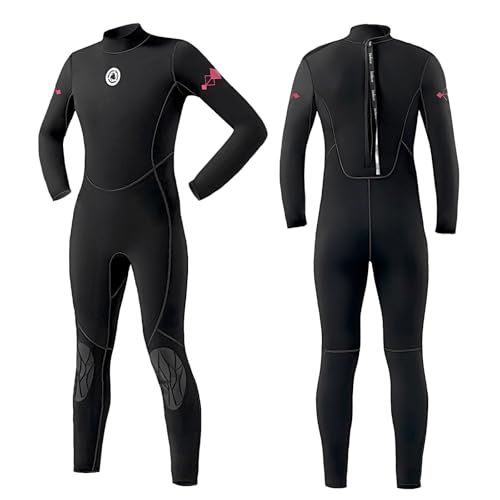
Yakevo 3mm Men’s Wetsuit is a 3mm full-body suit in size M, with the chest range of 39–41 inches as its most useful fit cue. Its maker describes reinforced stitching and protection from wind, UV rays and underwater hazards, along with a flexible fit for swimming, kayaking and diving. The suit also covers the body, which may appeal to swimmers seeking more coverage than a rash guard. The chest range is only one measurement; if your height or weight falls outside the size chart, confirm the fit before ordering.
Bottom line: Choose this if the 39–41-inch chest range fits and full-body coverage is the priority.
How to choose a men’s full-body swimming suit
Start with water temperature, then choose thickness and fit; a thicker suit generally retains more warmth but can limit shoulder movement. A 3/2mm suit is the middle-ground option here, while the 7mm suit is aimed at much colder water. A suit should fit close to the body without painful pressure or restricting a full stroke. Loose areas let water circulate, reducing warmth, while an overly tight neck or shoulders can make swimming uncomfortable. Try the swimming motion when checking fit: reach overhead and rotate both shoulders. Choose a thinner suit if mobility in milder water is more important than insulation, and reserve thick neoprene for cold conditions.
Wetsuit thickness and water temperature
Thickness is a useful starting point, but it is not a complete temperature guarantee: water movement, wind, activity level and personal cold tolerance also affect comfort. The 3/2mm suit’s maker gives a 58–68°F range, and the 7mm suit’s maker gives a below-53.6°F use range. For temperatures between those windows, do not assume a precise fit from thickness alone; consider how long you will be in the water and how easily you get cold. This comparison gives no specific temperature range for the 3mm models. A simple rule is to favor a range when your water temperature is near either end, rather than treating thickness as a universal rating.
The table separates thickness from the maker’s temperature guidance, which is available for only two suits.
| Suit thickness | Maker’s range | Practical starting point |
|---|---|---|
| 3/2mm | 58–68°F | Moderate water, if fit and conditions suit |
| 3mm | — | Check conditions and personal cold tolerance |
| 7mm | Below 53.6°F | Colder water, with mobility tradeoffs |
Getting the fit right for swimming
A close fit matters because wetsuits work by limiting water exchange, not by keeping every drop out. Check chest, torso and height measurements against the maker’s size chart, and pay special attention to weight where the maker calls it out. A chest measurement alone cannot establish a full-body fit. For example, the M suit here gives a 39–41-inch chest range, while the 3XL suit’s maker emphasizes weight before height. If your measurements fall between sizes or point to different size codes, verify the chart before ordering. Avoid choosing a suit so tight that it restricts breathing, shoulder rotation or a safe swim stroke.
Swimming safety and wetsuit limits
A wetsuit is not a life jacket and should not replace a properly fitted flotation device where one is needed. Neoprene can help slow heat loss, but it does not eliminate cold-water risks; end the swim if shivering, numbness, confusion or loss of coordination develops. Check water temperature and expected exposure time before entering, and swim with a companion in open water. Full coverage may reduce contact with sun and underwater irritants, but it does not guarantee protection from UV exposure, jellyfish or sharp objects. Rinse and dry a wetsuit after use, and inspect seams, zippers and collar areas for damage before the next swim.
Frequently Asked Questions
How tight should a men’s swimming wetsuit fit?
A swimming wetsuit should lie close to the body without restricting breathing or shoulder rotation. Check the size chart using chest, height and weight rather than relying on one measurement alone.
Can a 3mm wetsuit work in cold water?
Use a suit with a temperature range that matches the water, and factor in wind, exposure time and cold tolerance.
What is the difference between 3/2mm and 3mm neoprene?
A 3/2mm suit uses panels of two thicknesses, with the thinner area helping flexibility; a 3mm suit has a single stated thickness.
Does a wetsuit keep all water out?
No, a wetsuit is not fully waterproof; a thin layer of water enters and warms against the skin. A close fit helps limit water exchange, while gaps at the neck, wrists or ankles can make the suit feel colder.
Is a wetsuit safe to use as a flotation device?
No, a wetsuit is not a substitute for a life jacket or other appropriate flotation aid. In open water, check conditions, avoid swimming alone and leave the water if cold exposure affects coordination.