
GE Optima HD Antenna: Models Compared by Fit

The GE UltraPro Optima Outdoor HD Antenna is the GE Optima HD antenna match here, with weatherproof construction and a claimed 40-mile range for attic or outdoor use. Choose an indoor antenna instead if you need a compact setup near the TV, or a different outdoor model if its mounting style or claimed range better fits your location.
We earn a commission if you buy through links on this page. As an Amazon Associate I earn from qualifying purchases. Products are compared on manufacturer specifications, not hands-on testing.
- Best overall: GE UltraPro Optima Outdoor HD Antenna – Weatherproof outdoor or attic mounting and a 40-mile claimed range match the Optima name.
- Best for longer claimed range: GE Outdoor HD Antenna 29884 – The outdoor model claims reception from 70+ miles away.
- Best for amplified indoor use: GE Hover Amplified Indoor Antenna 37075 – Its built-in amplifier and flexible tabletop, wall, or TV-top placement suit indoor setups.
| Product | Best for | Type | Claimed range | Placement | Shop |
|---|---|---|---|---|---|
| GE UltraPro Optima Outdoor HD Antenna | Attic or outdoor | Outdoor antenna | 40 miles | Attic or outdoor | Check Price on Amazon |
| GE Flat Panel Indoor Antenna 33681 | Compact indoor setup | Indoor antenna | 40 miles | Indoor | Check Price on Amazon |
| GE Outdoor HD Antenna 29884 | Longer range claim | Outdoor antenna | 70+ miles | Attic or outdoor | Check Price on Amazon |
| GE Hover Amplified Indoor Antenna 37075 | Amplified indoor use | Amplified indoor antenna | 55+ miles | TV top, wall, or tabletop | Check Price on Amazon |
| GE Indoor Antenna Signal Amplifier 42178 | Existing antenna boost | Signal amplifier | — | Between antenna and TV | Check Price on Amazon |
GE Optima HD Antenna and Alternatives
Compare the Optima match with related GE antennas and an amplifier by type, range, and intended placement.
GE UltraPro Optima Outdoor HD Antenna

The Optima is the only named Optima model among these choices, and its weatherproof loop design is made for outdoor or attic installation. GE says it receives VHF and UHF signals up to 40 miles from the broadcast source and supports 4K/8K broadcasts and NEXTGEN TV where available. The included mounting plate and hardware allow installation in an attic or outdoors. It suits a buyer who wants an outdoor antenna rather than a compact indoor unit. Its claimed range is shorter than the 70+ mile claim on another outdoor option, so compare expected signal conditions before choosing by range alone.
Bottom line: Pick this if you want the Optima model for attic or outdoor placement.
GE Flat Panel Indoor Antenna 33681
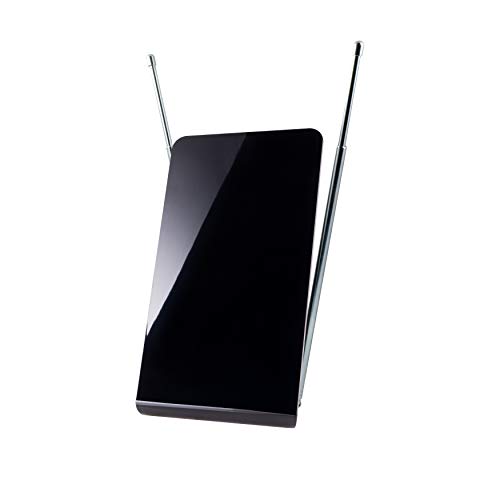
The flat panel antenna is an indoor alternative with an adjustable stand and extendable dipole rabbit ears, unlike the Optima’s weatherproof outdoor design. GE says the antenna supports VHF and UHF reception up to 40 miles and is compatible with 1080p, 4K, and NEXTGEN TV broadcasts where available. Its 10.5-inch height and 5-foot coax cable suit a setup near the television. Choose it when an indoor antenna is more practical than attic or outdoor mounting. Indoor placement can be less favorable when walls or nearby structures obstruct broadcast signals, so it may not suit a weak-signal location.
Bottom line: Choose this for a stand-mounted indoor antenna with dipole elements.
GE Outdoor HD Antenna 29884

The 29884 outdoor antenna makes a longer claimed-range choice than the Optima, with GE advertising reception from 70+ miles and a J mount for attic or outdoor installation. Its weather-resistant build and VHF/UHF reception target buyers who want an outdoor-capable antenna without the Optima model’s distinctive single-loop design. GE says it supports ATSC 3.0 where available and 4K/8K broadcasts. Consider it when its range and included mount align with your installation plan. The longer range claim is not a guarantee of reception: terrain, buildings, and antenna position affect over-the-air signal quality.
Bottom line: Choose this if the longer claimed range and J mount fit your setup.
GE Hover Amplified Indoor Antenna 37075

The Hover is the indoor alternative with an integrated amplifier, flexible mounting options, and a claimed 55+ mile range. GE says its PureAmp amplifier includes a 4G/5G LTE filter to help reduce cell-phone interference, and the antenna can sit on a TV, wall, or tabletop and swivel horizontally. It supports VHF/UHF and NEXTGEN TV broadcasts where available. This suits someone who wants an amplified indoor antenna rather than an outdoor model. An amplifier can strengthen a signal already received but cannot create a usable broadcast signal where reception is absent, so placement still matters.
Bottom line: Choose this for an amplified antenna that can be placed in several indoor positions.
GE Indoor Antenna Signal Amplifier 42178
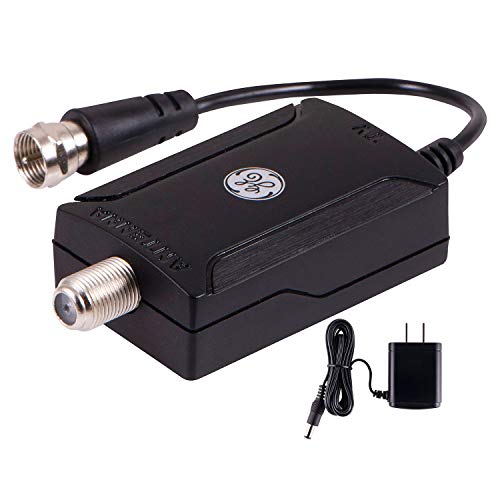
The 42178 is an amplifier, not an antenna, so it is the most distinct alternative to the Optima. It connects between a compatible antenna and television through standard coaxial connections and includes an AC adapter. GE says its low-noise amplifier can offset cable loss and its built-in 4G/5G LTE filter helps reduce cell-phone interference. Consider it when you already have an antenna and want to address signal loss along a cable run. It cannot replace an antenna or guarantee reception of weak or unavailable channels, and it does not provide a range claim of its own.
Bottom line: Choose this only if you already have an antenna and need an inline amplifier.
How to choose a GE TV antenna
Choose by antenna type and installation location before comparing the claimed mile range. Indoor antennas are easiest to position near a TV, while outdoor or attic antennas can be placed higher and away from some indoor obstructions. An amplifier is a separate component: it may help with cable loss, but it cannot make an absent broadcast signal appear. Broadcast signals use VHF and UHF bands, so check that an antenna supports the bands used by the local stations you want. Range claims are not reliable distance guarantees because terrain, buildings, and antenna height affect reception. If your desired stations are more than 40 miles away, compare antenna placement and signal conditions rather than assuming a higher advertised range will solve reception.
Indoor versus outdoor antenna placement
Outdoor or attic placement is often useful when indoor walls or nearby structures weaken reception, while an indoor antenna avoids mounting hardware and weather exposure. Place an indoor antenna near a window or higher point, then scan for channels again after moving it; a small position change can alter reception. For outdoor installation, mount securely and keep the antenna clear of nearby obstructions. Avoid placing an antenna or its cable where it can contact power lines; maintain at least 10 feet of clearance from overhead electrical wires and never install during a storm. An attic avoids direct weather but roof materials and metal can affect signals, so verify reception at the intended location before finalizing the mount.
What antenna range claims mean
A range is a manufacturer claim, not a fixed reception radius. Line of sight, terrain, buildings, antenna height, and broadcast frequency all influence whether a station comes in reliably. A 40-mile antenna may receive a closer station poorly behind an obstruction, while a more distant station may be receivable from a favorable elevated site. Compare the distances to the transmitters you want with the antenna’s claimed range, but treat a station near the edge of that claim as uncertain. Use VHF/UHF support as a separate check from range: a long-range claim does not tell you which bands a model receives. After installation, run the television’s channel scan and repeat it after substantial antenna repositioning.
When an antenna amplifier helps
An amplifier is most useful when a signal is already arriving at the antenna but loses strength through a long coaxial cable or a splitter. It is not a substitute for better antenna placement, and amplifying a weak or noisy signal may not improve picture stability. Keep coaxial cable runs as short as practical and use sound, weather-protected connections outdoors. Connect an inline amplifier in the signal path between antenna and TV, then rescan channels after setup. Do not confuse an amplified antenna with a separate signal amplifier: the latter requires a compatible antenna. If reception worsens after adding amplification, remove it and compare the signal, since stronger amplification is not always better.
Frequently Asked Questions
Does the GE Optima antenna work indoors?
The GE UltraPro Optima model is described for attic or outdoor mounting, not as an indoor tabletop antenna. If you need an indoor setup, choose an indoor antenna and test it near a window or higher position.
Will a 40-mile antenna receive stations 40 miles away?
Not necessarily; 40 miles is a claimed range, not a reception guarantee. Terrain, buildings, height, and signal frequency can change reception, especially for stations near the edge of the claim.
Should I use an amplifier with an outdoor TV antenna?
An amplifier can help offset signal loss along long cable runs or through splitters when a signal is already present. It will not restore a signal blocked by terrain or create reception where the antenna receives none.
How often should I rescan TV channels after moving an antenna?
Rescan after a meaningful position change or when channels disappear, because a television’s channel scan updates which broadcasts it detects. A small move near a window or a higher location can change reception.
How far should an outdoor antenna be from power lines?
Keep an antenna and its mounting hardware at least 10 feet from overhead electrical wires. Never install near power lines during a storm, and choose a location that avoids any possibility of contact.