
Best Jasmine Rice Brands: 5 Bags Compared by Type

Three Ladies Jasmine Rice, 5 lb suits most people seeking everyday jasmine rice because it is a 5-pound bag of long-grain Thai fragrant rice. Choose Asian Best Jasmine Brown Rice, 80 oz for brown rice, Texas Best Organic White Jasmine Rice, 6-pack for an organic white-rice option, Three Ladies Jasmine Broken Rice, 5 lb for broken grains, or Iberia Jasmine Rice, 18 lb when you need a larger 18-pound bag.
We earn a commission if you buy through links on this page. As an Amazon Associate I earn from qualifying purchases. Products are compared on manufacturer specifications, not hands-on testing.
- Best overall: Three Ladies Jasmine Rice, 5 lb – The 5-pound bag is long-grain jasmine rice from Thailand.
- Best for brown rice: Asian Best Jasmine Brown Rice, 80 oz – It is jasmine brown rice in an 80-ounce bag with a zip-lock closure.
- Best for bulk cooking: Iberia Jasmine Rice, 18 lb – The 18-pound bag is the largest package here.
| Product | Best for | Rice type | Package amount | Origin or marks | Shop |
|---|---|---|---|---|---|
| Asian Best Jasmine Brown Rice, 80 oz | Brown rice meals | Brown jasmine | 5 lb | Thailand | Check Price on Amazon |
| Three Ladies Jasmine Rice, 5 lb | Everyday white rice | Long-grain jasmine | 5 lb | Thailand | Check Price on Amazon |
| Texas Best Organic White Jasmine Rice, 6-pack | Organic pantry stock | White jasmine | 12 lb total | USDA Organic, kosher | Check Price on Amazon |
| Three Ladies Jasmine Broken Rice, 5 lb | Broken-grain dishes | Broken jasmine | 5 lb | — | Check Price on Amazon |
| Iberia Jasmine Rice, 18 lb | Large-batch cooking | Long-grain white jasmine | 18 lb | — | Check Price on Amazon |
Jasmine Rice Brands Compared
Compare grain style and package size first, then choose the rice that fits your cooking plans.
Asian Best Jasmine Brown Rice, 80 oz

Unlike the white-rice options here, this is jasmine brown rice, so it suits cooks who specifically want a less-polished grain. The bag holds 80 ounces, or 5 pounds, and has a zip-lock closure intended to secure freshness. The brand identifies it as a product of Thailand and says it is rich in fiber. Brown rice generally takes longer to cook than white rice because its bran layer remains; plan for extra cooking time if you are swapping it into a white-rice recipe. Choose another option if you want a standard white jasmine rice texture.
Bottom line: Pick this if you want brown jasmine rice and a resealable bag.
Three Ladies Jasmine Rice, 5 lb
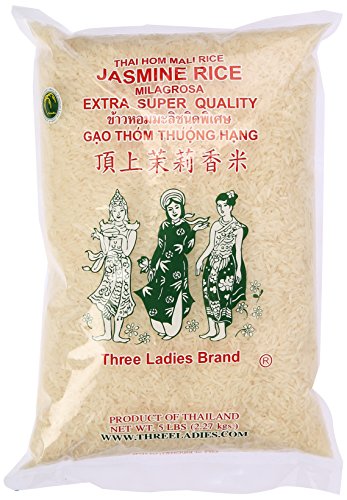
Three Ladies offers a straightforward 5-pound bag of long-grain jasmine rice, making it the most direct fit for everyday white jasmine rice among these options. The brand also calls it Thai fragrant rice and identifies Thailand as its origin. Jasmine rice is an aromatic long-grain variety; rinsing it before cooking can remove loose surface starch and reduce excess gumminess. This bag is a practical middle size for regular home meals, but it is not the pick for shoppers who want brown rice, broken grains, or a bulk 18-pound supply.
Bottom line: Choose this for a standard 5-pound bag of Thai long-grain jasmine rice.
Texas Best Organic White Jasmine Rice, 6-pack

Texas Best stands apart with white jasmine rice sold in six 32-ounce packages, or 12 pounds total. Its product name and features identify it as USDA Certified Organic and kosher; the product is also labeled gluten free. Six smaller packages can be useful when you prefer to open one bag at a time rather than store one large sack. Jasmine rice is naturally aromatic, and rinsing before cooking is a common way to remove loose starch. Choose a different option if country of origin or a single large bag is your deciding factor.
Bottom line: Pick this if organic certification and split packages matter to you.
Three Ladies Jasmine Broken Rice, 5 lb

This Three Ladies option is broken jasmine rice rather than intact long grains, which makes it the distinct choice for recipes where a softer, less separate grain is welcome. The bag is 5 pounds. Broken rice pieces can cook more quickly and release starch readily, so check texture earlier than you would with intact jasmine rice and adjust liquid to the dish. The specifications do not identify origin or cooking directions, so use your recipe’s cues for doneness. Choose intact jasmine rice instead when you want distinct, elongated grains in a pilaf or side dish.
Bottom line: Choose this for dishes that benefit from broken grains and a softer texture.
Iberia Jasmine Rice, 18 lb

Iberia is the largest single bag here at 18 pounds, suited to meal prep or households that cook rice often. The brand says this long-grain white jasmine rice cooks tender and slightly sticky, and gives a stovetop method of rinsing, bringing water to a boil, then covering and simmering on low for about 15 to 20 minutes. The larger sack means more pantry storage is needed than for the 5-pound options. Choose a smaller package if you use rice infrequently or want to keep several varieties open at once.
Bottom line: Pick this when a single large bag fits your storage and cooking routine.
How to Choose Jasmine Rice
Start with grain type and the texture you want: intact white jasmine rice cooks into aromatic, tender grains, while brown jasmine retains its bran and broken rice pieces tend toward a softer result. Jasmine rice is a fragrant long-grain variety, commonly associated with Thailand; the name alone does not guarantee a particular origin or cultivar. For a fluffy side dish, rinse rice until the water runs less cloudy, then drain it well so surface starch does not make the result pasty. A useful decision rule is to choose brown rice when you want the bran layer and can allow for a longer cook; choose intact white rice when a quicker, more separate side is the priority. Package size should match how quickly your household uses rice.
Cooking ratio and time are not universal: rice age, rinsing, pot shape, and heat all change water absorption. Start with the method provided for your chosen rice, then adjust gradually rather than assuming one ratio works for every bag.
Jasmine Rice Types and Uses
White, brown, and broken jasmine rice differ in processing and grain condition, so they do not behave identically in the pot. White jasmine has its bran removed; brown jasmine keeps the bran and germ, usually giving a chewier bite and longer cooking time. Broken rice is made up of fragments rather than full-length kernels, and smaller pieces can soften sooner and thicken a dish. Thai fragrant rice is a common name for jasmine rice, but a country-of-origin claim should be checked on the specific package when provenance matters. Match the form to the meal: intact white grains for a side or curry, brown grains for a heartier bowl, and broken grains for a softer porridge-like preparation. Avoid substituting broken rice one-for-one in a recipe designed around distinct whole grains.
The table summarizes practical differences rather than promising identical cook times across brands.
| Type | Typical texture | Useful choice when |
|---|---|---|
| White jasmine | Tender, aromatic | You want intact grains for everyday sides |
| Brown jasmine | Chewier, longer-cooking | You want the bran retained |
| Broken jasmine | Softer, starchier | You want a porridge-like result |
How Much Jasmine Rice to Buy
Choose package size by how often rice is cooked and where it will be stored: a 5-pound bag is easier to fit into a typical pantry than an 18-pound sack, while a multi-pack can let you open smaller portions as needed. One dry cup of long-grain rice typically yields about 3 cups cooked, though grain type and water absorption change the yield. For planning, estimate dry rice per meal first, then multiply by the number of meals before buying a bulk amount. An 18-pound bag weighs more and needs a larger dry storage container than a 5-pound bag. Keep uncooked rice sealed in a cool, dry place; transfer opened bags to an airtight container to limit moisture and pantry pests.
Do not assume a bulk bag is a better fit just because the rice keeps dry: choose a size you can store securely and use while its aroma remains appealing.
Rinsing, Cooking, and Storing Jasmine Rice
Rinsing jasmine rice before cooking removes loose surface starch, which can help prevent a gummy finish; drain it thoroughly so extra rinse water does not alter the recipe. Stovetop methods commonly bring rice and water to a boil, cover the pot, then simmer gently, but the amount of water depends on whether the rice is brown, white, or broken and on the pot’s tightness. Keep the lid closed during most of the simmer to limit steam loss, then let cooked rice rest covered for about 10 minutes before fluffing. Cooked rice is perishable: refrigerate leftovers within 2 hours, or within 1 hour when room temperature is above 90°F, and use within 3 to 4 days. Cool leftovers promptly in shallow containers rather than leaving a warm pot on the counter.
Frequently Asked Questions
Should jasmine rice be rinsed before cooking?
Rinsing is useful when you want to remove loose surface starch and reduce a gummy texture. Drain it well afterward, because retained rinse water changes the liquid amount in a recipe.
How much water does jasmine rice need?
A common stovetop starting point for white long-grain rice is about 1½ cups water per 1 cup dry rice. Brown rice usually needs more water and more time, while broken rice may need less; adjust based on grain type and pot evaporation.
How long does jasmine rice take to cook?
White jasmine commonly simmers for about 15 to 20 minutes, while brown rice often needs roughly 40 to kim 50 minutes. The actual time changes with grain condition, water ratio, and heat, so check tenderness before serving.
How much cooked rice comes from one cup dry?
One cup of dry long-grain rice typically yields about 3 cups cooked. Yield varies with rice type and water absorption, so allow more dry rice when serving hearty portions.
How should cooked jasmine rice be stored safely?
Refrigerate cooked rice within 2 hours, or within 1 hour if the room is hotter than 90°F. Keep it in shallow covered containers and use refrigerated leftovers within 3 to 4 days.