
Battle Vision Storm Glasses: 5 Options Compared

Battle Vision 3-Pack is the closest match for Battle Vision Storm glasses because it includes separate day, night, and storm-tinted pairs. Choose a different option only if you want a single yellow-lens style, but do not rely on tinted glasses to make nighttime driving safer.
Night driving glasses are tinted eyewear marketed to reduce glare or increase contrast; any tint also reduces the light reaching your eyes, which matters in dark conditions.
We earn a commission if you buy through links on this page. As an Amazon Associate I earn from qualifying purchases. Products are compared on manufacturer specifications, not hands-on testing.
- Best overall: Battle Vision 3-Pack – Three pairs target day, night, and storm conditions, with wraparound coverage.
- Best for yellow lenses: KANASTAL Yellow Night Driving Glasses – Yellow TAC lenses and a UV400 protection claim.
- Best for two pairs: Clear Vision Deluxe Tactical Sunglasses 2-Pack – A two-pack with a 180-degree uni-lens design.
| Product | Best for | Lens or mode | Pack | UV claim | Shop |
|---|---|---|---|---|---|
| Battle Vision 3-Pack | Multi-condition eyewear | Day, night, storm | 3 pairs | UV400 | Check Price on Amazon |
| KANASTAL Yellow Night Driving Glasses | Yellow TAC lenses | Yellow night lens | 1 pair | UV400 | Check Price on Amazon |
| KANASTAL Yellow Night Glasses | Outdoor low-light use | Yellow lens | 1 pair | UV400 | Check Price on Amazon |
| Clear Vision Deluxe Tactical Sunglasses 2-Pack | Two-pair set | Glare-reducing lens | 2 pairs | — | Check Price on Amazon |
| KastKing IllumiLens Night Vision Glasses | Fishing and low light | Yellow IllumiLens | 1 pair | — | Check Price on Amazon |
Battle Vision Storm Glasses Compared
Compare the lens types and stated features, then choose based on fit and the conditions you actually face.
Battle Vision 3-Pack

Battle Vision 3-Pack is the only option here with three specialized pairs rather than a single yellow-lens style. The wraparound frames are described as fitting over prescription glasses, and the maker says the polycarbonate lenses are impact-resistant, shatterproof, and block 100% of UVA and UVB rays. This setup suits someone seeking distinct tints for bright, low-light, and wet-weather use. The limitation is that the night pair is still tinted eyewear: reduced incoming light can make it unsuitable for driving after dark, regardless of contrast claims.
Bottom line: Choose this set if you want multiple lens modes and can use the night pair only where tint does not compromise visibility.
KANASTAL Yellow Night Driving Glasses

KANASTAL Yellow Night Driving Glasses differs from the multi-pair set by using a single yellow TAC lens intended for nighttime and cloudy or wet conditions. The maker says the lens reduces glare and includes UV400 protection. Its simple single-lens format suits a buyer specifically seeking yellow-tinted eyewear rather than several specialized pairs. The maker does not establish frame fit or prescription compatibility, so check those before ordering if either is essential. More importantly, yellow tint can reduce the light reaching your eyes; do not use it as a fix for poor visibility while driving at night.
Bottom line: Choose these only if you specifically want a single yellow-lens style for appropriate, well-lit conditions.
KANASTAL Yellow Night Glasses

KANASTAL Yellow Night Glasses is another single-pair KANASTAL option, with yellow lenses and a UV400 protection claim rather than the three conditions-specific pairs in Battle Vision 3-Pack. The maker says the tint can reduce glare and improve contrast in night, cloudy, foggy, or rainy conditions. It may interest someone looking for one style for driving or other outdoor activities, but the claims do not establish that the glasses improve safety. As with other tinted eyewear, less light reaches the eye; avoid relying on these glasses during dark driving, and confirm frame fit if compatibility matters.
Bottom line: Consider these for a single yellow-lens style, not as a nighttime driving safety aid.
Clear Vision Deluxe Tactical Sunglasses 2-Pack
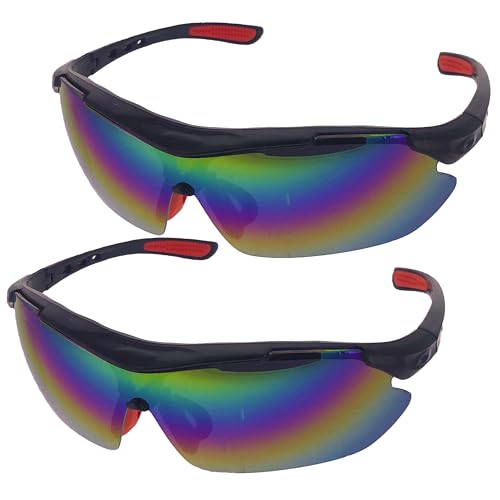
Clear Vision Deluxe Tactical Sunglasses 2-Pack stands apart with two pairs and a 180-degree uni-lens design, plus a soft rubber nose pad and non-slip fit feature. The two-pair format may suit a buyer prioritizing a spare pair and broad lens coverage. A limitation is that its claims do not establish safe use for night driving, and the one-size-fits-most design may not fit every face securely.
Bottom line: Choose this set if a two-pair format and rubber nose pad matter more than specified tint or UV protection.
KastKing IllumiLens Night Vision Glasses

KastKing IllumiLens Night Vision Glasses is positioned for a broader set of low-light activities, including fishing, hunting, and computer work, while the other yellow-lens options focus more directly on driving. The maker describes the IllumiLens as lightweight and durable and says the yellow lenses reduce glare and eye strain. The available features do not give a UV rating or quantify the tint, so this option is less useful when those specifications determine the choice. Its night driving claims should not override the basic visibility tradeoff: tinted lenses reduce incoming light in dark settings.
Bottom line: Pick these for the range of low-light activities, but not to improve visibility on dark roads.
How to Choose Battle Vision Storm Glasses
Choose by the lighting condition and lens tint, not by a broad promise of clearer vision. A three-lens set separates daytime sun, low-light, and storm use; single yellow-lens glasses are a narrower format. For daytime outdoor eyewear, look for a UV400 or 100% UVA/UVB protection claim, and consider whether wraparound coverage or fit over prescription glasses matters. Tint and UV protection are separate properties: a yellow lens does not itself establish UV protection. For dark-road use, choose clear lenses instead of assuming a tint will improve visibility.
Use a measurable rule: if the road is dark enough that you need brighter headlights to see, do not add a tinted lens that further reduces incoming light. Glare reduction claims do not establish that a lens improves reaction time or driving safety.
Night Driving Glasses and Visibility
Yellow night driving glasses do not make a dark road brighter; their tint filters some incoming light along with glare. Reduced light can make obstacles harder to see, especially on unlit roads, in rain, or when the windshield is dirty. For nighttime driving, use clear, clean lenses and a properly aimed headlight system rather than relying on yellow tint. Keep the windshield and headlight covers clean, and slow down when rain or fog limits sight distance.
Polarized lenses are primarily useful for reducing reflected glare in bright conditions, such as sunlight reflecting off a road or water. They do not eliminate glare from every source and are not a substitute for clear night driving eyewear. Treat claims about contrast or eye fatigue as maker claims, not proof of safer driving.
Lens Coverage, Fit, and UV Protection
Wraparound frames can cover more of the sides of the eyes than a conventional open-sided frame, while a large single lens can provide a broad field of view. Neither design guarantees a secure fit: the frame should stay in place when you turn your head and should not press uncomfortably on the nose or temples. Buyers who wear prescription glasses should verify that an over-glasses frame has enough room and does not shift the prescription frames.
UV400 refers to filtering ultraviolet wavelengths up to 400 nanometers; it is not a measure of visible-light transmission or night driving suitability. Check the UV claim separately from lens tint, impact resistance, and fit. For cycling or other impact-risk activities, ordinary sunglasses are not automatically certified protective eyewear.
Choosing Glasses for Rain and Fog
Rain and fog reduce contrast because water droplets scatter light, and a darker or tinted lens cannot remove that scattering. A clear, clean windshield, working defroster, and slower speed address visibility more directly than tinted eyewear. Avoid high beams in dense fog because the reflected light can worsen glare; low beams are generally the better choice.
For wet-weather eyewear away from driving, a wraparound design can help shield eyes from wind and spray, but lens claims do not establish waterproofing or antifog performance. Confirm comfort and coverage for the activity, and do not use an eyewear tint as a replacement for vehicle lighting or safe driving adjustments.
Frequently Asked Questions
Are yellow glasses safe for driving at night?
Yellow lenses reduce some incoming light, so they can make dark roads harder to see. Use clear lenses at night, particularly on unlit roads or in rain.
Do Battle Vision Storm glasses fit over prescription glasses?
The maker says the three-pair set fits over prescription glasses. Check the frame dimensions against your own glasses if fit is critical, since comfort depends on both frames.
What does UV400 protection mean on sunglasses?
UV400 refers to blocking ultraviolet wavelengths up to 400 nanometers. It does not tell you how dark the lens is or whether it is suitable for nighttime use.
Do polarized glasses help with nighttime glare?
Polarization can reduce reflected glare in bright conditions, but it does not make dark roads brighter. Choose clear lenses for nighttime driving instead of adding a tint.
Can yellow lenses improve visibility in fog?
Yellow tint does not remove the light scattering caused by fog and may reduce incoming light. Use low-beam headlights, slow down, and avoid driving when visibility is unsafe.