
Glasses for TV Viewing: 3 Options by Viewing Style

For watching TV from a distance, Eschenbach Max TV 2.1X is the clearest match because its 2.1x magnification and individually focusable lenses suit distance viewing. Choose Valuu Lazy Prism Glasses instead if you want to watch while lying down without turning your head; 2.1X Hyperopia TV Glasses is another distance-magnifier option.
TV-viewing glasses use prisms or magnifying optics to change how you see the screen; they are not a substitute for prescription glasses when you need vision correction.
We earn a commission if you buy through links on this page. As an Amazon Associate I earn from qualifying purchases. Products are compared on manufacturer specifications, not hands-on testing.
- Best overall: Eschenbach Max TV 2.1X – Its 2.1x magnification and focusable lenses are designed for distance viewing.
- Best for watching in bed: Valuu Lazy Prism Glasses – Prism optics let you look ahead while lying down.
- Best for portable magnification: 2.1X Hyperopia TV Glasses – The 2.1x magnification is paired with a lightweight, compact design.
| Product | Best for | Magnification | Viewing style | Shop |
|---|---|---|---|---|
| Valuu Lazy Prism Glasses | Watching in bed | — | Lying down | Check Price on Amazon |
| Eschenbach Max TV 2.1X | Distance viewing | 2.1x | Distance viewing | Check Price on Amazon |
| 2.1X Hyperopia TV Glasses | Portable magnification | 2.1x | Distance viewing | Check Price on Amazon |
Glasses for TV Viewing
Match the glasses to your viewing position and whether you want prism optics or magnification.
Valuu Lazy Prism Glasses
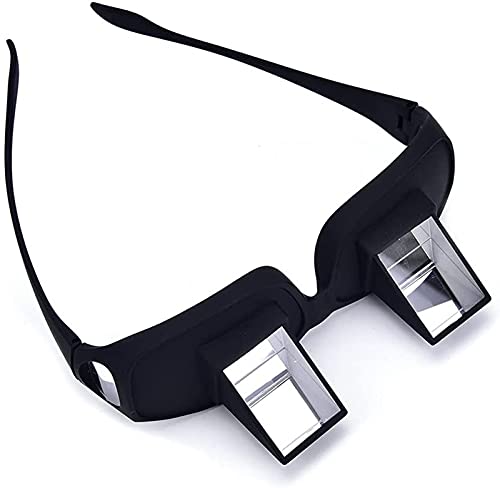
Unlike the distance magnifiers, Valuu Lazy Prism Glasses uses prism optics to redirect your line of sight, making it the option here for watching TV while lying down. The maker says the glasses can be worn alone or over ordinary glasses, including prescription glasses, and describes them as lightweight. That over-glasses design may suit someone who wants to keep their usual eyewear on. The product is a single black pair. Its features do not give a magnification or focus-adjustment value, so it is a poor fit if you specifically want quantified magnification or adjustable distance focus.
Bottom line: Choose these if lying down without turning your head is the priority.
Eschenbach Max TV 2.1X
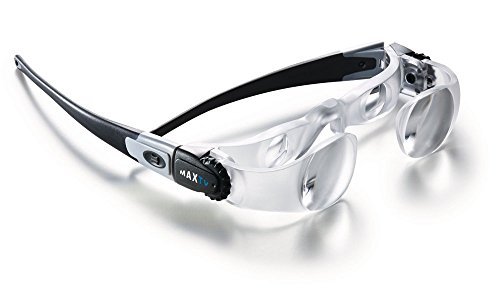
Eschenbach Max TV 2.1X stands apart with individually focusable objective lenses: each lens can compensate for up to ±3 diopters of spherical correction, or adjust focus from 10 feet to infinity. Its Galilean design provides 2.1x magnification and a 20-degree field of view. The PXM optics, flexible plastic temples and 1.7-ounce weight are suited to someone seeking a lightweight distance-viewing aid. Frosted lens housings are intended to limit distracting reflections. This is a magnifying aid, not a general-purpose pair for lying-down viewing; the 20-degree field of view is relatively narrow compared with unaided vision.
Bottom line: Choose these for distance magnification and adjustable focus.
2.1X Hyperopia TV Glasses

2.1X Hyperopia TV Glasses offers 2.1x magnification in a compact, portable design, unlike the prism option intended for watching while lying down. The maker positions these glasses for distance viewing, including TV watching and outdoor activities, and describes the frame as lightweight and ergonomic for extended wear. Their travel-friendly form may suit someone who wants magnification beyond the living room. The product name refers to hyperopia, but the features do not explain prescription compatibility or any focus adjustment. If either matters for your vision needs, confirm compatibility with an eye-care professional before relying on them.
Bottom line: Choose these if portable 2.1x magnification matters most.
How to choose glasses for TV viewing
Choose by viewing position first: prism glasses redirect your line of sight for lying down, while magnifying glasses enlarge a distant view. Magnification is a ratio, so 2.1x means the view appears about 2.1 times larger in angular size; it does not guarantee a wider view. Field of view matters too: a 20-degree field is a relatively narrow window, so you may need to move your gaze to see across a large screen. If you mainly watch from a seat, compare magnification and focus adjustment; if you watch flat on your back, prioritize prism design. Do not assume magnifiers correct your prescription unless their compatibility is clear.
Distance, screen size and viewing position
For a comfortable TV setup, screen size and seating distance affect how much of the screen fills your view; glasses do not change the physical distance to the screen. A commonly used starting point for a 4K television is a viewing distance around 1 to 1.5 times the screen’s diagonal, while lower-resolution screens are often viewed farther away to reduce visible pixel structure. These are layout guidelines, not medical rules, and eyesight and personal comfort can change the preferred distance. Decide whether you want a larger apparent image from magnification or a reclined line of sight from prisms. If your usual glasses are needed for clear vision, check whether the chosen design can accommodate them.
Magnifying glasses versus prism glasses
Magnifying glasses enlarge distant objects; prism glasses bend the path of light so a person can see forward while reclining. Those functions solve different problems, so a higher magnification figure is not a reason to choose a bed-prism design, or vice versa. Distance magnifiers may have a limited field of view, which can make it harder to take in a full screen without moving your gaze. Prism eyewear also does not automatically provide magnification or prescription correction. A useful decision rule is simple: choose prism optics if you need to look toward a screen while lying down, and choose distance magnification if you want a larger view from a seated position. Confirm any prescription or fit requirement before relying on either type.
Frequently Asked Questions
Can TV magnifying glasses replace prescription glasses?
Not necessarily; magnification alone does not mean the glasses correct your prescription. One option here says its focusable lenses can compensate for up to ±3 diopters of spherical correction, but check with an eye-care professional if you rely on prescription eyewear.
What does 2.1x magnification mean for TV viewing?
A 2.1x magnifier makes the viewed image appear about 2.1 times larger in angular size. It does not mean the television itself is larger, and the field of view can be narrower than unaided vision.
How far away should I sit from a 4K TV?
A common starting point is about 1 to 1.5 times the screen’s diagonal for a 4K television. Personal eyesight, screen size and comfort can shift that distance.
Do prism glasses magnify the TV screen?
Prism glasses redirect the line of sight rather than necessarily enlarging the image. Check whether a pair specifies magnification if making the screen appear larger is your goal.
Can I wear prism glasses while lying down?
Bed-prism glasses are designed to redirect your view while reclining, so you can look toward the screen without turning your head. Confirm whether the frame fits over your usual glasses if you need prescription correction.