
A Good Wind Up Alarm Clock: 2 Manual-Wind Picks

For a good wind up alarm clock, choose the Westclox if you want a manual-wind bell alarm and operation without batteries or electricity. The Equity is a smaller alternative with luminous hands and a beep alarm, while battery-powered twin-bell clocks are for shoppers who value a long ringing alarm over winding.
We earn a commission if you buy through links on this page. As an Amazon Associate I earn from qualifying purchases. Products are compared on manufacturer specifications, not hands-on testing.
- Best overall: Westclox Keywound Analog Alarm Clock – Manual winding and a loud bell alarm work without batteries or electricity.
- Best for luminous hands: Equity 14075 Wind-Up Alarm Clock – The 4.25-inch clock has hands that glow in low light and a beep alarm.
| Product | Best for | Power | Alarm | Height | Shop |
|---|---|---|---|---|---|
| Westclox Keywound Analog Alarm Clock | Off-grid wake-ups | Manual wind | Loud bell | 3.1 in | Check Price on Amazon |
| Equity 14075 Wind-Up Alarm Clock | Luminous dial | Key wound | Loud beep | 4.25 in | Check Price on Amazon |
| Peakeep 4-Inch Twin Bell Clock | Long alarm ring | Battery operated | Twin bell | 6.5 in | Check Price on Amazon |
| AYRELY 4.5-Inch Twin Bell Clock | Backlit dial | Battery powered | Twin bell | 6.2 in | Check Price on Amazon |
Wind Up Alarm Clocks Compared
These choices differ most in how they are powered and the sound they use to wake you.
Westclox Keywound Analog Alarm Clock

For a manual-wind bell alarm, this Westclox operates without batteries or electricity, unlike the battery-powered twin-bell alternatives. It has an analog face, a white finish, and a compact 3.1-inch height. The maker describes the bell as loud and suitable for heavy sleepers. Its straightforward design is less suited to someone who wants luminous hands or a beep alarm.
Bottom line: Pick this if you want a wind-up bell alarm that needs no external power.
Equity 14075 Wind-Up Alarm Clock

Unlike the Westclox’s bell, the Equity uses a beep alarm and adds hands that glow in low light. Its white dial has bold black numbers, and its 4.25-inch height gives it a larger profile than the Westclox. The clock is key-wound and does not need batteries. It suits a bedside user who wants nighttime visibility and a simple dial. The tradeoff is the beep sound: shoppers specifically seeking a ringing bell should choose a bell-alarm model instead.
Bottom line: Choose this for luminous hands and a beep rather than a bell.
Peakeep 4-Inch Twin Bell Clock
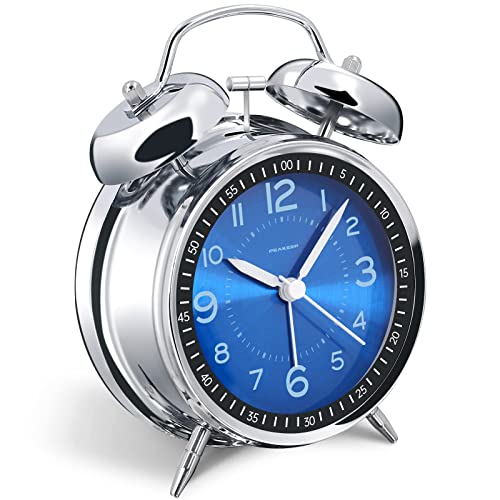
This Peakeep is the battery-powered alternative, not a wind-up clock; its defining feature is a twin-bell alarm that the maker says can ring for 50 minutes until switched off. The clock has a metal exterior and face, a jewel-blue finish, and a silent quartz sweep movement. At 6.5 inches tall, it is taller than the manual-wind choices. It may fit someone who prioritizes an extended ringing alarm, but it does not meet a no-battery preference.
Bottom line: Choose this only if battery power is acceptable and a long bell alarm matters most.
AYRELY 4.5-Inch Twin Bell Clock
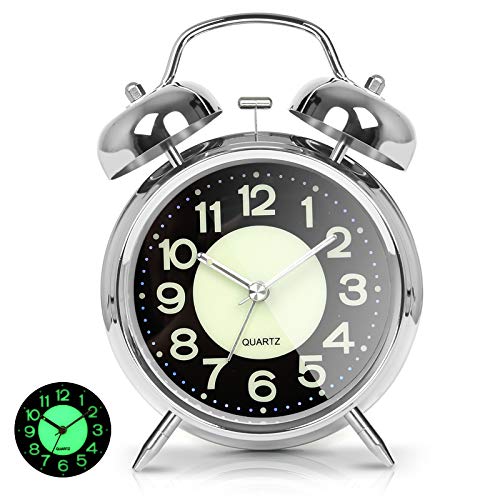
The AYRELY offers a twin-bell alarm with backlight and luminous dial, but it is battery-powered rather than wind-up. A metal hammer strikes the bells, and the maker describes the clock as silent and non-ticking. Its 6.2-inch height makes it a taller bedside choice than the manual-wind clocks. Consider it if visibility and a resonant bell are more important than avoiding batteries; shoppers committed to winding a clock should skip this type.
Bottom line: Pick this for a battery-powered twin bell with added dial visibility.
How to Choose a Wind Up Alarm Clock
Choose first between a bell and a beep, then decide whether nighttime visibility matters. Mechanical wind-up clocks rely on wound springs rather than a battery or outlet; quartz clocks typically use a battery to power the movement. A bell mechanism can be mechanically struck, while beep alarms use an electronic sounder, so the alarm style is a practical discriminator rather than a measure of volume. Mechanical clocks also need regular winding, often daily, though the exact interval depends on the movement. If you need the alarm to ring for a specific duration, confirm that duration before ordering; the two manual-wind options here do not give a ring time.
Wind-Up and Battery Alarm Types
Manual-wind clocks suit places where batteries and outlets are inconvenient, while battery models can add features such as a long twin-bell ring or backlight. Quartz movements keep time with a vibrating quartz crystal and are generally more consistent than basic mechanical movements; mechanical clocks can gain or lose time as their spring unwinds. A battery alarm may be silent while its hands move, but its alarm still produces sound at wake time. Use this quick comparison to match the power type to the need.
| Type | Power | Consider it for |
|---|---|---|
| Manual-wind | Wound spring | No outlet or battery reliance |
| Battery quartz | Replaceable battery | Extra alarm or light features |
Reading a Clock in a Dark Bedroom
Luminous hands and a backlight work differently: luminous paint stores light and glows afterward, while a backlight illuminates the dial when activated. Luminous material needs exposure to light to glow, and brightness fades over time in darkness; a backlight is useful on demand but needs electrical power from a battery. For a bedside clock, a lit dial should be dim enough not to disrupt sleep, and a glow should not be assumed to remain bright all night. Choose luminous hands for passive visibility, or a backlight when you want to switch illumination on briefly.
Setting and Maintaining a Mechanical Alarm
Wind-up clocks need consistent winding to keep their timekeeping spring energized; many small mechanical clocks are wound once each day, but the clock’s own winding interval takes priority. Avoid forcing a key or crown past resistance, because overwinding can damage a spring or gear. Place a mechanical clock on a stable, level surface, since a tilt can affect some movements. Set the alarm with enough margin before the target wake time, and check that the alarm is armed after winding; timekeeping and alarm mechanisms may use separate controls.
Frequently Asked Questions
How often should I wind a mechanical alarm clock?
Many small mechanical alarm clocks are wound daily, but the movement determines the actual interval. Wind gently and stop when resistance rises rather than forcing the key.
Do wind-up alarm clocks need batteries?
A fully mechanical wind-up clock uses a wound spring for timekeeping and does not need a battery. Clocks with quartz movements, backlights, or battery-powered bells do need batteries for those functions.
Are luminous clock hands visible all night?
Luminous hands glow after absorbing light, but their brightness fades while they remain in darkness. Charge the luminous material before bedtime and do not expect it to stay equally bright throughout the night.
Why does a mechanical clock lose or gain time?
Spring tension, movement condition, and how level the clock sits can affect mechanical timekeeping. If the clock drifts noticeably, adjust it regularly and have a damaged or worn movement assessed.
Can I leave a wind-up alarm clock unwound?
Yes, but the clock stops when its spring runs down, so it will not keep time or sound the alarm while stopped. Wind it again and reset the time before relying on it for a wake-up.