
Non Permanent Window Tint: 3 Static-Cling Films Compared

KESPEN Static-Cling Black-Silver Film suits most people seeking non permanent window tint because it is a static-cling home film in a 17.5-inch-wide, 6.5-foot roll. Choose Dwersty Grid-Backed Static-Cling Film or XIAWEI Cosmic Black PET Film instead if its length, backing grid, or PET material better matches your installation.
Reflective one-way films provide privacy only while outdoor light is brighter than indoor light, so plan on curtains or blinds after dark.
We earn a commission if you buy through links on this page. As an Amazon Associate I earn from qualifying purchases. Products are compared on manufacturer specifications, not hands-on testing.
- Best overall: KESPEN Static-Cling Black-Silver Film – Its static-cling construction and 17.5-inch-by-6.5-foot size suit a straightforward home-window project.
- Best for measuring cuts: Dwersty Grid-Backed Static-Cling Film – The backing has 1-inch grids to guide cutting.
- Best for PET material: XIAWEI Cosmic Black PET Film – The film is identified as PET and comes in a 17.5-inch-by-6.5-foot roll.
| Product | Best for | Application | Roll size | Maker-claimed UV blocking | Shop |
|---|---|---|---|---|---|
| KESPEN Static-Cling Black-Silver Film | Home window tint | Static cling | 17.5 in × 6.5 ft | 90% | Check Price on Amazon |
| Dwersty Grid-Backed Static-Cling Film | Guided cutting | Static cling | 17.5 in × 78.7 in | — | Check Price on Amazon |
| XIAWEI Cosmic Black PET Film | PET film material | — | 17.5 in × 6.5 ft | 99% | Check Price on Amazon |
Non permanent window tint options
Compare the application style and roll dimensions first, then choose a film that fits the glass and the privacy conditions in the room.
KESPEN Static-Cling Black-Silver Film
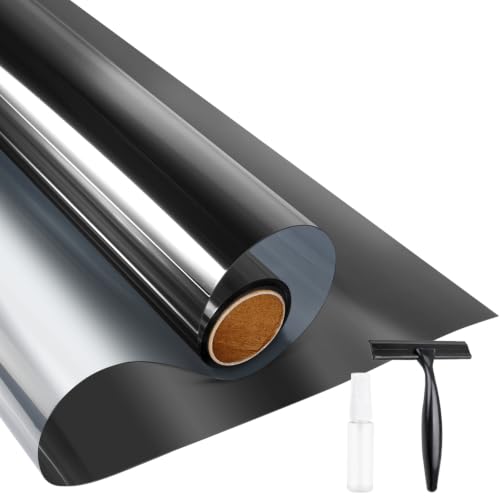
KESPEN Static-Cling Black-Silver Film is the static-cling choice with a 12% visible light transmission (VLT), so it allows some visible light while reducing glare. The 17.5-inch-wide, 6.5-foot roll fits narrower panes or smaller projects. KESPEN says the film blocks 90% of UV rays and 82% of infrared rays, and that it provides daytime privacy. Like other reflective films, it does not maintain a mirror privacy effect when the room is brighter than outdoors. Measure each pane before cutting; this roll may require multiple strips for a wide window.
Bottom line: Choose it for a narrower home window when static-cling installation and a dark 12% VLT are the priorities.
Dwersty Grid-Backed Static-Cling Film

Dwersty Grid-Backed Static-Cling Film stands out for its 1-inch grid backing, which gives a visible guide when cutting the 17.5-inch-by-78.7-inch sheet. Its black-silver reflective style is intended for home glass and daytime privacy. The mirror effect depends on the brighter side being outdoors; when indoor lighting is stronger, outside viewers may see in, so use curtains at night. The product also says the free tools are inside the paper tube. The features do not give a UV-blocking percentage, so this is a less useful pick if a numerical UV claim is a deciding factor.
Bottom line: Pick it when a cut guide is more useful than a UV-blocking percentage.
XIAWEI Cosmic Black PET Film

XIAWEI Cosmic Black PET Film is the option explicitly identified as premium PET material, in a 17.5-inch-by-6.5-foot size matching KESPEN Static-Cling Black-Silver Film. The maker says it blocks 99% of UV rays and 80% of infrared rays, and describes it as a daytime privacy film. As with other one-way reflective films, the privacy effect fades when indoor light exceeds outdoor light; nighttime curtains remain necessary.
Bottom line: Choose it if PET material and the maker-claimed UV figure matter, after confirming the attachment method.
How to choose non permanent window tint
Start with attachment style: static-cling film is designed to attach without a permanent adhesive bond, making it the relevant type for a removable project. Measure the visible glass area, not the outer frame, and allow enough material for careful trimming. A 17.5-inch-wide roll will not cover a wider pane in one piece; seams can be visible and harder to align. Wet application with a soap-and-water solution is common for window film because it lets the sheet slide into position before squeegeeing out liquid and air. Clean glass carefully first: dust trapped under film can leave visible bumps and interfere with a smooth fit.
Daytime privacy and nighttime limits
Reflective one-way window tint relies on a difference in brightness, not a permanent one-way view. The outside must be brighter than the room for the mirror effect to favor daytime privacy; at night, interior lights can reverse that balance and expose the room. Treat a reflective film as a daytime aid rather than a substitute for curtains, blinds, or frosted glazing. Before choosing a dark film, consider how much daylight the room needs: visible light transmission (VLT) is the share of visible light that passes through, and lower VLT means a darker view. The 12% VLT figure on KESPEN Static-Cling Black-Silver Film indicates a dark tint.
Measure and prepare the glass
Measure the height and width of every pane separately because windows in one room may not be identical. Leave a small trimming margin rather than cutting the film exactly to the pane size on the first pass; a sharp utility blade and straight edge help create a clean edge. Remove dust and residue before wet application, then keep the glass and film surface wet while positioning to reduce premature sticking and creases. Films can be sensitive to folds: a crease may remain visible after installation. Check the window maker’s film-compatibility guidance before applying tint, especially on insulated or specially coated glass, because some film-and-glass combinations can increase thermal stress.
Static cling versus adhesive window film
Static-cling film and adhesive film attach differently, which matters when removability is the goal. Static cling adheres through surface contact and is generally suited to temporary applications; adhesive film uses a bonding layer and can be more difficult to remove cleanly. The table summarizes the practical distinction, but a product’s attachment method should be confirmed if it is not clear from its name or features.
| Type | Attachment | Best fit |
|---|---|---|
| Static cling | Surface contact, no permanent adhesive bond | Removable home projects |
| Adhesive film | Bonding layer | Installations where a bonded fit is intended |
Frequently Asked Questions
Does reflective window tint provide privacy at night?
No, reflective tint does not reliably provide privacy when indoor light is brighter than outdoor light. Close curtains or blinds after dark, even if the film appears mirrored during the day.
How should I measure a window for tint film?
Measure the glass width and height inside the frame for each pane separately. Compare those measurements with the roll width before cutting, since a narrower roll may require visible seams on wider glass.
Can static-cling window film be repositioned during installation?
Wet application with a soap-and-water solution commonly allows window film to slide for alignment before the water is squeegeed away. Keep the glass and film wet while positioning, and avoid folding the sheet because creases may remain.
Can window tint go on insulated glass?
Some film-and-glass combinations can increase thermal stress, so check the window maker’s compatibility guidance before applying film to insulated or specially coated glass. Do not assume that every tint is suitable for every pane.
What does a 12% VLT window tint mean?
A 12% visible light transmission rating means the film passes 12% of visible light. Lower VLT produces a darker appearance and reduces the amount of daylight entering through the glass.