
Coast Guard Approved Floats: 4 Types Compared

For a Coast Guard approved float to keep aboard a boat, choose a throwable Type IV cushion if you need the specific boat safety device; the 16-by-14-inch size is the key fit detail here. Choose a wearable vest instead when a child needs flotation while in the water, since a cushion is not worn.
Throwable Flotation Cushion, Red is a red Type IV cushion; Stearns Throwable Cushion, Blue is a blue Type IV cushion with a durable nylon shell. The child vests are related options, not throwable cushions.
We earn a commission if you buy through links on this page. As an Amazon Associate I earn from qualifying purchases. Products are compared on manufacturer specifications, not hands-on testing.
- Best overall: Throwable Flotation Cushion, Red – A Coast Guard-approved Type IV throwable cushion measuring 16 by 14 inches.
- Best for a blue cushion: Stearns Throwable Cushion, Blue – A Type IV cushion with a 200-denier nylon shell and 1-inch webbed straps.
- Best for child swimming: Body Glove Paddle Pals, Orca – A wearable learn-to-swim vest sized for children weighing 33 to 55 pounds.
| Product | Best for | Type or use | Size or weight range | Material | Shop |
|---|---|---|---|---|---|
| Throwable Flotation Cushion, Red | Boat throwable cushion | Type IV throwable cushion | 16 × 14 inches | Polyester Oxford, EPE foam | Check Price on Amazon |
| Stearns Throwable Cushion, Blue | Durable seat cushion | Type IV throwable cushion | 16 × 14.375 inches | Polyester shell, Crosstech foam | Check Price on Amazon |
| Body Glove Paddle Pals, Orca | Child swim practice | Wearable child swim vest | 33–55 pounds | Polyester | Check Price on Amazon |
| Oceans 7 Type III Vest, Infant | Infant wearable PFD | Wearable Type III vest | 8–30 pounds | Nylon, EPE foam | Check Price on Amazon |
Coast Guard Approved Floats Compared
Match a throwable cushion to boat safety requirements, or choose a wearable vest for a person who needs flotation.
Throwable Flotation Cushion, Red

Throwable Flotation Cushion, Red is the red Type IV throwable cushion in this group, with a 16-by-14-inch face and 2.7-inch thickness. Its maker says it is Coast Guard approved and identifies it as a throwable device that can also serve as a boat seat cushion. The shell is 200-denier polyester Oxford, with polypropylene webbing and ten layers of 7-millimeter EPE foam. The red color may be easier to spot than the blue option, but buyers who want the specified 1-inch straps or nylon shell should compare Stearns Throwable Cushion, Blue instead. A throwable cushion is not a wearable PFD.
Bottom line: Pick this if a red Type IV cushion that doubles as a seat is the right fit.
Stearns Throwable Cushion, Blue

Stearns Throwable Cushion, Blue distinguishes itself with a 200-denier nylon shell and 1-inch webbed straps, rather than the polyester Oxford shell listed for Throwable Flotation Cushion, Red. Its maker says the cushion is Coast Guard-approved Type IV and can function as either a throwable flotation device or a seat cushion. The cushion measures 16 by 14⅜ inches and weighs 0.64 pound. That slightly longer measurement may matter when stowing it in a tight compartment; measure the available space before choosing. Like other throwable cushions, it is intended to be thrown to someone in the water, not worn as a life jacket.
Bottom line: Choose this if you want a Type IV cushion with nylon shell and webbed straps.
Body Glove Paddle Pals, Orca

Body Glove Paddle Pals, Orca is a wearable learn-to-swim vest for a child weighing 33 to 55 pounds, not a throwable boat cushion. Its maker identifies it as a Coast Guard-approved Type III learn-to-swim aid and describes a multi-panel polyester construction with a shoulder harness designed to help keep the vest from riding up. The Orca pattern distinguishes it from the plain pink vest option, while its weight range is narrower. This is not a fit for adults or children outside that range; use a correctly sized wearable PFD and supervise children closely around water.
Bottom line: Pick this for a child in the 33-to-55-pound range who needs a wearable swim vest.
Oceans 7 Type III Vest, Infant
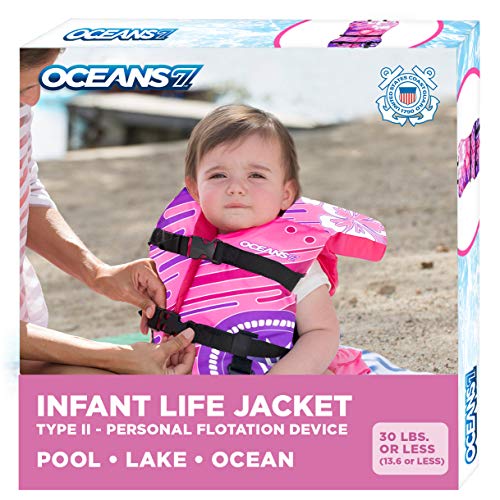
Oceans 7 Type III Vest, Infant is a wearable Type III vest rather than a throwable float, and its infant size is intended for 8-to-30-pound users. The maker says the PFD has three adjustable straps and an open-sided design, with nylon construction and EPE flotation foam. Unlike Body Glove Paddle Pals, Orca, this option includes an infant size, making the weight label central to the choice. The maker advises considering child sizing above 25 pounds, so buyers near that boundary should confirm the fit before ordering. A vest only functions as intended when fastened securely and sized for the wearer.
Bottom line: Choose this for an infant whose weight and fit match the vest size.
How Coast Guard Approved Floats Differ
Type IV cushions are throwable devices; Type III vests are worn, so they serve different roles. Federal recreational-boat rules generally require a wearable, properly sized PFD for each person aboard, and boats 16 feet or longer generally must also carry one readily accessible throwable Type IV device, with exceptions including canoes and kayaks. A throwable cushion does not replace a wearable PFD. A child should wear a fitted life jacket rather than rely on a cushion, especially when the child is in or near the water. The products here include both the throwable and wearable types, so choose by the intended user and use rather than treating every item called a float as interchangeable.
How to Choose a Throwable Cushion
For a boat that requires a Type IV device, choose a cushion explicitly identified as a Coast Guard-approved throwable Type IV PFD. A typical throwable cushion is roughly 16 by 14 inches, as are the two cushions here, but thickness and outer dimensions affect storage. Keep the cushion accessible rather than buried under gear, and make sure the grab straps can be reached. Choose by material or color only after confirming the device type and stowage fit. A throwable device is meant to be cast to someone in the water; it is not designed to be worn or used as the sole flotation protection for a passenger.
How to Size a Child’s Wearable Float
Child PFD sizing is based first on body weight, not age or clothing size. The options here target 33 to 55 pounds and 8 to 30 pounds, so use a scale if the child is near a limit and select the size range that covers the child’s current weight. A properly fitted vest should be snug, with straps fastened, and should not ride up over the wearer’s head when lifted at the shoulders. Check the product’s label and fit before going on the water; children can outgrow a vest between seasons. No swim vest makes supervision optional: keep an adult within arm’s reach of young children in or near water.
Where Boat Float Requirements Apply
Federal rules generally require a throwable Type IV PFD aboard recreational boats 16 feet or longer, alongside wearable PFDs for people aboard; canoes and kayaks are among the exceptions to the throwable-device rule. State rules, waterway restrictions, and vessel type can add requirements, so check the rule that applies to the planned trip. The throwable device must be readily accessible, not sealed in a compartment or obstructed by equipment. A practical decision rule is to keep a Type IV cushion within reach of the cockpit or passenger area where it can be thrown quickly, while each passenger wears a suitable PFD whenever conditions call for it.
Frequently Asked Questions
Does a throwable cushion replace a life jacket?
No, a throwable cushion is not a wearable PFD. Federal recreational-boat rules generally require a properly sized wearable PFD for each person aboard, in addition to the throwable device when required.
When does a boat need a Type IV throwable device?
Federal rules generally require one on recreational boats 16 feet or longer, with exceptions including canoes and kayaks. Check state and vessel-specific rules as well, since they can add requirements.
How should a child’s flotation vest fit?
Choose by the child’s current weight range and fasten every strap snugly. The vest should not ride up over the child’s head when lifted at the shoulders; supervise children closely around water.
Can an infant wear a child-size life jacket?
Use a vest whose labeled weight range covers the infant, rather than sizing up by age or clothing size. The infant option here is for 8 to 30 pounds, and proper secure fit still matters.
Where should a throwable cushion be kept?
Keep it readily accessible where it can be thrown promptly, not buried beneath gear or locked away. For boats that must carry one, the device needs to be aboard and accessible during the trip.