
Travel Seat Cushion for Airplane: 5 Models Compared

For most flyers, JETTAMOR 49-Airbag Travel Cushion is the clearest pick because its 49 interconnected airbags are paired with a built-in pump and adjustable firmness. Choose ComfiLife Ergo-Gel Cushion instead if you prefer a fixed gel-style cushion, or CloudAir 19-Cell Inflatable Cushion, Airplane Cushion with Embedded Pump or Sondur Medium Inflatable Cushion if a foldable inflatable design better fits your packing routine.
We earn a commission if you buy through links on this page. As an Amazon Associate I earn from qualifying purchases. Products are compared on manufacturer specifications, not hands-on testing.
- Best overall: JETTAMOR 49-Airbag Travel Cushion – Its 49 air cells and built-in pump let you adjust firmness without carrying a separate pump.
- Best for gel-style support: ComfiLife Ergo-Gel Cushion – Its Ergo-Gel design and 15.4-by-11.4-inch footprint suit buyers seeking a non-inflatable alternative.
- Best for built-in inflation: Sondur Medium Inflatable Cushion – It uses 24 connected cells and inflates in 3–4 breaths, with a pump and release valve for adjustment.
| Product | Best for | Design | Inflation | Dimensions | Shop |
|---|---|---|---|---|---|
| JETTAMOR 49-Airbag Travel Cushion | Adjustable air-cell support | 49 interconnected air cells | Built-in pump; about 1 minute | — | Check Price on Amazon |
| Sondur Medium Inflatable Cushion | Quick breath inflation | 24 interconnected air cells | Built-in pump; 3–4 breaths | — | Check Price on Amazon |
| CloudAir 19-Cell Inflatable Cushion | Wide seat coverage | 19 3D airbags | Inflatable; no pump needed | 19 × 17 in | Check Price on Amazon |
| Airplane Cushion with Embedded Pump | Firmness adjustment | Inflatable | Embedded pump; valve adjustment | Medium | Check Price on Amazon |
| ComfiLife Ergo-Gel Cushion | Gel-style cushion | Ergo-Gel design | Not inflatable | 15.4 × 11.4 × 1.2 in | Check Price on Amazon |
Travel Seat Cushions for Airplane
Compare the support layout, inflation method and fit details before choosing a cushion for your next flight.
JETTAMOR 49-Airbag Travel Cushion

JETTAMOR 49-Airbag Travel Cushion stands apart for its 49 interconnected air cells, a larger cell count than the other inflatable options here. The built-in pump inflates it in about one minute, and an air-release valve lets you set firmness without a separate pump. Its travel-focused foldable design suits flyers who want an adjustable cushion that can also go along for driving or desk sitting. The tradeoff is that the dimensions are absent, so check the cushion’s fit against your airline seat before packing it if footprint is a deciding factor.
Bottom line: Pick this if you want adjustable air-cell support with a built-in pump.
Sondur Medium Inflatable Cushion

Sondur Medium Inflatable Cushion uses 24 interconnected cells and is the only option with an inflation time of 3–4 breaths. A built-in pump and release valve let you change firmness while seated, and its puncture-resistant EnduraSoft fabric and reinforced seams are named construction features. It folds into a carry bag, which makes it suited to travelers who value a compact packed form. The cell count is lower than JETTAMOR 49-Airbag Travel Cushion and CloudAir 19-Cell Inflatable Cushion, so buyers specifically seeking the densest air-cell layout should compare those alternatives.
Bottom line: Choose this for breath-based inflation and a reinforced fabric construction.
CloudAir 19-Cell Inflatable Cushion

CloudAir 19-Cell Inflatable Cushion has the largest footprint among cushions with dimensions, at 19 by 17 inches, and uses 19 three-dimensional air cells. Its no-pump-needed design and foldable form suit flyers who want a broad cushion that packs down after use. The height converts to about 0.04 inch, which appears inconsistent with the 50 mm height in its name; verify the intended cushion thickness before buying if seat height matters to you. Lycra is one of its named materials.
Bottom line: Pick this if a wider stated footprint and pump-free setup are priorities.
Airplane Cushion with Embedded Pump
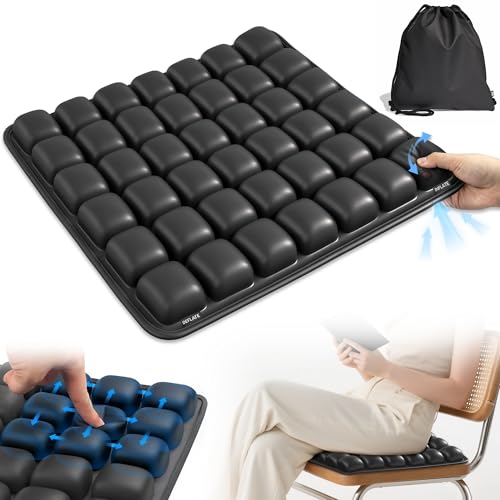
Airplane Cushion with Embedded Pump differs from the other named pump designs by combining a small embedded pump with a dual-layer valve intended to seal more securely. The release valve allows the air volume to be adjusted after inflation, and it folds into an included storage bag. Its medium size may suit someone who wants an inflatable airplane cushion without the larger stated footprint given for CloudAir 19-Cell Inflatable Cushion or ComfiLife Ergo-Gel Cushion. The dimensions and cell count are not provided, so verify the cushion’s fit before ordering if you need a specific seat area.
Bottom line: Choose this for an embedded pump, valve-based firmness changes and a medium size.
ComfiLife Ergo-Gel Cushion

ComfiLife Ergo-Gel Cushion is the only cushion in this group with an Ergo-Gel design rather than an inflatable air-cell layout. Its 15.4-by-11.4-inch footprint and 1.2-inch thickness give buyers concrete dimensions for comparing seat coverage and packed volume; it weighs 1.6 pounds. The foldable format suits people who want one cushion for flights and other seated activities without adjusting air pressure. The dimensions are smaller than CloudAir 19-Cell Inflatable Cushion’s stated footprint, so flyers wanting broad coverage may prefer that model instead.
Bottom line: Pick this if you want a measured, foldable gel-style cushion rather than an inflatable one.
How to choose an airplane seat cushion
Choose by support type, thickness and how much firmness control you want. Inflatable cushions let you change air volume, while gel-style cushions avoid inflation and keep a fixed shape. Seat width and usable depth vary by aircraft and seat position, so compare the cushion’s footprint with your seat rather than assuming a travel cushion fits every seat. A simple decision rule: if you need a cushion no thicker than 1.2 inches, ComfiLife Ergo-Gel Cushion is the only model here with a thickness at or below that limit; verify the actual thickness of other inflatable choices before ordering. Also consider whether a built-in pump or a pump-free design is more convenient for you. A cushion that raises your sitting position can affect legroom and tray-table alignment.
Inflatable and gel travel cushions compared
Inflatable cushions offer adjustable air volume, while gel-style cushions offer a fixed profile without inflation. Air cells can distribute contact across multiple points, but a softer inflation may feel different from a firmer one; use the release valve to tune pressure rather than filling the cushion as hard as possible. Gel designs do not require inflation steps, but they retain their full dimensions when packed. The table compares the main tradeoff for airplane use.
| Type | Firmness control | Packed form | Useful when |
|---|---|---|---|
| Inflatable air cell | Adjust air volume | Can deflate and fold | You want adjustable pressure and compact packing |
| Gel-style | Fixed shape | Folds, but does not deflate | You prefer no inflation step |
Check cushion fit and seat height
Measure the usable seat area before choosing a footprint: a 19-by-17-inch cushion needs more room than a 15.4-by-11.4-inch one. Thickness also changes how high you sit, which can affect leg clearance and how easily you reach the tray table. The height for CloudAir 19-Cell Inflatable Cushion is inconsistent with the 50 mm claim in its name, so confirm its intended thickness before relying on that measurement. For other inflatable models, the size is only “medium” or “large,” without dimensions; verify fit if your seat space is limited. Allow space for the cushion to stay centered and avoid covering the seat-belt buckle.
Use an airplane cushion safely
Keep the aircraft seat belt fastened low across your hips, with the buckle accessible and the belt directly over you rather than hidden under the cushion. A cushion must not interfere with the seat belt, aisle access or evacuation; remove or reposition it if crew instructions require it. Inflatable cushions work best when they remain stable and do not slide on the seat, so check placement after sitting down and after adjusting air pressure. Avoid inflating so firmly that the cushion becomes unstable or raises you enough to compromise your seating position. On flights, crew directions take priority over personal comfort accessories.
Frequently Asked Questions
Can I use an inflatable seat cushion on an airplane?
Inflatable seat cushions can be used if they do not interfere with the seat belt, buckle access or crew instructions. Keep the belt low across your hips and follow any direction to remove or reposition the cushion.
How thick should a travel seat cushion be?
There is no single ideal thickness, because seat height and legroom differ by aircraft and passenger. A cushion around 1 inch adds less height than a 2-inch cushion, so check knee clearance and tray-table reach before settling on one.
Should I inflate an airplane cushion fully?
No; adjust an inflatable cushion to a stable, comfortable firmness rather than automatically filling it completely. A softer setting can reduce the chance of feeling perched or unstable, and the belt must still fit properly across your hips.
How do I keep a seat cushion from sliding?
Center the cushion on the seat and check its position after sitting down, since smooth seat fabrics and movement can shift loose pads. Keep the buckle exposed and do not rely on a cushion to secure your seating position.
Are gel cushions better than inflatable cushions for flying?
Gel cushions avoid inflation and have a fixed thickness, while inflatable cushions can be deflated for packing and adjusted for firmness. Choose gel if you want a set profile, or inflatable if adjustable air volume matters more.