
Netting for Strawberry Plants: 5 Options Compared

For a 6- to 7-tier vertical strawberry planter, choose Vertical Planter Netting, 6–7 Tier because its 59-by-22-inch zippered cover is sized for that planter style. For in-ground beds or larger plantings, choose a flat sheet or individual shrub bag instead; measure the covered area before deciding.
Netting is a physical barrier placed over or around plants. Keep it taut and supported so it does not sag onto berries or leave gaps for birds.
We earn a commission if you buy through links on this page. As an Amazon Associate I earn from qualifying purchases. Products are compared on manufacturer specifications, not hands-on testing.
- Best overall: Vertical Planter Netting, 6–7 Tier – Its 59-by-22-inch zippered cover is made for 6- to 7-tier vertical planters.
- Best for raised beds: 4 × 10 ft Fine Bug Netting – The 4-by-10-foot sheet can be cut to size and used over beds or hoops.
- Best for individual plants: Evoio Drawstring Berry Netting Bags – Four drawstring bags each measure 2.3 by 3.5 feet.
| Product | Best for | Cover format | Dimensions | Mesh / material | Shop |
|---|---|---|---|---|---|
| Vertical Planter Netting, 6–7 Tier | Vertical planters | Zippered planter cover | 59 × 22 in | Breathable mesh | Check Price on Amazon |
| Evoio Drawstring Berry Netting Bags | Individual berry plants | Drawstring bags, 4 pack | 2.3 × 3.5 ft each | 60 mesh | Check Price on Amazon |
| RAINFLOW 10 × 5 ft Garden Netting | Raised-bed rows | Flat sheet | 10 × 5 ft | 60 mesh, PE | Check Price on Amazon |
| 4 × 10 ft Fine Bug Netting | Cut-to-fit coverage | Flat sheet | 4 × 10 ft | HDPE | Check Price on Amazon |
| LCHUANG Plant Netting, 4 Pack | Small plant covers | Drawstring covers, 4 pack | 3.3 × 2.7 ft each | PE | Check Price on Amazon |
Netting for Strawberry Plants
Match the cover format and dimensions to your strawberry bed, bush or vertical planter before choosing a mesh.
Vertical Planter Netting, 6–7 Tier

Unlike flat bed netting, this 59-by-22-inch sleeve is shaped for a vertical strawberry planter with 6 to 7 tiers. The package contains two covers; each has a zipper for access and a drawstring at the bottom. The maker says the breathable mesh helps protect strawberries from insects, birds and other animals.
This is the most targeted choice for a stackable planter, but the planter itself is not included. Check that your planter has 6 or 7 tiers and compare its circumference with the cover before ordering; this sleeve is not a general-purpose sheet for a wide bed.
Bottom line: Choose this for a compatible 6- to 7-tier vertical planter.
Evoio Drawstring Berry Netting Bags
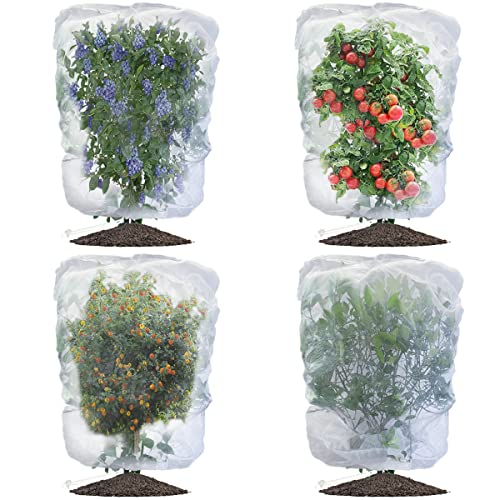
These individual bags suit separate strawberry plants or berry shrubs better than a single sheet: four covers measure 2.3 by 3.5 feet each. The maker says the 60-mesh fabric lets water, air and sunlight pass through, so the bags can remain in place during watering.
The drawstring helps close each cover around a plant, and the soft, flexible mesh is intended to avoid plant damage. The limitation is coverage: bags are awkward for a continuous bed or a dense planting where the fabric cannot be secured around each plant. Measure the plant canopy before choosing a bag.
Bottom line: Pick these for individual plants that can be enclosed separately.
RAINFLOW 10 × 5 ft Garden Netting

This flat 10-by-5-foot sheet covers a broader area than individual bags and is suited to raised beds, rows or fruit trees. It is 60 mesh and made of PE. The maker says air, water and light pass through and that the sheet can be cut to size for different garden layouts.
Its rectangular shape makes it a flexible option for a strawberry bed when supported or secured over the planting. Unlike a fitted sleeve or bag, it has no stated zipper or drawstring for closing around a planter, so plan how to anchor the edges and keep the mesh from lying on the fruit.
Bottom line: Choose this for a wider bed if you can secure the sheet around it.
4 × 10 ft Fine Bug Netting
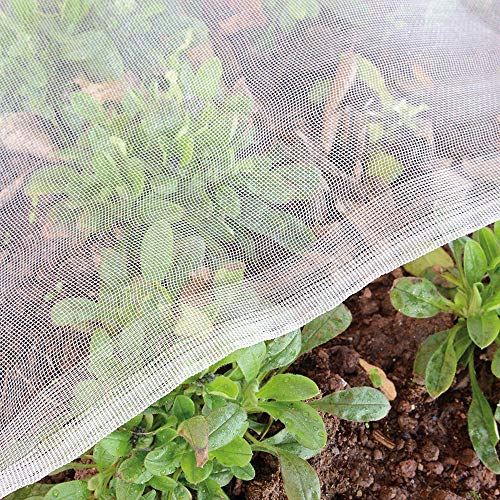
This 4-by-10-foot sheet is the longest rectangular option here, making it useful when a strawberry row needs extended coverage. It is made of HDPE, and the maker says the material is UV-resistant and allows air, water and light to pass through. The seller also describes a tightly finished edge intended not to unravel.
It is a better match for a supported row or bed than for a single plant or tiered pot.
Bottom line: Pick this for a long row when the opening size meets your pest-control needs.
LCHUANG Plant Netting, 4 Pack

These four drawstring covers are smaller and individually sized, measuring 3.3 by 2.7 feet each. The maker describes them as lightweight PE netting for plants including blueberries, tomatoes, vegetables and potted plants, with protection from insects and birds. A drawstring lets the cover be tightened around a plant.
The smaller cover format can suit a pot or compact strawberry plant, but it is not as convenient as a sheet for a continuous row. The product name emphasizes other crops rather than strawberries, so compare each cover’s dimensions with the plant canopy and leave room for access before choosing.
Bottom line: Choose these for compact potted strawberries or small plants.
How to Choose Netting for Strawberry Plants
Choose netting by the shape and area of the planting first, then check mesh and access. A tiered planter calls for a fitted sleeve; a row or raised bed is easier to cover with a flat sheet, while separate shrubs can use individual bags. Measure the full canopy, not just the pot or bed rim, and leave enough slack to secure the edges without pressing fabric against ripe fruit.
Mesh must balance pest exclusion with airflow, light and watering access. A 60-mesh product is identified as such by two of these options, while the other sheets give no mesh count. If keeping out a particular insect is the priority, confirm the actual opening size before buying rather than assuming every garden net blocks the same pests.
Fitted Covers, Bags and Flat Sheets
Fitted covers are easiest to use when their shape matches the plant arrangement; flat sheets are more adaptable but need support and edge fastening. Bags surround individual plants, a sleeve encloses a vertical planter, and a rectangular sheet spans a bed or row. Netting should be secured around its perimeter because even a suitable mesh cannot protect fruit if birds can enter through loose edges.
This table compares the formats by the planting situation they suit. Use it as a first screen, then verify the product dimensions against your actual plants.
| Planting situation | Useful format | Fit check |
|---|---|---|
| Tiered vertical planter | Zippered sleeve | Tier count and circumference |
| Separate pots or shrubs | Drawstring bags | Canopy height and width |
| Raised bed or row | Flat sheet | Bed area plus edge fastening |
How to Size a Strawberry Net Cover
Measure the plant canopy at its widest point and include its height from the ground or pot base. A cover that only matches the container rim can leave leaves and berries exposed; one that is too small may pull tight against fruit or fail to close. For a flat sheet, measure bed length and width and allow extra fabric on every side to anchor it.
For mesh bags, compare dimensions with the mature canopy rather than a newly planted crown. For a vertical planter, check both tier count and circumference; a nominal length and width alone do not guarantee a snug fit. Secure the bottom and sides, but leave practical access for picking and watering. Avoid loose loops and sagging fabric that can snag birds or brush repeatedly against berries.
Safe Placement and Care for Garden Netting
Keep netting taut and supported above the fruit whenever possible. Loose mesh can entangle birds and other small wildlife, so inspect the cover regularly for holes, trapped animals and openings at ground level. Secure edges rather than letting excess fabric trail on the ground, and remove the cover carefully if an animal becomes caught.
Light and water permeability do not make every cover interchangeable: check whether the material can remain in place during watering and whether its mesh is fine enough for the target pest. Remove plant debris after use and let wet netting dry before folding it for storage. Cut edges should be secured if the fabric begins to fray, and damaged netting should be repaired or replaced before the fruit ripens.
Frequently Asked Questions
Should strawberry netting touch the berries?
Keep netting from resting directly on ripe berries when you can. Support a flat cover above the canopy, since contact can press fruit against damp fabric and make picking harder.
Can rain and sunlight pass through garden netting?
Many lightweight garden meshes are designed to pass water and light, but the amount depends on mesh and material. Confirm those properties for the cover you choose, especially if it will stay on during watering.
How do I keep bird netting off a strawberry bed?
Use hoops or another support to hold a sheet above the foliage, then secure the perimeter. Leave enough clearance for plant growth and picking, and remove loose folds that could snag wildlife.
When should I put netting over strawberry plants?
Install a secure cover as fruit begins to form and before birds start feeding on ripening berries. Check it after watering and as the plants grow so edges remain closed without pressing against fruit.
Will garden netting stop every insect pest?
No; exclusion depends on the mesh opening and the size of the pest. If a specific insect is the concern, verify the mesh opening rather than relying only on a general claim that the netting blocks pests.