
Doorbell With Dog Barking Sound: 3 Options Compared

For a doorbell with dog barking sound, choose S SELDORAUK Motion Sensor Door Chime if you want six recorded bark options plus a motion-triggered alert. Choose Electronic Button Dog-Bark Doorbell instead if you specifically want a push-button doorbell, or Wireless Dog Barking Motion Detector for motion detection with sound and LED alert modes.
These devices play electronic recordings rather than producing a live dog-bark, and a recorded bark is not a substitute for a security system or a real dog’s response.
We earn a commission if you buy through links on this page. As an Amazon Associate I earn from qualifying purchases. Products are compared on manufacturer specifications, not hands-on testing.
- Best overall: S SELDORAUK Motion Sensor Door Chime – Six recorded dog barks and 11 total sound modes make it the most flexible motion-triggered option.
- Best for push-button use: Electronic Button Dog-Bark Doorbell – It is the only described electronic push-button doorbell rather than a motion detector.
- Best for visual alerts: Wireless Dog Barking Motion Detector – It offers sound, flashing LED, or both as alert modes.
| Product | Best for | Trigger | Sound modes | Maximum volume | Shop |
|---|---|---|---|---|---|
| S SELDORAUK Motion Sensor Door Chime | Bark sound variety | Motion sensor | 11 modes | 110 dB | Check Price on Amazon |
| Wireless Dog Barking Motion Detector | LED alert choices | Motion sensor | 8 chimes | 110 dB | Check Price on Amazon |
| Electronic Button Dog-Bark Doorbell | Push-button chime | Push button | Dog bark | — | Check Price on Amazon |
Dog-Barking Doorbells Compared
Compare how each option is triggered and what kind of alert it provides before choosing a location.
S SELDORAUK Motion Sensor Door Chime

Six electronically recorded dog barks distinguish this motion sensor chime from the push-button option and the model with three bark choices. The receiver offers 11 sound modes in total, including an alarm, ding-dongs, a melody, and a welcoming tone, with four volume levels and a maximum of 110 dB measured in a quiet environment. Its open-area range is 1,000 feet. Choose it when variety in recorded bark sounds matters; obstacles, distance, and outdoor conditions can reduce the audible volume and range.
Bottom line: Choose this if you want the broadest selection of dog-bark recordings in a motion-triggered chime.
Wireless Dog Barking Motion Detector
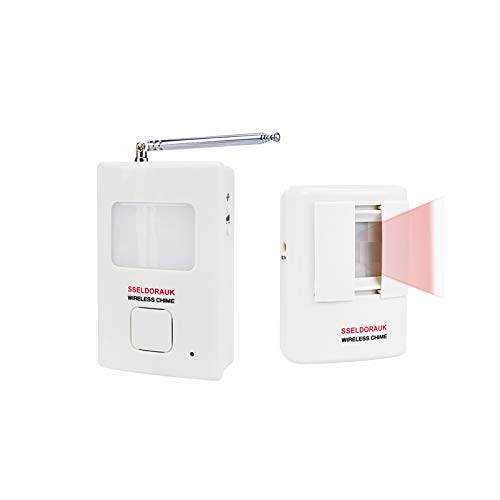
Three selectable dog-bark sounds and a flashing-light option set this motion detector apart from the model with six recorded barks. It provides eight chime choices and three alert modes: LED flashing, sound, or sound with LED. The maker gives a maximum volume of 110 dB and a 1,000-foot range in an open area, and says the unit suits areas up to 200 square meters. Its two-piece sensor-and-receiver set suits buyers who want a visual alert as well as an audible one; the bark is an alarm recording, not a live dog.
Bottom line: Pick this for a motion alert that can use sound, a flashing LED, or both.
Electronic Button Dog-Bark Doorbell
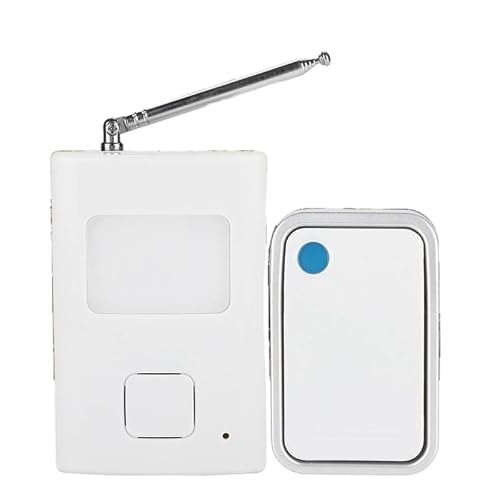
A push button, rather than motion detection, is the defining difference of this electronic doorbell. Its product name specifies a dog-barking sound and a waterproof push button, making it the closest match for someone who wants visitors to press a doorbell rather than have a sensor trigger an alert. The maker does not give a volume level, sound selection, or range, so this is a less suitable choice when those measurable features are decisive. Before ordering, confirm that the button and chime are compatible with your existing doorbell setup.
Bottom line: Choose this when a visitor-pressed button matters more than motion sensing or quantified sound options.
How to Choose a Dog-Barking Doorbell
Start with the trigger: a push button alerts only after a visitor presses it, while a motion sensor can alert you when movement crosses its detection area. A sensor is useful for a gate or driveway, but passing people, wildlife, and moving branches can also trigger alerts depending on placement. Match the alert to the room: sound-only is simpler, while a flashing LED can help in a noisy space or for someone who may not hear a chime. A recorded bark is an electronic sound effect, not a live animal or a monitored security alarm. For a driveway, test the sensor from the path people actually use and aim it away from streets and swaying vegetation.
Motion Sensor Range and Placement
Open-air range figures do not guarantee the same distance through walls, metal doors, or dense landscaping; obstacles and radio interference can weaken the signal between sensor and receiver. Place the receiver where it will be heard, then position the sensor to cover the approach rather than the entire yard. For a 1,000-foot-rated device, do not assume that distance through a house; verify reception at the intended mounting point before relying on it. A motion detector responds to movement, not specifically to a person, so avoid aiming it at sidewalks or roads if frequent false alerts would be disruptive. Outdoor exposure also matters: check whether the sensor itself is rated for the weather at its location.
Recorded Bark, Volume, and Alert Modes
Dog-bark doorbells use a recording played through a speaker, so tone and loudness differ from a live dog’s bark. Maximum decibel figures are generally measured under particular conditions; distance, walls, and background noise affect what reaches a listener. A 110 dB maximum is very loud nearby, so begin at a lower volume and adjust from a safe listening distance. Sound modes also affect the alert’s purpose: a ding-dong is recognizable as a visitor chime, while barking or an alarm tone may be mistaken for a warning. Use the flashing-light mode when an audible alert is not suitable, and do not treat an alarm sound as proof that a person has entered.
Push-Button and Motion-Triggered Types
Push-button and motion-triggered doorbells solve different problems: the button requires an intentional press, while the sensor reacts automatically to movement. Use this guide to match the trigger to the entry point rather than choosing by bark count alone.
| Entry situation | Trigger to choose | Trade-off |
|---|---|---|
| Front door visitor | Push button | Requires a press |
| Gate or approach | Motion sensor | May react to animals or passing movement |
| Noisy room | Sound plus LED | Requires a visible receiver alert |
Some conventional wired doorbell circuits use 16 to 24 volts AC, but electronic chimes may have different power and compatibility requirements. Do not connect a product to existing wiring based on the words “doorbell” alone; confirm its electrical requirements before installation.
Frequently Asked Questions
Can a dog-barking doorbell replace a real watchdog?
No, a recorded bark is only an electronic alert or sound effect. It does not detect intent or respond like an animal, and it should not be treated as a security system.
Will a motion doorbell detect every visitor?
No sensor can be assumed to catch every approach from a range figure alone. Walls, mounting angle, obstructions, and interference can reduce coverage, so test the installed position before relying on it.
How loud is a 110 dB dog-bark alarm?
A 110 dB maximum is a very loud sound level nearby, but distance and barriers reduce the volume heard. Start at a lower setting and avoid prolonged listening close to the speaker.
Can outdoor motion sensors trigger on animals?
Yes, motion sensors respond to movement rather than identifying a visitor as human. Aim the sensor away from animal paths, roads, and moving vegetation when those could cause nuisance alerts.
What should I check before wiring a doorbell chime?
Confirm the chime’s power and wiring compatibility before connecting it to a circuit. Conventional wired doorbells commonly use 16 to 24 volts AC, but electronic models can have different requirements.