
Best Hypochlorous Acid Spray for Eyes: 4 Compared

Avenova Eyelid Spray, 20 ml is the best fit for most people because it is an eyelid-and-lash cleanser with a 0.01% hypochlorous acid formula. Choose another option if you want a larger bottle or a formula described as preservative-free and pH balanced.
Hypochlorous acid sprays for eyes are intended for hygiene around the eyelids and lashes, not as a substitute for treatment of eye symptoms.
We earn a commission if you buy through links on this page. As an Amazon Associate I earn from qualifying purchases. Products are compared on manufacturer specifications, not hands-on testing.
- Best overall: Avenova Eyelid Spray, 20 ml – Its 0.01% HOCl formula and eyelid-and-lash focus suit everyday lid hygiene.
- Best for a large bottle: Eyelid Cleanser Spray, 8 oz – The 8 fl oz size is larger than the other eye-area options.
- Best for a compact bottle: OCuSOFT HypoChlor Spray, 2 fl oz – The 2 fl oz bottle is smaller than the 3.38 and 8 fl oz options.
- Best for pH-balanced formula: OPTASE Protect Eyelid Spray, 100 ml – Its formula is described as preservative-free and pH balanced.
| Product | Best for | Bottle size | Formula or packaging note | Shop |
|---|---|---|---|---|
| Avenova Eyelid Spray, 20 ml | Daily lid hygiene | 0.68 fl oz | 0.01% HOCl; glass bottle | Check Price on Amazon |
| Eyelid Cleanser Spray, 8 oz | Large bottle | 8 fl oz | HOCl; concentration not given | Check Price on Amazon |
| OCuSOFT HypoChlor Spray, 2 fl oz | Makeup residue | 2 fl oz | HOCl; concentration not given | Check Price on Amazon |
| OPTASE Protect Eyelid Spray, 100 ml | Sensitive eye area | 3.38 fl oz | Preservative-free; pH balanced | Check Price on Amazon |
Hypochlorous Acid Sprays for Eyes
Compare the intended use, bottle size and formula notes to choose an eyelid cleanser that fits your routine.
Avenova Eyelid Spray, 20 ml
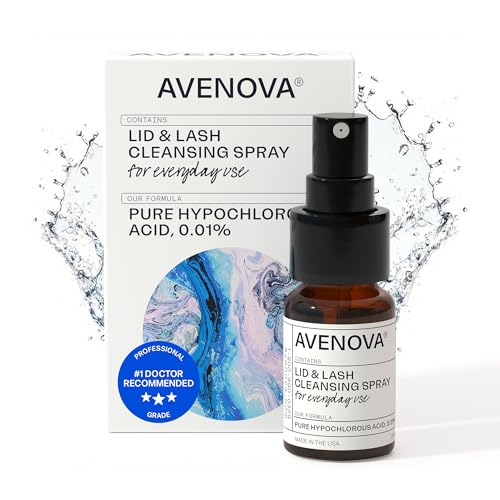
Avenova Eyelid Spray, 20 ml stands out for its 0.01% hypochlorous acid concentration and glass bottle. Avenova describes it as an oil-free cleanser for lids and lashes, including use around lash extensions. The 20 ml bottle suits someone who wants a small, eye-area-specific spray rather than a larger format. The maker says it is intended for gentle everyday cleansing. Its main limitation is capacity: at 0.68 fl oz, it is the smallest of these options, so it may be less suitable if you want a larger bottle for a regular routine.
Bottom line: Choose this for a small, eye-specific spray with a 0.01% HOCl formula.
Eyelid Cleanser Spray, 8 oz

Eyelid Cleanser Spray, 8 oz is distinguished by its 8 fl oz bottle, the largest size among the eye-area sprays here. The maker describes it as a hypochlorous acid cleanser for eyelids and lashes, with use around eyelash extensions also mentioned. That capacity may suit someone who prefers fewer bottle replacements in an ongoing lid-hygiene routine. Its product name includes treatment language, but the claims do not establish it as a treatment for eye conditions; consider it a cleanser, not a substitute for medical care. The formula concentration is a key comparison point if you specifically want a percentage.
Bottom line: Pick this if bottle capacity matters more than a HOCl percentage.
OCuSOFT HypoChlor Spray, 2 fl oz

OCuSOFT HypoChlor Spray, 2 fl oz specifically calls out cleansing oil, allergens, dirt and leftover makeup from eyelids and lashes. OCuSOFT describes the spray as part of an eyelid hygiene regimen and says it is intended for everyday use. Its 2 fl oz size falls between the 0.68 fl oz and larger 3.38 and 8 fl oz bottles, making it a middle-capacity choice. The specifications do not give a hypochlorous acid percentage, so shoppers comparing formulas by concentration will need to verify that before choosing. It is described for eyelids and surrounding skin, rather than direct application into the eye.
Bottom line: Choose this if makeup and everyday lid debris are the main cleansing concerns.
OPTASE Protect Eyelid Spray, 100 ml

OPTASE Protect Eyelid Spray, 100 ml differs with its preservative-free, pH-balanced formula and 100 ml bottle. OPTASE describes it as a hypochlorous acid spray for daily eyelid and lash hygiene, suitable for use around dry and sensitive eyes. The maker’s directions specify holding it 6–10 inches away and applying one pump to each closed eyelid. That use instruction is a practical distinction for someone who wants a defined application method. The formula is also described as containing 99.6% pure hypochlorous acid; that wording is not the same kind of concentration figure as a percentage of the finished solution.
Bottom line: Choose this if a preservative-free, pH-balanced formula and an application distance matter.
How to Choose an Eye-Area HOCl Spray
Choose a spray labeled for eyelid or lash hygiene, and compare the product’s formula and method of use. Hypochlorous acid (HOCl) is a reactive chlorine-containing molecule used in some cleansers; a purity claim and a solution concentration are different measurements, so do not treat them as interchangeable. For a daily routine, select a product whose directions clearly match how you plan to apply it, such as spraying onto closed lids or applying with a pad if the label allows. If you have an eye condition, recent eye surgery, or ongoing irritation, ask an eye-care professional before adding a cleanser. A lid spray is for the eyelid area, not a replacement for prescribed eye drops or evaluation of pain or vision changes.
How to Apply Eyelid Spray Safely
Keep the eye closed and avoid aiming a cosmetic or eyelid cleanser into the open eye unless its label specifically directs that use. A common lid-hygiene routine pairs a warm compress for about 5 to 10 minutes with gentle cleaning of the closed eyelid margin; avoid scrubbing the eye itself. Remove contact lenses before applying products around the eyes unless their directions say otherwise, and wash hands first to limit transferring debris. Never share eye-area applicators or use a bottle whose nozzle has touched the eye or another surface. Stop using the spray if it causes persistent burning, redness or swelling, and seek professional advice for eye pain, light sensitivity or a change in vision.
What Bottle Size and Formula Mean
Bottle volume is useful for comparing capacity, but it does not tell you how much product each pump dispenses or how long a bottle will last. A 0.68 fl oz container is less than one quarter the volume of an 8 fl oz container, while the 2 and 3.38 fl oz sizes sit between those endpoints. Formula wording also needs care: a percentage describing purity is not necessarily the percentage of HOCl in the whole solution. Read concentration claims literally and compare only the same kind of measure. Choose the smallest bottle that fits your expected routine if you prefer carrying a compact container; choose a larger one when capacity matters more than portability, while following any package guidance on use after opening.
| Buyer need | Practical choice |
|---|---|
| Smallest container in this group | 0.68 fl oz |
| Mid-size capacity | 2 or 3.38 fl oz |
| Largest capacity | 8 fl oz |
| Stated preservative-free and pH-balanced formula | Compare the formula note on the 3.38 fl oz option |
When Eyelid Cleansing Is Not Enough
Eyelid hygiene can remove surface debris, but recurring or severe symptoms need more than a cleanser. Eye pain, sudden blurred vision, marked light sensitivity or a foreign-body sensation that does not clear warrants prompt professional attention. Persistent crusting or redness can have different causes, so avoid treating a product’s marketing language as a diagnosis. Do not use an eyelid spray to flush a chemical splash; immediately rinse the eye with clean lukewarm water for at least 15 minutes and contact poison control or emergency care. For routine irritation, avoid rubbing, keep towels and eye makeup personal, and ask an eye-care professional whether lid cleansing fits your symptoms.
Frequently Asked Questions
Can hypochlorous acid spray go directly in the eye?
Use an eyelid cleanser on the closed eyelid area unless its directions specifically say it is for direct eye use. If spray gets into an eye, rinse with clean water; seek care for persistent pain or vision changes.
Should I use eyelid spray before or after a warm compress?
A common lid-hygiene sequence is a warm compress for about 5 to 10 minutes, followed by gentle lid cleaning. Keep the eye closed and use the product as its label directs.
Can I use eyelid spray while wearing contact lenses?
Remove contact lenses before applying products around the eyes unless the product directions explicitly allow use with lenses in place. Put lenses back in only when the label or your eye-care professional says it is appropriate.
How do I compare HOCl purity and concentration claims?
Compare like with like: purity of an ingredient is not the same measure as its percentage in the finished solution. If a specific solution concentration matters to you, verify that the package gives that figure.
When should I stop using an eyelid cleanser?
Stop if the cleanser causes persistent burning, redness or swelling. Eye pain, light sensitivity or a change in vision should be assessed by an eye-care professional rather than managed with a cleanser.