
Hill’s Dog Food: 4 Adult Formulas Compared by Need

For an adult dog with a sensitive stomach or skin, Hill’s Science Diet Sensitive Stomach & Skin is the closest match because its formula focuses on those concerns; the other recipes target everyday adult feeding or weight management. Choose Hill’s Science Diet Adult 1-6 Chicken & Barley for a standard adult recipe, Hill’s Science Diet Adult Perfect Weight for weight management, or Hill’s Science Diet Perfect Weight & Joint Support Large Breed if you want a large breed formula that also supports joint health.
Dry dog food is a shelf-stable kibble; choose by life stage, body condition and any needs your veterinarian has identified.
We earn a commission if you buy through links on this page. As an Amazon Associate I earn from qualifying purchases. Products are compared on manufacturer specifications, not hands-on testing.
- Best overall: Hill’s Science Diet Sensitive Stomach & Skin – Its adult recipe focuses on sensitive stomach and skin support.
- Best for everyday adult feeding: Hill’s Science Diet Adult 1-6 Chicken & Barley – Chicken and barley make this the standard adult formula in this group.
- Best for weight management: Hill’s Science Diet Adult Perfect Weight – The recipe is specifically intended to support healthy body weight.
- Best for large breeds: Hill’s Science Diet Perfect Weight & Joint Support Large Breed – It pairs weight-management nutrition with joint support for large breed adults.
| Product | Best for | Recipe focus | Main recipe | Bag weight | Shop |
|---|---|---|---|---|---|
| Hill’s Science Diet Sensitive Stomach & Skin | Sensitive adults | Stomach and skin support | Chicken | 30 lb | Check Price on Amazon |
| Hill’s Science Diet Adult 1-6 Chicken & Barley | Everyday adult feeding | Adult maintenance | Chicken and barley | 35 lb | Check Price on Amazon |
| Hill’s Science Diet Adult Perfect Weight | Weight management | Weight management | Chicken and brown rice | 25 lb | Check Price on Amazon |
| Hill’s Science Diet Perfect Weight & Joint Support Large Breed | Large breed adults | Weight and joint support | Chicken | 25 lb | Check Price on Amazon |
Hill’s dog food formulas compared
Match each adult formula to your dog’s feeding goal, then check the life-stage and feeding guidance on the package.
Hill’s Science Diet Sensitive Stomach & Skin

Unlike the other formulas here, this recipe centers on sensitive stomach and skin support. The adult kibble includes prebiotic fiber and vitamins E and C, along with omega-3 and omega-6 fatty acids; Hill’s says the formula is highly digestible and supports stomach, skin and immune system health. The 30-pound bag suits an adult dog whose feeding needs align with those goals. It is not the weight-management-focused option, so a dog needing a dedicated weight-control formula may fit Hill’s Science Diet Adult Perfect Weight or Hill’s Science Diet Perfect Weight & Joint Support Large Breed better.
Bottom line: Choose this if sensitive stomach and skin support are your priority.
Hill’s Science Diet Adult 1-6 Chicken & Barley

This is the straightforward adult recipe in the group rather than a formula focused on sensitive digestion or weight control. Its chicken-and-barley blend is sold for adults ages 1–6, with omega-6 and vitamin E for skin and coat and protein to support lean muscle. The 35-pound bag is the largest of these four choices. It makes sense for an adult dog without a specific need for the targeted recipes; owners seeking a weight-management focus should compare Hill’s Science Diet Adult Perfect Weight or Hill’s Science Diet Perfect Weight & Joint Support Large Breed instead.
Bottom line: Pick this for a standard chicken-and-barley adult formula.
Hill’s Science Diet Adult Perfect Weight
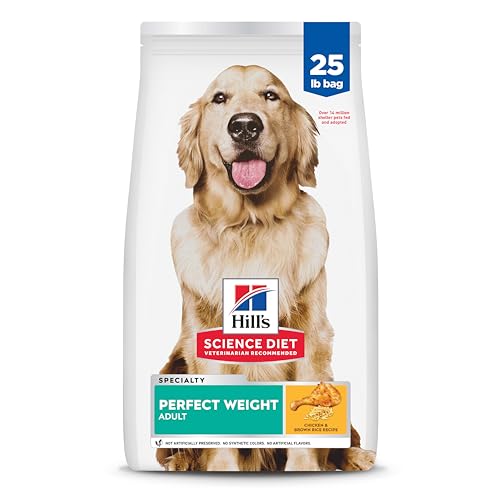
Where Hill’s Science Diet Perfect Weight & Joint Support Large Breed adds a large breed joint support angle, this 25-pound recipe focuses on adult weight management. It combines chicken and brown rice, and Hill’s says the formula is intended to support metabolism and healthy body weight; the maker also claims visible weight-loss results within 10 weeks. This is the more direct fit when weight control is the main goal and a large breed joint emphasis is not needed. It is not the general adult-maintenance pick, so compare the feeding goal with your veterinarian if your dog’s weight needs are unclear.
Bottom line: Choose this when weight management is the main feeding goal.
Hill’s Science Diet Perfect Weight & Joint Support Large Breed

This is the only large breed formula here, combining weight management with joint support rather than focusing on weight alone. The adult chicken recipe includes omega-3-rich fish oil; Hill’s says its nutrition supports weight management and joint health and mobility. Its 25-pound bag matches the weight of Hill’s Science Diet Adult Perfect Weight, but the additional large breed and joint focus sets it apart. Choose it for a large breed adult when both goals matter; for weight management without that added emphasis, Hill’s Science Diet Adult Perfect Weight is the more direct comparison.
Bottom line: Pick this for a large breed adult needing weight and joint support.
How to choose Hill’s dog food
Start with life stage and body condition, then select a recipe goal that matches your adult dog’s needs. Adult maintenance food is intended for adult dogs, while targeted formulas add a focus such as weight management or sensitive digestion. Compare the package’s nutritional adequacy statement: AAFCO label language identifies the life stage a food is formulated to support, and feeding-trial wording differs from a formulation-based claim. A food marked for adult maintenance is not automatically suitable for every individual dog. If your dog has a diagnosed condition, is on a prescribed diet, or needs a substantial weight change, ask your veterinarian before switching. For a dog needing weight management, compare the two targeted recipes and consider whether large breed joint support is relevant.
Compare the recipe goals
The clearest distinction among these Hill’s dry foods is the intended feeding goal, not the shared chicken-based flavor. Use the table to narrow the choice by need; then confirm the package is appropriate for your dog’s life stage and feeding plan. A standard adult recipe suits a dog without a special target, while a weight-management recipe is the more relevant starting point when body condition needs attention. The large breed option adds joint support positioning, and the sensitive stomach recipe has a separate digestive and skin focus. Ingredient sensitivities are individual, so a chicken recipe should not be assumed suitable for a dog avoiding chicken.
| Need | Formula direction | Decision point |
|---|---|---|
| General adult feeding | Adult maintenance | No specialized goal |
| Sensitive stomach or skin | Sensitive stomach and skin | Digestive and skin focus |
| Weight management | Perfect Weight | Weight goal is primary |
| Large breed weight and joint focus | Perfect Weight & Joint Support Large Breed | Large breed fit plus joint focus |
Switching dry dog food safely
Transition most dogs to a new dry food gradually over about 7 days, increasing the new food while decreasing the old food. A sudden switch can cause digestive upset, and a slower transition may be prudent for a dog with a sensitive stomach. Keep the daily amount consistent with the package feeding guide and your veterinarian’s advice; calorie needs vary with size, age, activity and body condition. Measure portions rather than topping off a bowl, especially when monitoring weight. If vomiting, diarrhea or appetite changes persist after a change, contact a veterinarian rather than repeatedly swapping formulas. Dogs with a prescribed diet should not be transitioned without veterinary direction.
Storing kibble and checking the label
Keep dry kibble in its original bag, tightly closed, in a cool, dry place; the bag helps retain lot and feeding information. Heat, moisture and air exposure can reduce freshness, so avoid storing food in a damp garage or leaving an open bag unsealed. Before serving a new food, verify the life-stage statement, feeding directions and any ingredient exclusions that matter to your dog. Bag weight alone does not indicate how long food will last: daily portions differ by dog and calorie density. Do not use kibble that has become damp, moldy or rancid-smelling, and keep food storage inaccessible to pets that may tear into a bag and overeat.
Frequently Asked Questions
How long should I take to switch my dog to Hill’s dry food?
A gradual transition of about 7 days works for most dogs. Increase the new food in stages while reducing the old food, and slow the change if your dog has a sensitive stomach.
How can I tell whether a dog food is for adults?
Check the nutritional adequacy statement on the package for the life stage, such as adult maintenance. A food labeled for adult maintenance is not automatically intended for puppies or every medical need.
Should I choose a weight-management formula for my overweight dog?
A weight-management recipe is a relevant option, but portion size and a safe weight goal also matter. Ask your veterinarian to set a target and monitor progress, especially if your dog has a health condition.
How should I store an opened bag of dry dog food?
Keep the original bag tightly closed in a cool, dry place to limit exposure to air and moisture. Discard kibble that becomes damp, moldy or rancid-smelling.
Can a chicken-based food suit a dog with food sensitivities?
Not necessarily; chicken is an ingredient in these recipes, and sensitivities differ between dogs. Ask your veterinarian about an elimination diet if a food reaction is suspected.