
Sumitomo Ice Edge: Four Winter Tire Sizes Compared

Choose a Sumitomo Ice Edge winter tire by matching its size and load rating to your vehicle’s tire placard; the four options here are different sizes of the same winter tire.
Confirm the approved tire size and load index for your vehicle before ordering, since a similar-looking size is not automatically compatible.
We earn a commission if you buy through links on this page. As an Amazon Associate I earn from qualifying purchases. Products are compared on manufacturer specifications, not hands-on testing.
- For 215/60R16 fit: Sumitomo Ice Edge 215/60R16 95T – This option has a 215/60R16 size and 95T rating.
- For 225/60R17 fit: Sumitomo Ice Edge 225/60R17 99T – This option is the only 17-inch size in the group.
- For 205/55R16 fit: Sumitomo Ice Edge 205/55R16 91T – This is the narrowest and shortest size.
- For 215/70R16 fit: Sumitomo Ice Edge 215/70R16 100T – This size has the tallest sidewall profile.
| Product | Best for | Tire size | Weight (lb) | Shop |
|---|---|---|---|---|
| Sumitomo Ice Edge 215/60R16 95T | 215/60R16 fit | 215/60R16 | 24.8 lb | Check Price on Amazon |
| Sumitomo Ice Edge 225/60R17 99T | 225/60R17 fit | 225/60R17 | 18.1 lb | Check Price on Amazon |
| Sumitomo Ice Edge 205/55R16 91T | 205/55R16 fit | 205/55R16 | 22.0 lb | Check Price on Amazon |
| Sumitomo Ice Edge 215/70R16 100T | 215/70R16 fit | 215/70R16 | 29.7 lb | Check Price on Amazon |
Sumitomo Ice Edge Winter Tire Sizes
Compare the size and rating on each tire with your vehicle’s approved fitment before choosing.
Sumitomo Ice Edge 215/60R16 95T
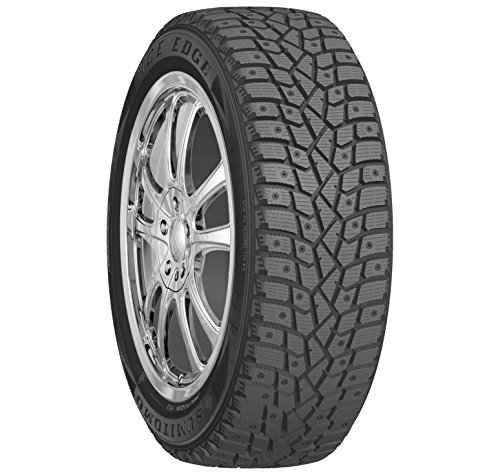
Sumitomo Ice Edge 215/60R16 95T is the 215/60R16 option, with a 95T rating and a weight of 24.8 lb. Sumitomo says the Ice Edge is designed for cold-weather grip and stability on snow, ice and slush. This size suits a vehicle whose placard or manual approves 215/60R16 and the 95 load index. Its key limitation is fit: the 16-inch rim alone does not establish compatibility, so drivers with another approved size should choose that match instead.
Bottom line: Choose this size only if 215/60R16 and its load rating match your vehicle’s approved fitment.
Sumitomo Ice Edge 225/60R17 99T
Sumitomo Ice Edge 225/60R17 99T is the sole 17-inch option here: a 225/60R17 tire with a 99T rating and stated weight of about 18.1 lb. Sumitomo says the Ice Edge is intended to provide cold-weather grip and stability on snow, ice and slush. Pick this size when your vehicle approves 225/60R17 and the 99 load index; its larger rim size distinguishes it from the three 16-inch alternatives. A 17-inch wheel by itself is not enough to confirm fit.
Bottom line: Choose this one for an approved 225/60R17 fit with a 99 load index.
Sumitomo Ice Edge 205/55R16 91T
Sumitomo Ice Edge 205/55R16 91T has the narrowest section width, 205 mm, and the lowest load index in this group, 91; its full size is 205/55R16 and its weight is 22.0 lb. Sumitomo says the Ice Edge is made for winter conditions including snow, ice and slush. This option fits only vehicles approved for its exact size and load rating. Its 91 load index makes it a poor substitute where the vehicle requires a higher index, even if the wheel diameter matches.
Bottom line: Pick this size when your vehicle specifies 205/55R16 with a load index of 91 or lower requirements.
Sumitomo Ice Edge 215/70R16 100T

Sumitomo Ice Edge 215/70R16 100T is the 215/70R16 choice, with the highest load index here at 100 and a weight of 29.67 lb. Its 70-series aspect ratio indicates a taller sidewall proportion than the 55- and 60-series options. Sumitomo says the Ice Edge is intended for cold-weather grip and stability on snow, ice and slush. Check that the vehicle approves this complete size and rating; matching only the 16-inch rim can leave the tire diameter or load capability wrong.
Bottom line: Choose this size when 215/70R16 and its 100 load index are approved for your vehicle.
How to choose a Sumitomo Ice Edge size
Start with the complete tire size and load index on your vehicle’s door-jamb placard or owner’s manual. In a size such as 215/60R16, 215 is the nominal section width in millimeters, 60 is the sidewall height as a percentage of width, and 16 is the wheel diameter in inches. The load index and speed symbol follow the size; these options are all T speed-rated, but their load indexes range from 91 to 100. Use a tire with at least the vehicle maker’s required load capacity and an approved overall diameter. A practical rule: if the placard calls for 225/60R17, do not substitute a 16-inch option just because it can be mounted on another wheel.
| Marking | What it identifies | How to use it |
|---|---|---|
| First number | Section width in mm | Match approved size |
| Aspect ratio | Sidewall height as a percentage of width | Keep the full size consistent |
| R plus number | Radial construction and wheel diameter in inches | Match the wheel diameter |
| Load index | Rated load capacity code | Meet or exceed vehicle requirement |
What the tire size numbers mean
The aspect ratio changes sidewall height, while the first number gives nominal width in millimeters. For example, 215/70 has a taller sidewall proportion than 215/60, even though both are 215 mm wide. The final rim number is inches, so a 16-inch tire is not interchangeable with a 17-inch tire on the same wheel. Overall diameter affects clearance, speedometer readings and gearing; changing size should stay within the vehicle maker’s approved fitments. Compare the complete marking, not just width or rim diameter. When a second approved size is being considered, a tire shop can confirm that wheel width, clearance and vehicle systems remain compatible.
Winter tire care and safe use
Winter tires are designed for cold-season traction, but they do not remove the need for careful speed and following distance on snow or ice. A commonly used winter-tire replacement threshold is 6/32 inch of remaining tread, because shallow tread has less ability to work through snow; check tread depth across the tire, not only at one groove. Install winter tires as a matched set of four to preserve balanced handling, and keep inflation at the vehicle maker’s specified cold pressure. Pressure falls about 1 psi for each 10°F drop in temperature, so check tires when cold as weather changes. Winter tires also wear faster in warm conditions, so seasonal changeover helps preserve usable tread.
Frequently Asked Questions
What does the T rating mean on these tires?
T is the speed symbol, indicating a maximum service speed of 118 mph under specified conditions. It does not override the vehicle maker’s tire requirements or make driving at that speed safe in winter weather.
How much winter tread should a tire have?
A common winter-use replacement threshold is 6/32 inch of tread depth. Measure several grooves around the tire, since uneven wear can leave one area less capable than the rest.
Should I install winter tires on all four wheels?
Yes, a matched set of four is the usual choice for balanced traction and handling. Fitting winter tires on only one axle can create an imbalance between front and rear grip, especially on slippery roads.
When should winter tires be taken off?
Switch back when cold-season conditions have passed and temperatures are consistently warm, since winter compounds wear more quickly in warmth. Seasonal timing depends on local weather; keep the vehicle’s approved tire size and load rating for either set.
How often should winter tire pressure be checked?
Check pressure at least monthly and whenever temperatures shift sharply, measuring before driving while tires are cold. Tire pressure changes by roughly 1 psi per 10°F temperature change, so use the vehicle placard rather than the tire sidewall maximum as the target.