
Best Slip Lead for Dog Training: 4 Picks Compared

Fida 6-Foot Slip Lead, Black is the best slip lead for dog training for most handlers who want a 6-foot leash with a 1/2-inch rope and reflective coverage. Choose a 7-foot lead for more walking room, or a padded-handle design if grip comfort is a priority.
A slip lead combines leash and collar in one loop; it tightens when tension is applied, so fit and handling matter.
We earn a commission if you buy through links on this page. As an Amazon Associate I earn from qualifying purchases. Products are compared on manufacturer specifications, not hands-on testing.
- Best overall: Fida 6-Foot Slip Lead, Black – Its 6-foot length and 1/2-inch rope pair a close working distance with a thicker grip.
- Best for extra reach: MayPaw 7-Foot Slip Lead, Black – The 7-foot length provides an additional foot of leash compared with the 6-foot options.
- Best for padded grip: TagME 6-Foot Slip Lead, Hot Pink – An EVA foam padded handle adds cushioning, and reflective stitching is integrated.
| Product | Best for | Length | Rope width | Handle | Shop |
|---|---|---|---|---|---|
| Fida 6-Foot Slip Lead, Black | Thicker rope grip | 6 ft | 1/2 in | Rope | Check Price on Amazon |
| MayPaw 7-Foot Slip Lead, Black | Extra leash reach | 7 ft | 1/4 in | Rope | Check Price on Amazon |
| Fida 6-Foot Slip Lead, Purple | Purple color choice | 6 ft | 1/2 in | Rope | Check Price on Amazon |
| TagME 6-Foot Slip Lead, Hot Pink | Cushioned handle | 6 ft | 3/8 in | EVA foam padded | Check Price on Amazon |
Slip Leads for Dog Training
Compare leash length, rope thickness and grip style to match your handling priorities.
Fida 6-Foot Slip Lead, Black

Fida 6-Foot Slip Lead, Black stands out for its 1/2-inch rope, which is thicker than the 1/4-inch rope on MayPaw 7-Foot Slip Lead, Black and the 3/8-inch rope on TagME 6-Foot Slip Lead, Hot Pink. The 6-foot nylon leash has reflective straps along the rope, a metal ring and leather-covered knots; its adjustable loop is designed to work without a separate collar or harness. It suits handlers who prefer a substantial rope and closer leash length. A slip lead applies pressure when tension is created, so handlers who need a non-tightening connection should choose a standard collar-and-leash setup instead.
Bottom line: Choose it for a thicker rope and a 6-foot working length.
MayPaw 7-Foot Slip Lead, Black
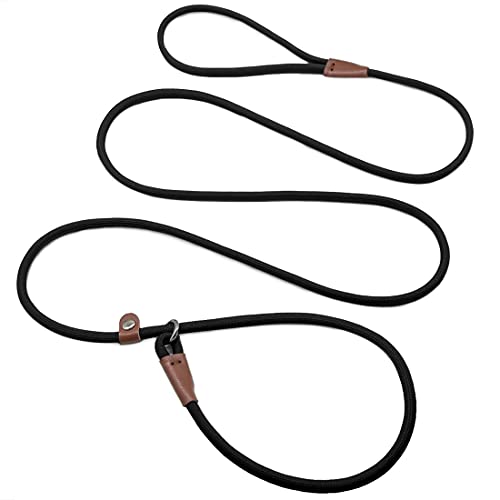
MayPaw 7-Foot Slip Lead, Black is the longest option here at 7 feet, giving more line than the 6-foot leads from Fida 6-Foot Slip Lead, Black, Fida 6-Foot Slip Lead, Purple and TagME 6-Foot Slip Lead, Hot Pink. Its 1/4-inch high-density nylon rope forms an adjustable slip loop, combining leash and collar in one piece for small and medium dogs. The extra foot can suit walks where a little more distance is useful, while the thinner rope is a different handling feel from the wider choices. Because a slip loop tightens under pulling, check its position and fit before walking; a fixed-width collar is preferable when tightening is unsuitable.
Bottom line: Pick it when an extra foot of leash matters more than rope thickness.
Fida 6-Foot Slip Lead, Purple

Fida 6-Foot Slip Lead, Purple offers the same 6-foot length and 1/2-inch rope width as Fida 6-Foot Slip Lead, Black, but in purple rather than black. Its nylon rope includes reflective straps, a metal ring, leather-covered knots and an adjustable loop; the maker says the lead tightens when a dog pulls and loosens when behavior is corrected. That makes it a straightforward option for handlers seeking this color with the thicker rope style. It does not provide the cushioned handle found on TagME 6-Foot Slip Lead, Hot Pink, so handlers prioritizing padding for sudden pulls may prefer that grip design.
Bottom line: Choose it for the purple finish with the thicker 6-foot rope.
TagME 6-Foot Slip Lead, Hot Pink

TagME 6-Foot Slip Lead, Hot Pink is the only option with an EVA foam padded handle, distinguishing its grip from the rope handles on Fida 6-Foot Slip Lead, Black, MayPaw 7-Foot Slip Lead, Black and Fida 6-Foot Slip Lead, Purple. The 6-foot braided climbing rope has reflective stitching, and the maker says its zero-stretch construction is intended to deliver immediate signals. The size is 3/8 inch and marked for dogs weighing 50–110 pounds, making that size range a practical fit check before choosing it. Handlers seeking a simple rope grip or a 7-foot length should consider another option.
Bottom line: Choose it if a padded handle is your priority and the marked size fits.
How to choose a dog-training slip lead
Choose by leash length, rope thickness and whether you want a padded handle; those traits change reach and grip, not the basic slip-loop action. A 6-foot leash is a common everyday length, while 4-foot leads are used for closer control and 10-foot lines provide more distance but less immediate handling. For these options, choose 7 feet when you need extra reach and 6 feet when you want a shorter working leash.
Rope width affects how the leash sits in the hand: these choices range from 1/4 to 1/2 inch. A thicker rope may feel more substantial, while a padded handle adds cushioning without changing the loop. Decide based on your hand comfort and the dog’s pulling behavior, not on a claim that one width suits every dog.
How a slip lead fits and tightens
A slip lead forms an adjustable loop around the neck, and leash tension can make that loop tighten; it is not a fixed-size collar. Place the loop high behind the ears for control, and keep it loose enough at rest to avoid continuous pressure. The loop should not be able to slip over the dog’s head, but it also should not be cinched tight.
Use a slip lead only when you can maintain a relaxed leash and supervise the dog. A dog that lunges hard, has breathing or neck concerns, or cannot walk without constant tension may be better served by a properly fitted harness or a fixed collar with a leash. Stop and readjust if coughing, gagging or distress occurs.
Slip lead length and rope width at a glance
Use this guide to match leash reach and rope width to the handling feel you prefer.
| Priority | Useful choice | Trade-off |
|---|---|---|
| Closer handling | 6 ft | Less room to wander |
| More reach | 7 ft | More line to manage |
| Thicker rope feel | 1/2 in | Bulkier grip |
| Cushioned grip | Padded handle | Handle material differs from plain rope |
Keep the leash short enough to prevent tangles around legs or obstacles. A longer lead is not a substitute for a secure environment or attentive handling.
Slip lead safety and care
Check the rope, stitching, knots and metal ring before each walk; fraying, loosened knots or a damaged ring can compromise control. Reflective material can help make a leash visible in low light, but it does not replace a light or reflective gear on the handler and dog.
Do not leave a slip lead on an unattended dog, where it can snag and tighten. Wash rope according to its material care needs, then let it dry fully before storage; inspect the loop and ring again after cleaning. For dogs that pull persistently, use reward-based loose-leash practice and a setup that avoids sustained neck pressure.
Frequently Asked Questions
How tight should a dog slip lead be?
A slip lead should rest loose rather than continuously constricting the neck, while remaining small enough that it cannot slide over the dog’s head. Recheck the loop if the dog coughs, gags or shows distress.
Where does a slip lead sit on a dog?
Position the loop high on the neck just behind the ears for better steering. If it slides down toward the shoulders, stop and reposition it before continuing.
Is a 6-foot or 7-foot lead better for training?
A 6-foot lead keeps the dog closer, while a 7-foot lead adds one foot of reach and requires more line management. Choose the shorter length in crowded or obstacle-filled areas.
Can a dog wear a slip lead all day?
No; remove a slip lead after supervised leash use because the loop can snag and tighten. Use a properly fitted collar or harness for routine wear instead.
Are slip leads safe for dogs that pull?
A slip lead can tighten when a dog pulls, so repeated lunging can create sustained neck pressure. If the dog cannot walk on a relaxed lead, use a suitable harness and train loose-leash walking rather than relying on tightening.