
Best Trout Fishing Rod Reel Combos by Fit and Setup

The KastKing Spartacus II 6-foot-8-inch medium-light combo suits most trout anglers here because it pairs a trout-friendly rod length and power with a 2-piece graphite blank and spare tip. Choose another setup if you want a complete tackle kit, a telescoping rod for compact travel, or a larger medium-power option instead.
We earn a commission if you buy through links on this page. As an Amazon Associate I earn from qualifying purchases. Products are compared on manufacturer specifications, not hands-on testing.
- Best overall: KastKing Spartacus II 6’8″ ML Spinning Combo – Its 6-foot-8-inch medium-light rod is a practical trout-oriented size and includes a backup tip.
- Best for an all-in-one kit: Goture 6’1″ Ultralight Kit – Includes line, lures, hooks, weights, tools and a carrier bag with a 6-foot-1-inch ultralight rod.
- Best for compact travel: PLUSINNO 5’11” Telescopic Combo – The 5-foot-11-inch rod telescopes for carrying, and its reel is size 3000.
| Product | Best for | Rod length and power | Reel size | Included tackle | Shop |
|---|---|---|---|---|---|
| KastKing Spartacus II 6’8″ ML Spinning Combo | All-around trout | 6’8″ medium-light | 2000 | Extra tip section | Check Price on Amazon |
| Goture 6’1″ Ultralight Kit | Starter tackle kit | 6’1″ ultralight | — | Line, lures, tools, bag | Check Price on Amazon |
| KastKing Lethal Blaze 6’8″ Medium | Medium-power option | 6’8″ medium | 2000 | Extra tip section | Check Price on Amazon |
| PLUSINNO 5’11” Telescopic Combo | Compact travel | 5’11” medium | 3000 | — | Check Price on Amazon |
Best trout fishing rod reel combos
Match rod length and power to your water, then consider whether you need a spare tip or a full tackle kit.
KastKing Spartacus II 6’8″ ML Spinning Combo

The 6-foot-8-inch medium-light rod makes this the most trout-oriented option in the group, with a 2000-size spinning reel and a spare tip section. Its two-piece IM6 graphite blank is designed for sensitivity, useful when detecting light takes with small lures. The extra tip adds a backup for travel or accidental damage. This combo suits anglers who already have their own line and tackle; unlike a complete kit, it does not bundle a broad assortment of lures and terminal tackle. Match line and lure weight to the rod’s specifications before rigging.
Bottom line: Choose this if you want a medium-light trout combo with a spare tip.
Goture 6’1″ Ultralight Kit

The Goture stands apart as the only combo here with a large assortment of tackle and tools included: two lines, soft baits, floats, spoons, hooks, weights, pliers, a fish gripper and a carrier bag. Its 6-foot-1-inch, two-piece carbon-fiber rod is ultralight, a useful fit for compact freshwater presentations. Stainless-steel guides with ceramic rings are intended to reduce line friction. This is a convenient starting point for someone building a first kit, but the included assortment is less tailored than selecting individual lures for a specific stream or trout technique.
Bottom line: Pick this for an ultralight rod and broad starter assortment.
KastKing Lethal Blaze 6’8″ Medium
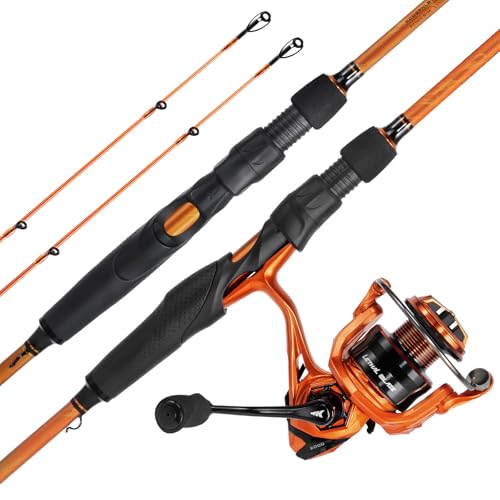
The Lethal Blaze offers a medium-power 6-foot-8-inch rod, rather than the medium-light option better aligned with many small trout presentations. Its two-piece IM6 graphite blank has a backup tip, and the 2000 reel size is the same as the Spartacus II. Stainless-steel guides with titanium-oxide ceramic rings accommodate monofilament, fluorocarbon or braided line. Consider it if your trout fishing also calls for a more versatile medium-power rod; anglers focused on lighter lures and smaller fish may prefer a lighter-power setup. Check lure and line ratings on the rod before choosing tackle.
Bottom line: Choose this if you prefer medium power for mixed freshwater use.
PLUSINNO 5’11” Telescopic Combo
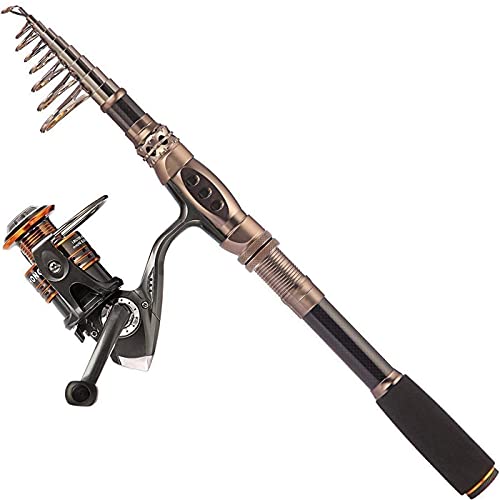
The PLUSINNO is the compact-carry choice: its 5-foot-11-inch rod telescopes, and the combo uses a size 3000 reel with a 5.2:1 gear ratio. The rod blends carbon fiber and fiberglass, has an EVA foregrip and a reel seat designed to resist seawater corrosion. Its medium power and larger reel make it less specialized for light trout tackle than the medium-light 2000-size option. The package includes a rod and reel only, without line or lures, so plan to select compatible line and small trout presentations separately.
Bottom line: Pick this when a telescoping rod matters more than a trout-specific light setup.
How to choose a trout rod and reel combo
For many trout situations, start with a 6- to 7-foot light or medium-light spinning rod and a 1000- to 2500-size reel. Shorter rods are easier to handle around brush-lined creeks; longer rods help with casting distance and line control on open banks. Small spinners, spoons and soft plastics benefit from a rod that can cast light lures. Pair the reel with line within the rod’s printed rating, and verify the lure-weight range too: a rod that cannot load with a light lure will cast it poorly. Choose a medium-power rod when you expect larger fish, heavier lures or mixed freshwater use, rather than assuming more power is always better.
Rod length and stream fit
A 5- to 6-foot rod is manageable on tight creeks, while 6 to 7 feet gives more reach on open water. The right length depends on casting room, bank vegetation and whether you need to steer line around current seams. A two-piece rod separates for carrying but is less compact than a telescoping design; telescopic rods collapse shorter, though their extended sections must be seated fully before casting. Use this quick fit guide as a starting point, then let the rod’s lure and line ratings decide the final match.
| Water and space | Starting rod length | Power starting point |
|---|---|---|
| Brushy creek | 5–6 ft | Light |
| General stream or pond | 6–7 ft | Light or medium-light |
| Open bank or larger mixed species | 6–7 ft | Medium-light or medium |
Spinning reel size and line choice
A 1000- to 2500-size spinning reel commonly suits trout-sized line and small lures; a 3000-size reel is a roomier choice but may add bulk. Reel numbers are not perfectly standardized across brands, so compare the reel’s line capacity and weight when those figures are available. Monofilament is forgiving and stretches under sudden pressure; fluorocarbon is less visible underwater and sinks; braid is thin for its strength but often needs a leader. Use line strength appropriate to the fish and cover, and avoid overfilling the spool, which can cause loops and tangles. Set drag so line can leave smoothly rather than locking it down.
Trout combo setup and safe handling
Before the first cast, check that rod sections are aligned, guides face the same direction and the reel is secured in its seat. Thread line through every guide, tie a reliable knot, and test the drag by pulling line steadily from the reel. Trout hooks are sharp, so keep fingers clear when removing a lure and use pliers for deeply set hooks; barbless hooks can make release easier when regulations allow. Keep fish wet and handle them gently if releasing them. Local rules can set minimum sizes, seasons, tackle restrictions and limits, so check the applicable regulations before fishing.
Frequently Asked Questions
What rod length works best for small trout streams?
A 5- to 6-foot rod is easier to cast around brush and overhanging branches. Open banks allow 6- to 7-foot rods, which provide more reach and line control.
Is a medium-light rod good for trout fishing?
Yes, medium-light power is a versatile starting point for many trout lures and fish sizes. Confirm that your lure weight and line strength fall within the rod’s printed ratings.
What reel size should I use for trout?
A 1000- to 2500-size spinning reel is a common trout range. Compare line capacity and reel weight as well, because size numbers can differ among manufacturers.
Should I use mono or fluorocarbon for trout?
Both can work: monofilament stretches and is forgiving, while fluorocarbon sinks and is less visible underwater. Choose based on lure presentation and keep line strength suitable for the rod and local cover.
How do I prevent line twist on a spinning reel?
Close the bail by hand after each cast and keep line snug as you reel. If twist persists, check that line was spooled in the direction recommended for the reel and replace badly twisted line.