
Best Bed Alarms for Elderly: 3 Types Compared

The best bed alarm for most caregivers is Lunderg Wireless Early Alert Bed Alarm because its hip-level pad is designed to alert a caregiver before the person gets out of bed. Choose Smart Caregiver Bed Exit Alarm if you prefer a pressure-removal alarm with an in-room monitor, or Wireless Bed Sensor Alarm with Caregiver Pager if a floor-level motion sensor better fits the person’s movement.
A bed alarm signals a caregiver when a person moves or leaves bed; it does not stop a fall or replace supervision.
We earn a commission if you buy through links on this page. As an Amazon Associate I earn from qualifying purchases. Products are compared on manufacturer specifications, not hands-on testing.
- Best overall: Lunderg Wireless Early Alert Bed Alarm – Its hip-level pad is designed to alert the caregiver before the person gets out of bed.
- Best for pressure sensing: Smart Caregiver Bed Exit Alarm – The pad triggers when pressure is removed, with a bedside monitor and optional wireless add-on.
- Best for floor-level sensing: Wireless Bed Sensor Alarm with Caregiver Pager – The wireless motion sensor can be positioned under the bed to detect a foot approaching the floor.
| Product | Best for | Detection method | Alert setup | Shop |
|---|---|---|---|---|
| Lunderg Wireless Early Alert Bed Alarm | Early caregiver alerts | Hip-level pressure pad | Wireless pager | Check Price on Amazon |
| Smart Caregiver Bed Exit Alarm | Pressure-removal alerts | Weight-sensing bed pad | Corded bedside monitor | Check Price on Amazon |
| Wireless Bed Sensor Alarm with Caregiver Pager | Floor-level movement | Motion sensor under bed or at door | Wireless receiver; five volume levels | Check Price on Amazon |
Bed alarms for elderly compared
Match the sensor location and alert path to how the person gets out of bed and where the caregiver needs to be.
Lunderg Wireless Early Alert Bed Alarm

Lunderg Wireless Early Alert Bed Alarm differs by using a hip-level pad and sending alerts to a caregiver’s pager rather than sounding a loud alarm in the room. The system is described as wireless and requires no Wi-Fi or app, which suits caregivers who want an alert they can carry. The maker says its PreRise design alerts before the person is out of bed. The limitation is that caregivers must be able to hear or notice the pager; this is a less suitable choice when no one can respond to an alert.
Bottom line: Choose this when a caregiver can carry and respond to a wireless pager.
Smart Caregiver Bed Exit Alarm

Smart Caregiver Bed Exit Alarm uses a weight-sensing pad linked by cord to a bedside monitor, so it differs from the wireless pager systems. The pad fits under the lower fitted sheet at the shoulder blades or hips, and the monitor alarms when pressure is removed. An optional wireless add-on can send alerts to the caregiver, but it is sold separately. The in-room sound may suit setups where a nearby caregiver can respond; it may be a poor fit when a quiet room alert is important and the wireless add-on is not available.
Bottom line: Pick this for a wired pad-and-monitor arrangement or a separately added wireless alert.
Wireless Bed Sensor Alarm with Caregiver Pager
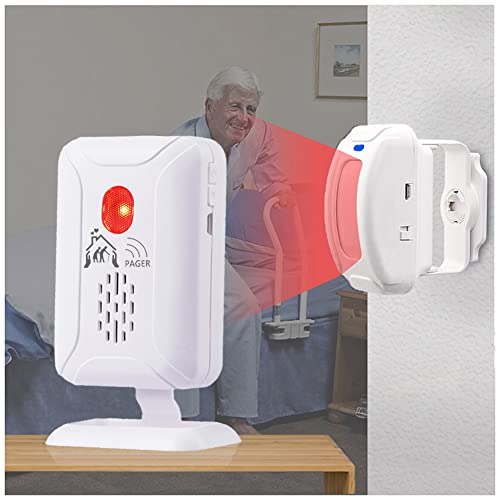
Wireless Bed Sensor Alarm with Caregiver Pager detects movement with a wireless sensor that can sit on the floor under the bed or at a doorway, rather than sensing weight on a bed pad. Under-bed placement is intended to alert when a foot is about to touch the ground; doorway placement can monitor exits from a room. The maker gives a 918-foot open-area transmission range and five volume levels. Walls and room layout can affect wireless reception, so test the sensor’s direction and receiver range in the intended locations before relying on it.
Bottom line: Choose this when detecting movement near the floor or doorway fits the care routine.
How to choose a bed alarm for elderly care
Choose by the event you need to detect: pressure leaving a bed pad, movement near the floor, or an early shift at hip level. A pressure pad triggers when weight comes off the sensor; a floor motion sensor detects movement in its sensing area. Those trigger points are not interchangeable. If the priority is an alert before the person is standing, favor a sensor specifically positioned for early movement; if the priority is knowing when pressure leaves the mattress, use a bed pad. Also match the alert to the caregiver: a room monitor requires proximity, while a pager must be carried and noticed. Alarms cue a response but do not physically prevent a fall.
Bed pad or motion sensor placement
Sensor position determines what movement triggers an alert. The pressure pad in Smart Caregiver Bed Exit Alarm is placed beneath a fitted sheet at the shoulder blades or hips, while Lunderg Wireless Early Alert Bed Alarm specifies hip-level placement; placing a pad in the wrong area can change when it responds. A floor motion sensor, such as Wireless Bed Sensor Alarm with Caregiver Pager, is positioned under the bed or at a doorway and detects movement in that area rather than weight on the mattress. Use the sensor type that covers the actual route out of bed. Test placement during the person’s ordinary movements, including turning and sitting up, and adjust if routine shifts trigger unwanted alerts or an exit goes undetected.
Compare bed alarm alert types
Alert style matters as much as sensing method: an in-room monitor sounds near the bed, while a wireless receiver sends a signal to a caregiver elsewhere within reception range. The wired pressure-pad system in Smart Caregiver Bed Exit Alarm includes a bedside monitor, and its wireless add-on is sold separately. Lunderg Wireless Early Alert Bed Alarm sends alerts wirelessly to a pager; Wireless Bed Sensor Alarm with Caregiver Pager sends a sensor signal to a receiver. The figures for Wireless Bed Sensor Alarm with Caregiver Pager are an open-area maximum, not a promise of that distance through walls. Use this table to match the trigger and alert arrangement to the room.
| Need | Sensor and alert to consider |
|---|---|
| Alert before a full bed exit | Hip-level early alert pad and caregiver pager |
| Detect pressure leaving the bed | Weight-sensing pad with bedside monitor |
| Detect movement by floor or doorway | Wireless motion sensor and receiver |
Using bed alarms safely
A bed alarm is a notification device, not a restraint or fall-prevention barrier. Keep the walking route clear, provide a stable light source at night, and make sure the caregiver can respond promptly; an alarm cannot catch someone who has already started falling. Avoid relying on a sound that the person may not hear or a pager the caregiver does not carry. Test the alarm after setup and after repositioning its sensor, then check that both the trigger and alert are noticed in the intended locations. Do not add bed rails as a substitute without considering entrapment risk, especially if the person may become caught between a rail and mattress.
Frequently Asked Questions
Do bed alarms prevent falls from bed?
No; bed alarms signal movement but do not stop a person from standing or falling. Pair the alert with a clear route, suitable lighting and a caregiver able to respond.
Where should a bed alarm pad sit?
Place the pad where its design specifies, such as the hips or shoulder-blade area beneath a fitted sheet. Test turning, sitting up and getting out of bed to confirm that normal movements do not trigger unwanted alerts.
Can a bed alarm page a caregiver in another room?
Some systems send an alert to a wireless pager or receiver, while a basic wired monitor sounds near the bed. Wireless range can be reduced by walls and layout, so test reception from the caregiver’s usual location.
How is a bed motion sensor different from a pressure pad?
A pressure pad triggers when weight leaves its surface, while a motion sensor detects movement within its sensing area. Choose a motion sensor for floor or doorway movement and a pressure pad for a mattress-exit trigger.
Should a bed alarm replace nighttime supervision?
No; an alarm depends on someone hearing or noticing it and responding in time. Keep nighttime lighting and the route to the bathroom clear, and arrange supervision appropriate to the person’s needs.