
Mother’s Milk Tea: 3 Herbal Blends Compared

Traditional Medicinals Organic Mother’s Milk tea is the closest match for shoppers seeking the familiar fennel, anise and coriander blend, with a 32-bag box that suits regular use. Choose another option if you want a multi-pack or a blend with milk thistle instead.
These caffeine-free herbal infusions are marketed for lactation support, but teas cannot replace feeding support or medical care; ask a lactation professional or clinician about concerns with milk supply or herb safety.
We earn a commission if you buy through links on this page. As an Amazon Associate I earn from qualifying purchases. Products are compared on manufacturer specifications, not hands-on testing.
- Best overall: Traditional Medicinals Mother’s Milk, 32 Bags – Its 32-bag box uses the classic fennel, anise, coriander and fenugreek blend.
- Best for multipacks: Traditional Medicinals Mother’s Milk, 2-Pack – The same brand’s blend comes as two 16-bag packs.
- Best for a different herb mix: Earth Mama Milkmaid Tea, 2-Pack – Its organic blend includes milk thistle, nettle and raspberry leaf.
| Product | Best for | Tea bags | Herb blend | Shop |
|---|---|---|---|---|
| Traditional Medicinals Mother’s Milk, 32 Bags | Regular tea drinkers | 32 bags | Fennel, anise, coriander, fenugreek | Check Price on Amazon |
| Traditional Medicinals Mother’s Milk, 2-Pack | Multi-pack shoppers | 32 bags total | Fennel, aniseed, coriander | Check Price on Amazon |
| Earth Mama Milkmaid Tea, 2-Pack | Alternate herb blend | 32 bags total | Fenugreek, fennel, milk thistle, nettle | Check Price on Amazon |
Mother’s Milk Tea Options
Compare the blend and package size first, then check the brewing directions for your chosen tea.
Traditional Medicinals Mother’s Milk, 32 Bags
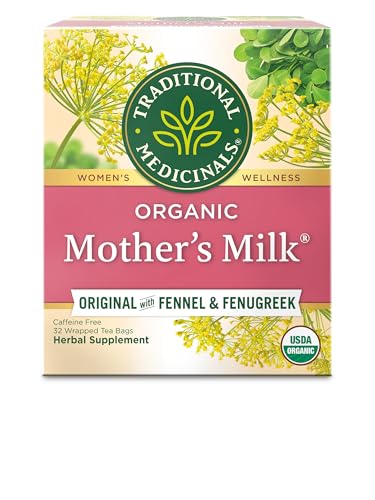
The 32-bag box makes this the straightforward pick for someone who wants the classic Traditional Medicinals blend in one package. The formula combines fennel, anise, coriander, fenugreek and blessed thistle; the brand says it promotes breast milk production. The tea is USDA Certified Organic, Non-GMO Verified, kosher and caffeine-free, with compostable tea bags. Its sweet, licorice-like taste may not suit anyone who dislikes anise or fennel. Herbal products can affect people differently, so discuss regular use with a clinician or lactation professional, especially if you take medication or have a health condition.
Bottom line: Choose this if you want the five-herb blend in a 32-bag box.
Traditional Medicinals Mother’s Milk, 2-Pack

The two-pack format separates this option from the single-box version while keeping the same core fennel, anise and coriander profile. It contains 16 bags per pack, or 32 bags total, and the blend is organic, vegan, non-GMO and caffeine-free. The maker says the herbs may increase breast milk production; that claim should not be treated as a guarantee, since milk supply has many possible causes. This choice suits someone who prefers two smaller packs. Buyers who want the expanded ingredient list that includes fenugreek and blessed thistle should compare the other Traditional Medicinals option.
Bottom line: Pick this if two smaller packs suit your storage or routine better.
Earth Mama Milkmaid Tea, 2-Pack

Earth Mama Milkmaid is the distinct alternative here: its blend includes milk thistle, nettle and raspberry leaf alongside fenugreek and fennel. The two-pack contains 16 bags per pack, and the maker describes the organic herbs as traditionally used to support milk production. Its preparation directions call for one bag with 8 ounces of boiling water and a covered steep of at least 5–10 minutes. The package cautions against use during pregnancy, so this is not the choice for someone who is pregnant. The added herbs also make it a different fit for shoppers seeking the Traditional Medicinals flavor profile.
Bottom line: Choose this if you want an organic blend with milk thistle and other herbs.
How to Choose Mother’s Milk Tea
Choose by herb blend and taste first, not by a promise of increased supply. Herbal lactation teas commonly combine fennel, anise or fenugreek; fennel and anise have a licorice-like flavor, while blends with more herbs can taste more complex. Tea bags are convenient for a single cup, but bag count affects how often you need to restock. A practical rule: if you drink one cup daily, a 32-bag box covers about a month; at two cups daily, it covers about 16 days. These blends are not a substitute for evaluating latch, feeding frequency or pumping technique when supply is a concern. Ask a lactation professional for individualized support, and check with a clinician before using herbs if you take medication or have a health condition.
What the Herb Blend Means
Fennel and anise are aromatic seeds that give many lactation teas a sweet, licorice-like taste, while fenugreek adds a different, more savory note. The three products here do not have identical recipes: one Traditional Medicinals option adds blessed thistle, while Earth Mama’s blend includes milk thistle, nettle and raspberry leaf. A longer ingredient list is not proof of stronger results. Herbal products may trigger sensitivities or interact with medicines, and people respond differently to them. Anyone with a known allergy to an ingredient should avoid that blend; if a nursing parent or baby has a reaction, stop use and contact a clinician. During pregnancy, follow the package caution and ask a prenatal clinician before using herbal blends.
Brewing and Steeping Herbal Tea
Boiling water is about 212°F at sea level, a useful starting point for herbal infusions; high elevation lowers its boiling temperature. Earth Mama’s directions specify 8 ounces of boiling water and a covered steep of at least 5–10 minutes. Covering the cup helps retain volatile aromas from herbs such as fennel and anise. A shorter steep usually makes a lighter cup, while a longer steep extracts more flavor and can make the tea taste stronger. Use a clean mug and discard the bag after brewing rather than reusing it for a second cup with the same strength. If you prefer iced tea, brew it hot first and chill it promptly instead of leaving a cup at room temperature for hours.
| Need | What to compare | Good fit |
|---|---|---|
| Familiar licorice notes | Fennel and anise | Traditional blend |
| Two smaller packs | 16 bags per pack | Two-pack format |
| More varied herbs | Milk thistle, nettle, raspberry leaf | Earth Mama blend |
When to Seek Feeding Support
Persistent concerns about milk supply deserve an assessment rather than relying on tea alone. A lactation professional can observe a feeding or pumping session and help assess milk transfer, latch and pump fit; these practical factors can matter more than adding a beverage. Track feeding patterns and diaper output as advised by your pediatric clinician, especially in the early weeks. If a baby is unusually sleepy, has fewer wet diapers than expected for age, or is not gaining weight as anticipated, contact the pediatrician promptly. A tea’s “lactation support” wording is not a guarantee of increased supply, and herbal ingredients are not risk-free for every parent or baby.
Frequently Asked Questions
Does Mother’s Milk tea contain caffeine?
The three teas compared here are caffeine-free. Herbal infusions are different from black or green tea, which naturally contain caffeine.
How long should I steep a lactation tea bag?
Earth Mama directs steeping one bag in 8 ounces of boiling water for at least 5–10 minutes, covered. A longer steep typically gives a stronger flavor.
Can I drink lactation tea while pregnant?
Earth Mama’s package cautions against using its Milkmaid tea during pregnancy. Ask a prenatal clinician before using herbal blends, since ingredient safety varies.
Will herbal tea increase my milk supply?
A tea cannot guarantee increased milk supply, and supply concerns can have several causes. If you are worried, seek an assessment from a lactation professional or clinician rather than relying on tea alone.
Can lactation tea interact with medication?
Herbal ingredients can interact with medicines, and individual risks depend on the herb and medication. Ask a pharmacist or clinician before regular use if you take medication or have a health condition.